

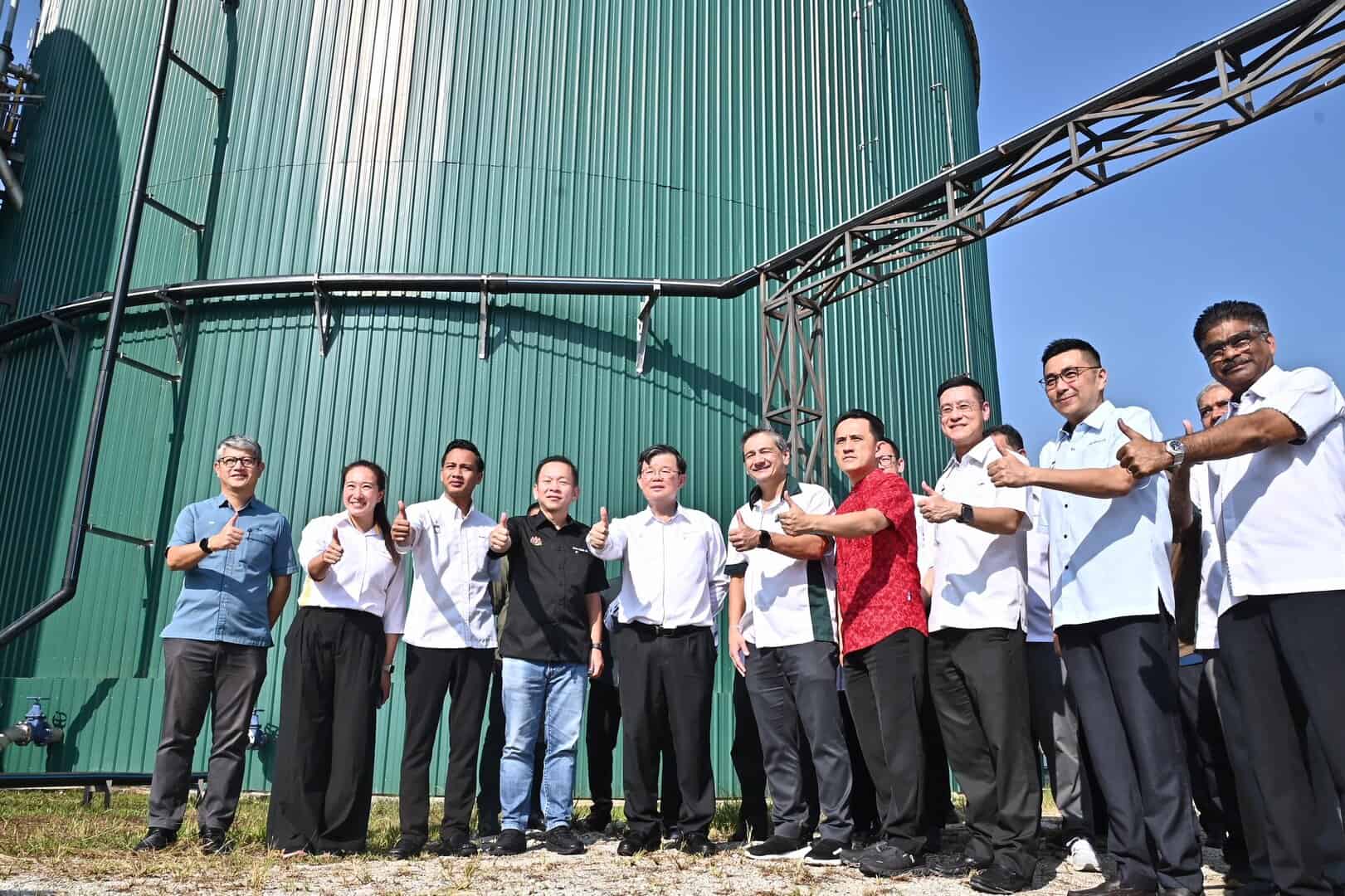

THE Penang government has launched a centralised biogas facility in Kampung Valdor, South Seberang Perai District, describing it as a long-term solution to environmental issues linked to pig farming in the state.
Chief Minister Chow Kon Yeow said the project marked an important milestone in managing livestock waste in a sustainable and systematic manner.
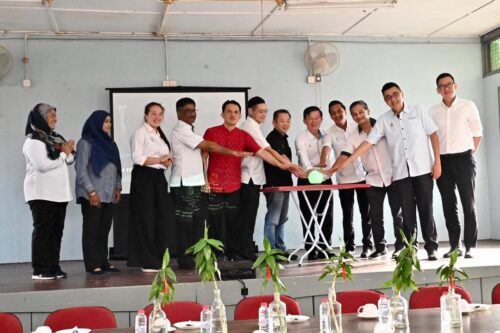
“Today marks an important day for Penang in our commitment to resolving issues related to the livestock industry in our state,” he said during the Biogas Facility launch and site visit to Kampung Valdor today.
Chow stressed that the facility was more than just a waste treatment centre.
“This is not just a facility to process livestock waste and convert it into energy. It is a solution to a long-standing environmental issue,” he said.
He noted that poor waste management in the past had led to broader social sensitivities.
“If not properly managed, it can escalate into social sensitivities involving race and religion. At its core, this is a land use issue and an environmental issue. It has nothing to do with race or religion,” he said.
Chow said Penang currently has two main pig farming areas, namely Kampung Valdor and Kampung Selamat, and proper waste treatment is crucial in both locations.
“This facility is a game changer. It demonstrates that with political will, technological solutions and cooperation between the state government, federal agencies and industry players, we can create a sustainable pathway forward,” he said.
He added that the issue had been discussed extensively at state executive council meetings over the years.
“We have been walking closely with the industry players. You are not alone in this. The state government stands with you, and we will continue to move forward together,” he said.
Chow said the state has taken various measures since 2016, including enacting regulations, strengthening licensing requirements and tightening planning guidelines.
“We have moved towards the licensing compliance and enforced proper planning guidelines that take into account environmental, social and traffic considerations,” he said.
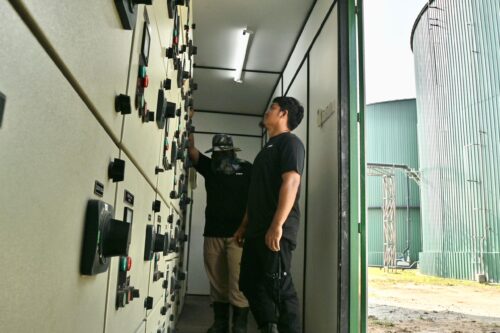
He mentioned the facility would help address problems such as river pollution, odour and fly infestation by ensuring waste is properly channelled and treated.
“We must ensure that no untreated waste is discharged into our rivers. Any discharge must comply fully with environmental standards,” he said.
A similar facility will be developed at Kampung Selamat in the North Seberang Perai district, where farm operators have agreed to collaborate with the project company.
He acknowledged that the Valdor project had taken many years to reach this stage due to interruptions such as the Covid-19 pandemic, the African swine fever outbreak and the need to obtain Environmental Impact Assessment (EIA) approval.
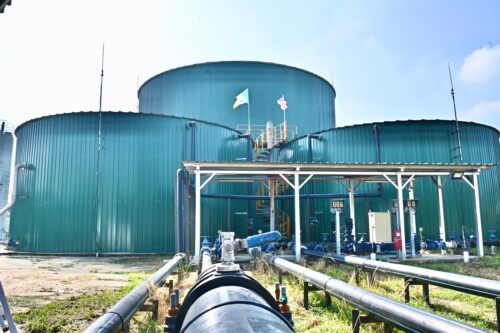
“As this is the first project of its kind, additional time was needed to explain the concept and approach to the authorities. It was a learning process for everyone involved, which is why it took longer than expected,” he said.
“Now that the template is in place, it will be easier to replicate in other areas. We have already spoken to the farmers, and they recently signed up with us. The process will begin there as well. We have also identified a suitable piece of land.”
Chow emphasised that the project was fully financed by the private sector.
“We thank the company for fully financing this initiative. Environmental sustainability and economic viability must go hand in hand,” he said.
He also expressed appreciation to the Valdor community for supporting the initiative.
“For decades, this was seen purely as an environmental issue. Because it was not managed properly, it became a social issue. Today, we are proving that with proper governance and cooperation, we can resolve it,” he said.
He reiterated that pig farming activities would continue in Penang, but must comply strictly with the law.
“We will not stop pig farming activities in Penang. However, all operators must comply with the law, land use regulations and environmental standards,” he said.
Chow added that resolving the issue was personally significant to him.
“This is one issue I wanted to resolve properly before I retire. With this progress, we are moving towards a lasting solution for Penang,” he said.
Meanwhile, Agriculture and Food Security deputy minister Datuk Chan Foong Hin, who was also present, said the ministry is currently developing a Pig Farming Industry Blueprint that will provide comprehensive guidelines for the entire industry.
“At the ministry level, we are in the pipeline to develop a Pig Farming Industry Blueprint. This blueprint will provide comprehensive guidelines for the entire industry,” he said.
He thanked the Penang government for taking the lead in demonstrating responsible waste management practices.
“As the chief minister mentioned, the core issue here is environmental. If it is not managed properly, it can lead to other problems, including social, racial, and religious issues.
“It is therefore very important for pig farmers and industry players across the country to learn from Penang’s experience,” he said.
Chan added that Malaysia’s current self-sufficiency level (SSL) for pork stands at about 65%.
Separately, project proponent Timeless Green Sdn Bhd director Datuk Dr Dennis Ganendra described the initiative as the realisation of a long-held aim.
“Today we celebrate the realisation of a vision. Our Timeless Green team set out to tackle one of the worst environmental and social problems in the country and to improve it in a way that was commercially viable by generating green renewable energy,” he said.
He thanked Chow for his leadership and for creating the enabling environment under the Penang Green Agenda 2030.
In terms of timeline, Dr Dennis said construction for the next facility would take about one year, but approvals would require additional time. More realistically, operations could begin around 2029.
Dr Dennis also expressed appreciation to the state Agrotechnology, Food Security and Cooperative Development Committee chairman Fahmi Zainol and other state executive councillors for their commitment to modernising agriculture and ensuring that food security and environmental sustainability progress.
Among those present during the event were Fahmi, state Local Government, Town and Country Planning Committee chairman H’ng Mooi Lye, who is Jawi assemblyman, state Housing and Environment Committee chairman Datuk Seri Sundarajoo Somu, state Infrastructure, Transport and Digital Committee chairman Zairil Khir Johari, Bukit Tambun assemblyman Goh Choon Aik, Sungai Puyu assemblyman Phee Syn Tze, Pulau Tikus assemblyman Joshua Woo, and state Veterinary Services director Dr Saira Banu Mohamed Rejab.
Story by Edmund Lee
Pix by Law Suun Ting
Video by Siti Nuratikah Rahmat