


THE Fisheries Research Institute (FRI) has developed a groundbreaking solution to combat marine leech infestations in farmed fish, helping reduce industry losses while promoting environmental sustainability.
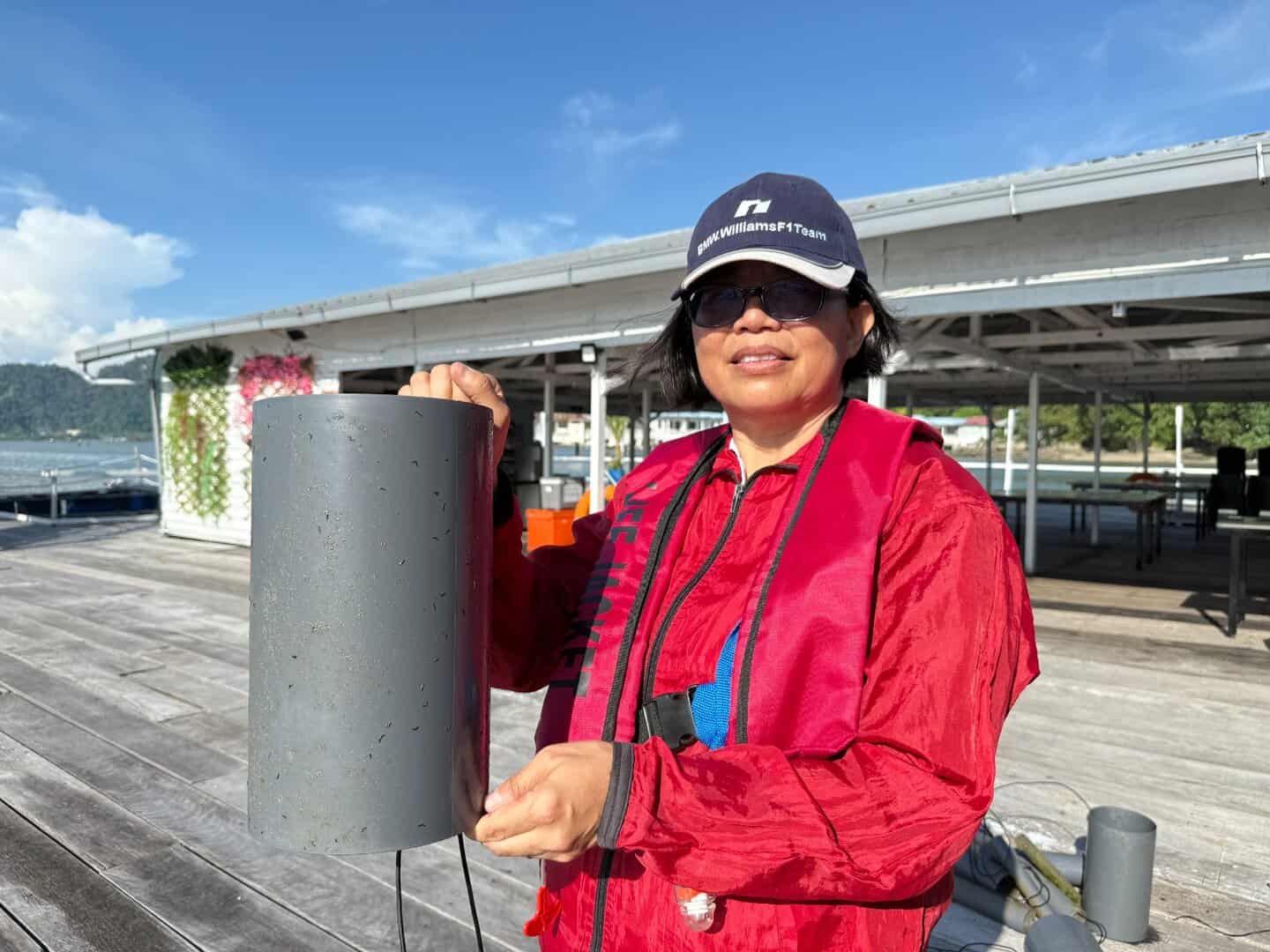
FRI deputy director Dr Kua Beng Chu and her colleague Nur Ashikin Arbi have been actively conducting aquatic animal health research, with a special focus on parasites.

Drawing from years of study into the life cycle of marine leeches, the duo successfully created the Break & Protect 2 (BP2) device, a physical anti-leech innovation that requires no chemical intervention.
Billed as the first device of its kind in Malaysia, BP2 offers a cleaner and safer alternative to chemical treatments, reducing pollution risks to both the environment and the food chain.
The device works by being placed in fish cages at fixed intervals, attracting marine leeches to settle and lay eggs on its surfaces.
By removing and cleaning the device regularly, fish farmers can drastically cut down leech populations and prevent infestations.
In an exclusive interview with Buletin Mutiara, Dr Kua said BP2 provides a long-term solution for sustainability and cost savings.

“We hope this innovation will significantly reduce the use of chemicals, which often accumulate in the environment and our food chain over the years,” she said.
Dr Kua shared that the idea for BP2 first emerged in 2009, when cage-cultured fish in Pulau Jerejak were severely affected by marine leech infestations.
“At that time, farmers relied on freshwater treatments and certain chemicals to kill the leeches.
“However, this only destroyed the adults, not the cocoons. Once the cocoons hatched, the infestation cycle started all over again,” she recalled.
Determined to break the cycle, Dr Kua and her team studied marine leeches extensively at the FRI laboratory.
“By chance, we discovered that marine leeches were attracted to certain surfaces, or substrates.
“With research funding from the Ministry of Science, Technology and Innovation (Mosti), we began developing a suitable substrate that could trap them and disrupt their life cycle,” she said.
By 2010, the team successfully completed the life cycle study of marine leeches. They experimented with materials like wood, plastic, and fishing nets of various colours such as transparent, blue, green, and others commonly used by farmers.
The findings revealed that leeches preferred stable surfaces of specific colours, leading to the creation of several prototype designs. From these, the team refined and selected the most effective version, which became the BP2 device.
According to Dr Kua, around 14 fish species are prone to marine leech infestations, and BP2 can be applied to all of them.
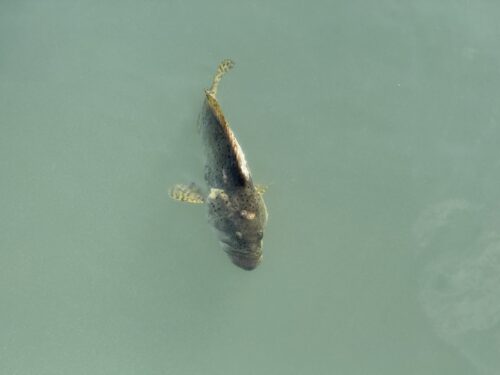
“Based on our data, when BP2 is placed in cages for five consecutive days, then removed and cleaned before being reused, infestation rates drop significantly.
“From 100 cases of marine leech attacks, we saw numbers fall to just 20 within 15 days.
“With continuous use, the infestation rate can eventually reach zero, since the device captures both adult leeches and their cocoons,” she explained.
She added that over time, usually within one to two years, leech populations in farms decline substantially.
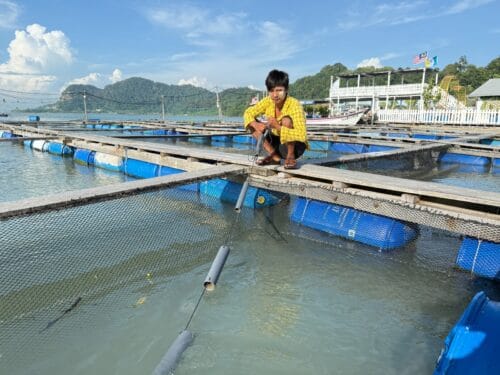
“Farmers simply place the device in their cages, and the leeches are naturally drawn to its surface and colour.
“Within three hours, the leeches begin laying eggs. After five days, large numbers of leeches can be removed, including cocoons, which take seven days to hatch.
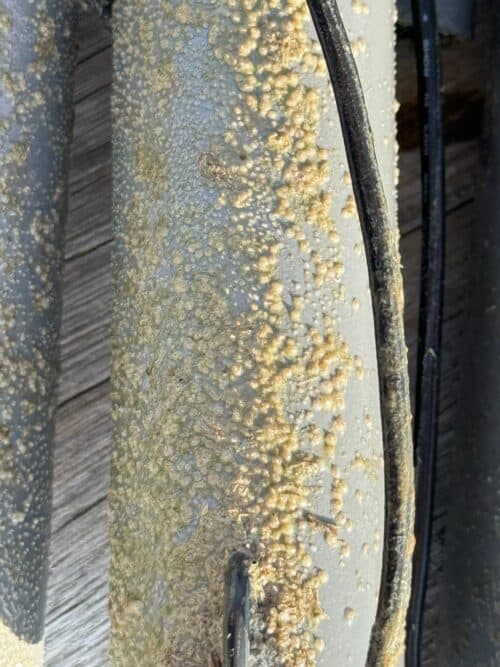
“This gives farmers an opportunity to act early and prevent infections before fish become sick,” Dr Kua added.
With support from the Penang government, BP2 devices have already been distributed to fish farmers across the state.
“We are monitoring the farms closely while collecting data to track the device’s effectiveness,” said Dr Kua.
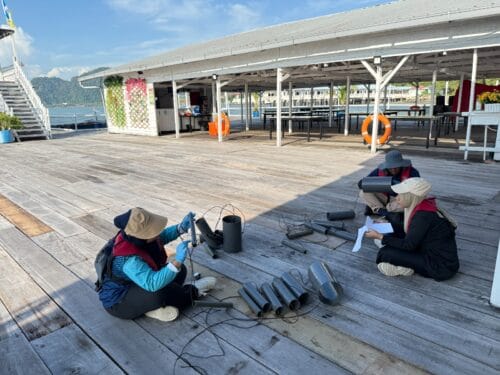
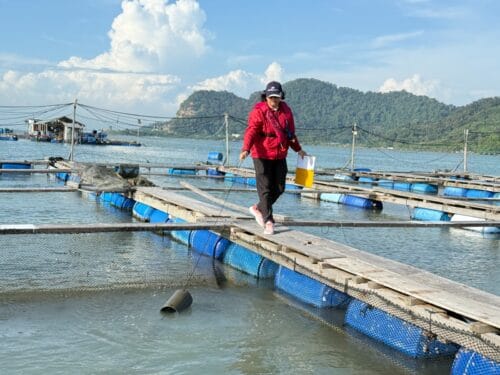
In August 2025, the Department of Fisheries (DoF) through FRI distributed BP2 devices to 40 cage fish farmers.
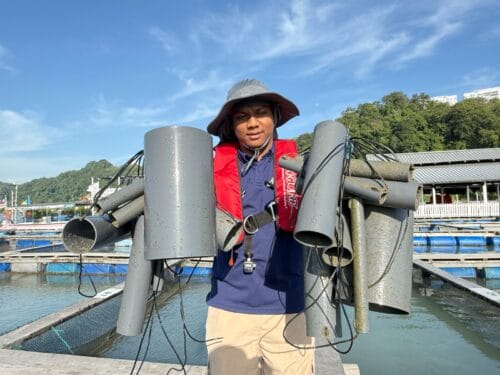
Penang Agrotechnology, Food Security and Cooperative Development Committee chairman Fahmi Zainol noted that the device is vital in reducing farmers’ financial losses caused by marine leech infestations.
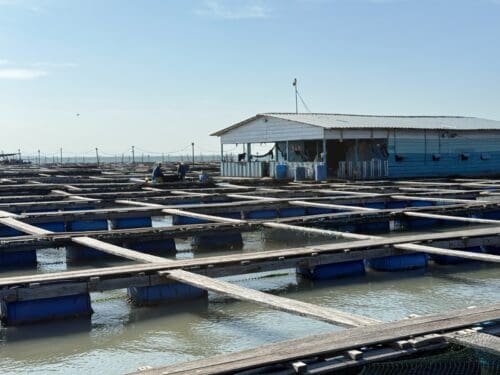
“The state government, with backing from the Agriculture and Food Ministry (KPKM), allocated RM350,000 in special funding to supply 1,200 BP2 units in phases—700 units in August and the remaining 500 in September,” he said.
Dr Kua added that BP2 is a proudly local innovation, registered as intellectual property since 2024, and has won multiple awards for its breakthrough design.
“My colleague and I are the first in Malaysia to create such a device. It is an important step to help farmers avoid chemical use in combating marine leeches.
“The device works by attracting marine leeches to lay eggs on it. Farmers only need to clean it once every five days, which significantly reduces the parasite population and protects fish quality.
“Without control, marine leeches leave wounds on fish, lowering their market value,” she explained.
Story by Riadz Akmal
Pix by Darwina Mohd Daud