

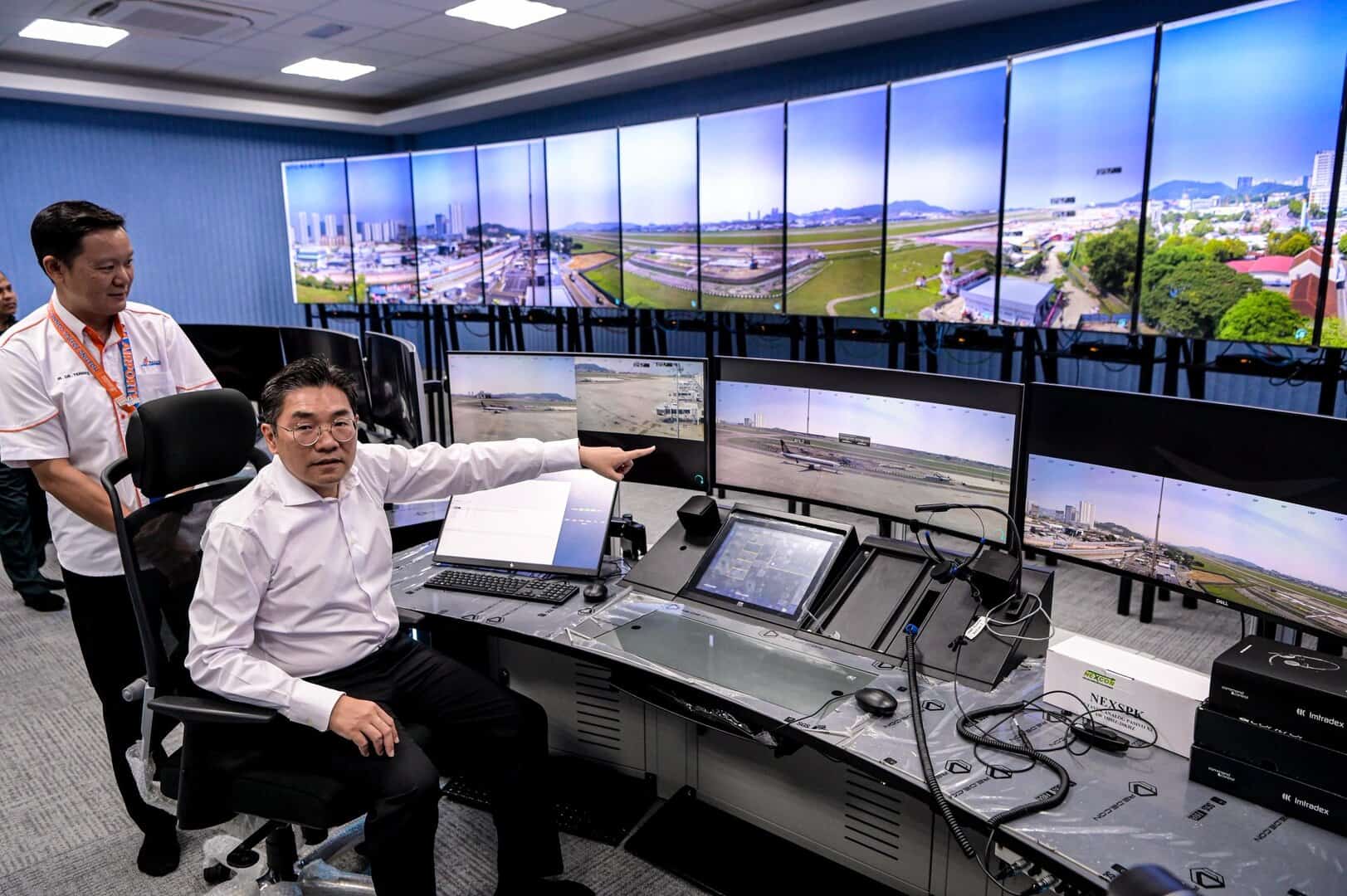

THE first phase of the Remote Digital Virtual Tower (RDVT), the first of its kind in Malaysia, is on track for completion at Penang International Airport (PIA) by the end of this month and is expected to be operational by mid-April, says Deputy Investment, Trade and Industry Minister Sim Tze Tzin.
He said the RM107 million facility, also the most advanced air traffic control tower system in the country, is currently undergoing the process of obtaining its Certificate of Completion and Compliance (CCC), noting that the project is progressing according to schedule.
Sim, who is also Bayan Baru MP, said the RDVT replaces conventional control towers, where control rooms were often smaller, cramped and limited in visibility, adding that the new system provides a more spacious and comfortable working environment for controllers.
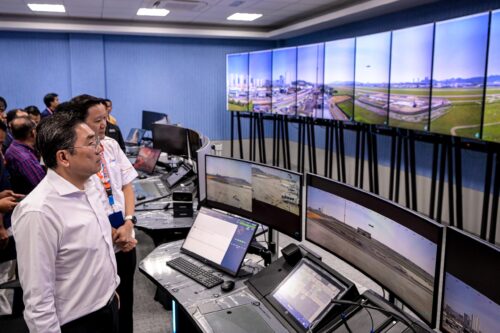
He said the RDVT utilises 16 high-definition cameras to capture real-time visuals of all airside activities, with live feeds transmitted directly into the control room to provide a comprehensive, full-view perspective.
“This significantly enhances situational awareness and operational efficiency,” he said after visiting the facility in Bayan Lepas.
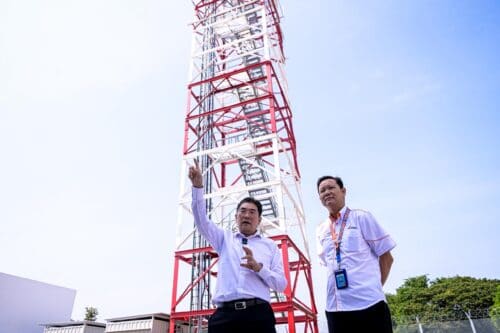
Sim added that the live feed is also transmitted to the Civil Aviation Authority of Malaysia (CAAM) control centre at Kuala Lumpur International Airport (KLIA), which is equipped with a larger control room and advanced analytical tools.
“These systems help monitor incoming and outgoing flights, including details such as aircraft type and estimated passenger numbers through tagging features,” he said, noting that this level of integration marks a major technological advancement in Malaysia’s aviation sector.
“The implementation of RDVT is something we are proud of, as it represents a leap forward in adopting high-tech, centralised air traffic management systems,” he added.
Sim said similar systems are planned for other locations, including Johor, particularly at Senai Airport, with further rollout expected nationwide.
On the timeline, he said the first phase will be completed by month-end, followed by commissioning and staff training to ensure smooth operations, adding that full operational transition is expected by mid-April.
Separately, Sim said the second package of the airport expansion involving the apron, or aircraft parking area, is expected to be completed by the middle of next year, while the third package, comprising a new domestic terminal and refurbishment of the international terminal, is scheduled to begin next year.
“Overall, progress is on track. This is something good for Penang,” he said.
From MITI’s perspective, Sim said cargo growth at PIA has been encouraging, reflecting Penang’s rising importance as a logistics hub, noting that volume increased from 120,000 metric tonnes in 2024 to 145,000 metric tonnes in 2025.
“For January and February this year alone, cargo volume has already reached 18,500 metric tonnes,” he added.
He said this underscores Penang’s growing role as a global logistics hub for the semiconductor industry, citing Broadcom, the world’s third-largest semiconductor company after Nvidia and TSMC, which has established its only hub outside the United States in Penang.
“The value of semiconductor goods moving in and out is very high, especially AI chips and components used in devices like iPhones. Penang is their global logistics hub outside the US,” he said.
Sim also highlighted Lam Research, the world’s second-largest semiconductor machinery manufacturer, noting that about 70% of its machinery manufacturing is handled in Malaysia, particularly in Penang, with all equipment shipped globally from the state.
On logistics, he said DHL operates five hubs in Penang and is building a sixth, adding that these developments reinforce PIA’s role as a critical logistics hub for the global semiconductor industry.
He added that the airport’s importance extends beyond cargo, with passenger traffic also on the rise.
“After expansion, the airport’s capacity will increase to 12 million passengers annually,” he said, noting that Malaysia recorded a record 42 million tourist arrivals last year, while Penang alone saw eight million passengers passing through its airport.
On investment, Sim said Malaysia achieved record-breaking total investments for three consecutive years from 2023 to 2025, adding that Penang has benefited from both foreign and domestic investments.
“This shows that economic and tourism activities are very strong,” he said, adding that PIA plays a crucial role in supporting Penang’s economy and Malaysia’s overall growth.
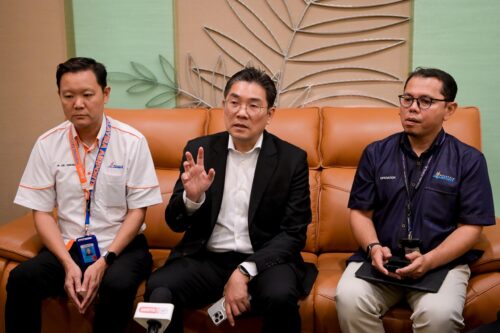
Also present were PIA operation manager Mohd Ridzuan Ahmad Walid, Malaysia Airports project director Dr Terence Leong, and Penang Island City Council (MBPP) councillor Chan Soon Aun.
Story by Edmund Lee
Pix by Noor Siti Nabilah Noorazis