

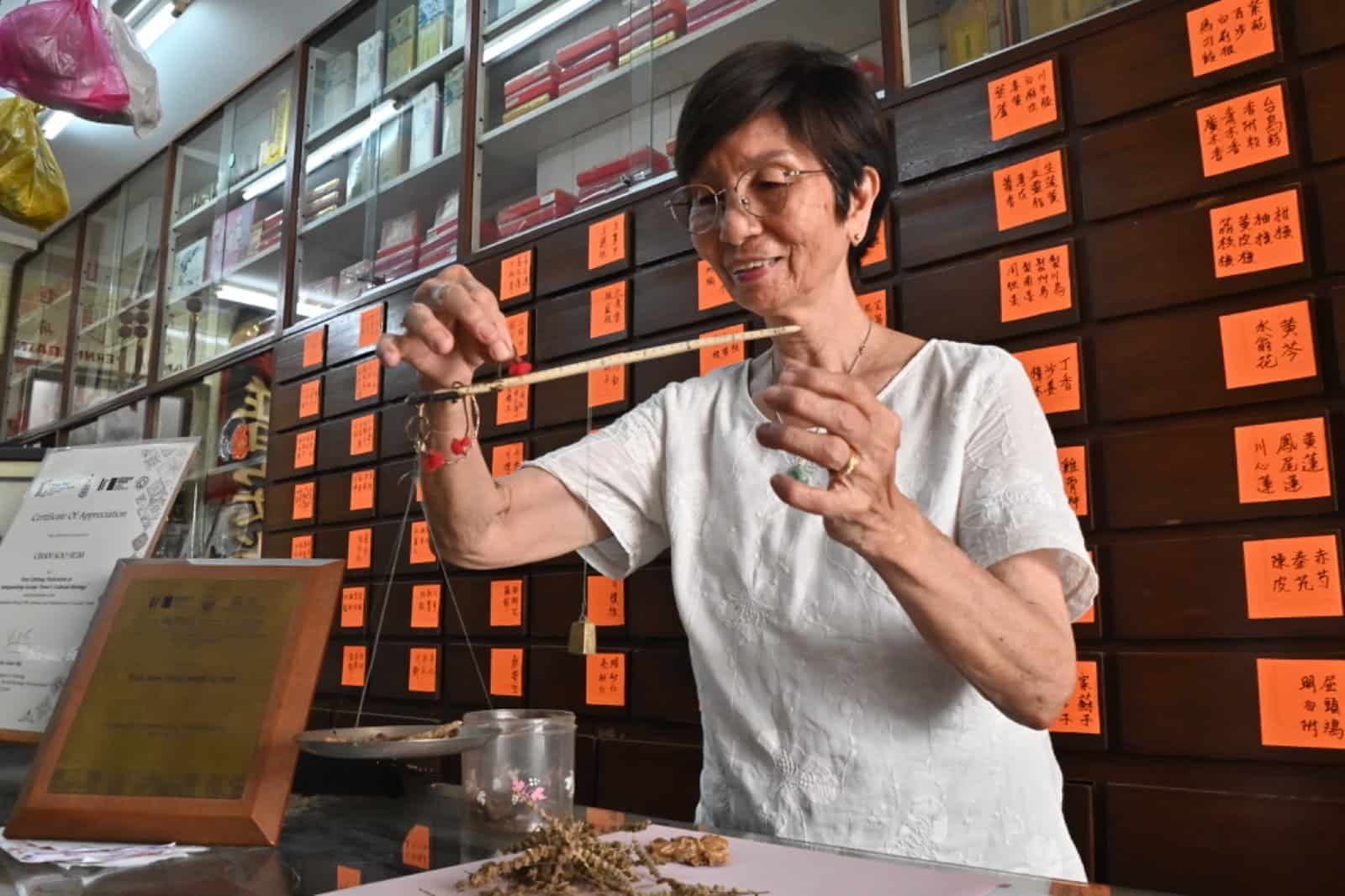

A TRADITIONAL Chinese medicine (TCM) shop founded in 1947 continues to operate today under its second-generation practitioner, even as such practices steadily decline amid changing healthcare preferences.
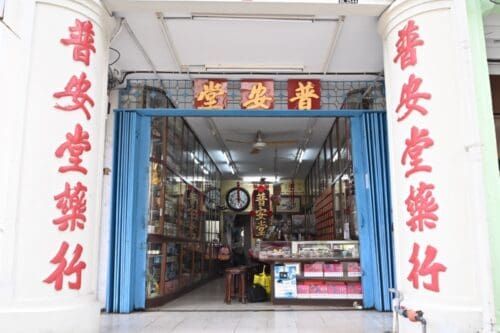
Poh Aun Tong Medical Hall on Campbell Street, established by the late physician Chan Chooi Foo, is now run by his 75-year-old daughter, Chan Soo Sum, who has been serving patients for more than five decades.
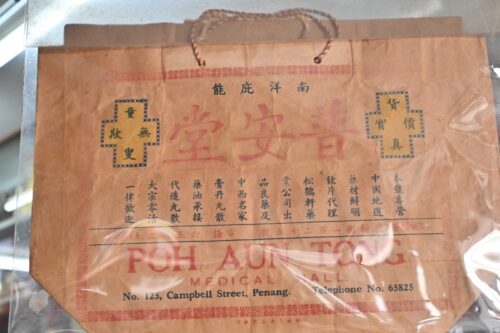
Soo Sum said traditional herbal medicine has become increasingly rare, as many practitioners retire or shift towards more modern treatment models.
She attributed the decline largely to lifestyle changes, noting that younger generations tend to prefer Western medicine for its convenience.
“Traditional medicine requires herbs to be boiled and prepared. Many young people do not have the time or patience for this anymore,” she told Buletin Mutiara during a recent interview.
Despite this, the clinic continues to receive loyal customers, including many who now live overseas.
“Some customers migrated long ago, but whenever they return, they still come back to see me to buy medicine and bring it overseas,” she said.
She added that most of these customers are from older generations, with their children and even grandchildren now visiting the clinic directly.
“This trust has been built over many years. Because of that, we are confident in what we do,” she said, acknowledging that demand among younger patients remains limited.
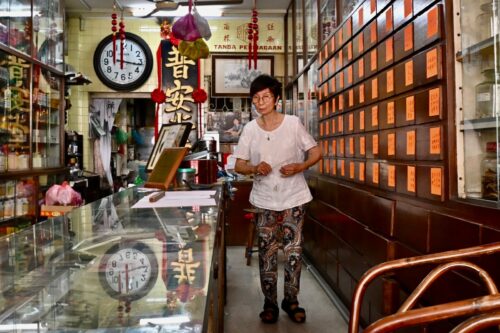
The medical hall operates daily except on Sundays. Asked how long she intends to continue, Soo Sum said there is no definite answer.
“I have already told my children not to take over. I am the second generation, but there will be no third generation,” she said, adding that none of her three daughters has an interest in TCM or herbal practice.
“As long as my health allows, I hope to continue working every day to serve my customers,” she said.
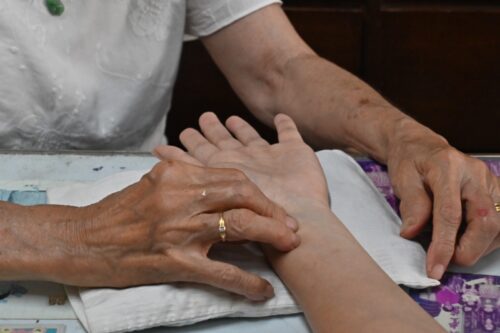
She noted that some long-time patients do not accept powdered medicine, syrups or pills, preferring traditional herbal decoctions that must be boiled.
“I believe very few practitioners still do this. Most prescribe powders or ready-made medicine now,” she said, adding that such traditional practices are becoming increasingly rare.
Business, she said, was stronger in earlier decades and gradually declined over time, but saw a surge during the Covid-19 pandemic.
“During the pandemic, many patients turned to traditional medicine instead of Western medicine. Business was actually better during that period,” she said.
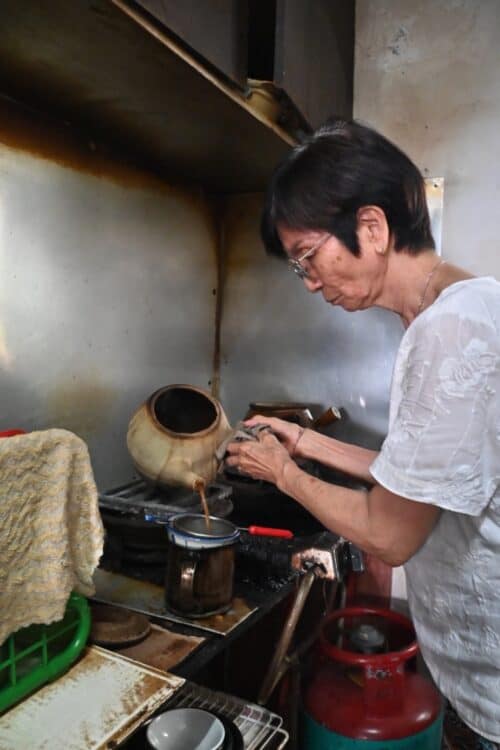
She added that preparing herbal medicine requires patience and careful instruction, with some prescriptions needing to be boiled for at least an hour.
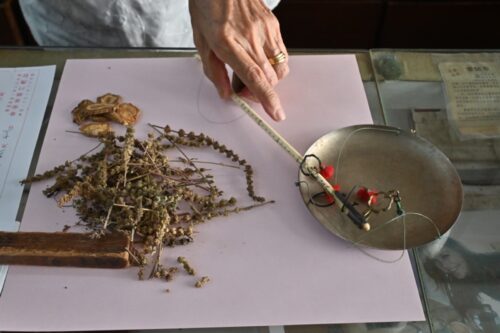
Unlike modernised shops that use machines and vacuum packaging, she said her practice remains strictly traditional, with limited storage time for prepared medicine.
Over the years, she has received recognition from the government and cultural bodies for preserving traditional medical practices, including acknowledgements at heritage-related events.
She recalled that in the past, many traditional herbal shops lined the old streets, but today only one or two remain in the area.
“If you are looking for truly traditional Chinese medicine, our shop is probably one of the few left,” she said.
Soo Sum currently runs the shop on her own, while her husband, who previously worked in a factory, is retired and occasionally accompanies her.
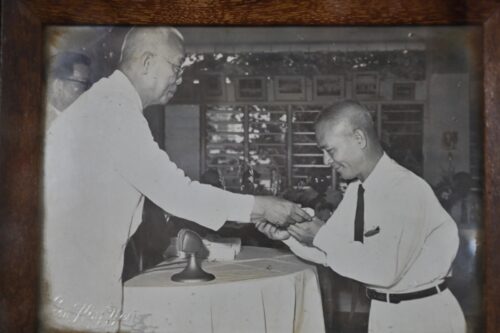
Chan Chooi Foo passed away in 1990 at the age of 80. His certificates and documents are still kept at the clinic.
“This shop has survived because of dedication and persistence,” she said, adding that she began learning the practice from her father in her 20s.
While retirement remains inevitable, she said, stepping away would not be easy.
“For now, I will continue for as long as I am able, one day at a time,” she added.
Story by Edmund Lee
Pix by Law Suun Ting