
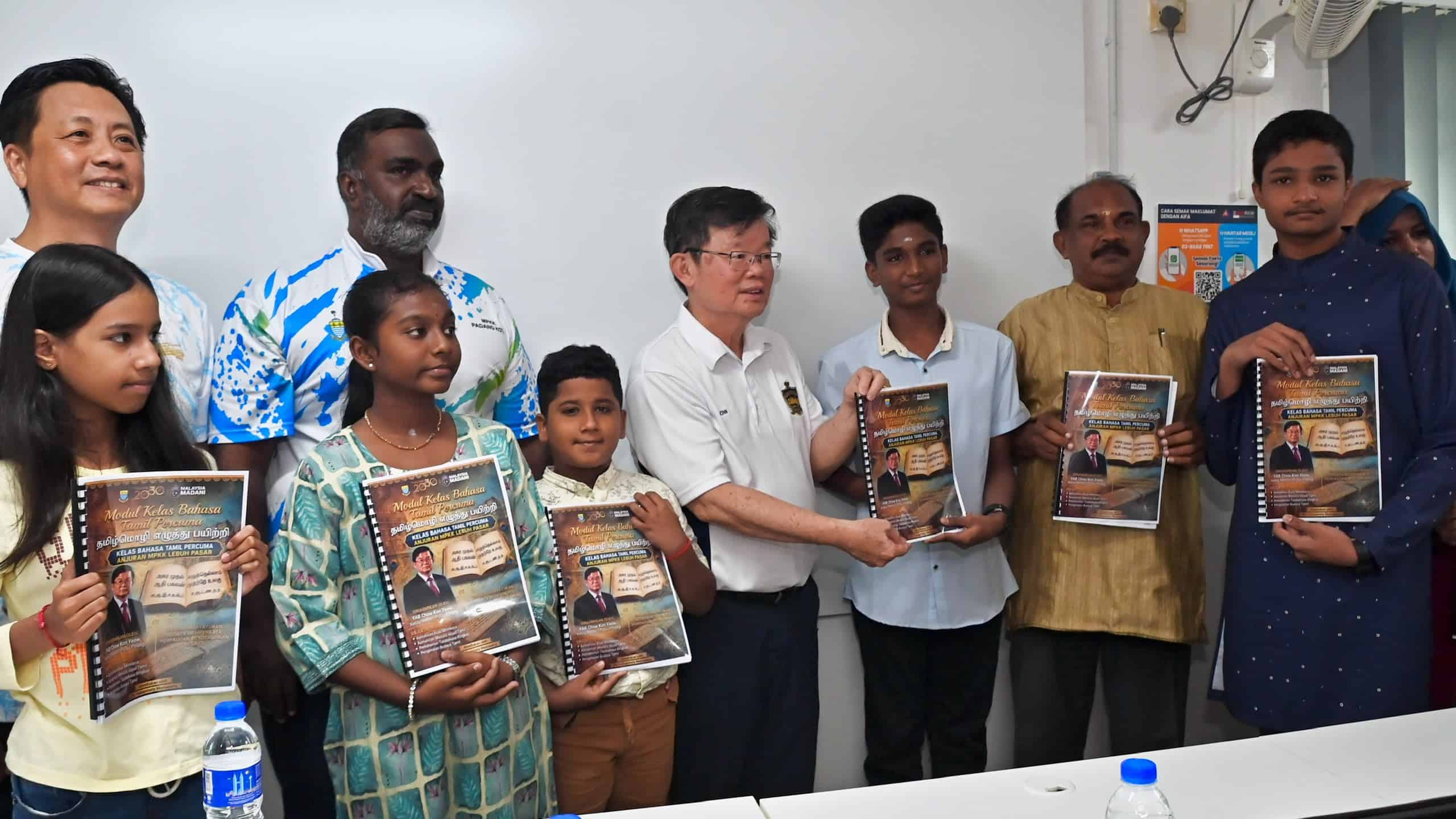

A SIMPLE community Tamil language class is opening more than just books, it is creating a bridge between generations, cultures and a heritage that stretches back more than 2,000 years.
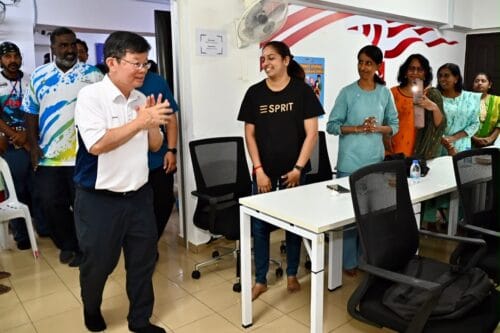
Chief Minister Chow Kon Yeow said the free Tamil language programme organised by the Lebuh Pasar Village Community Management Council (MPKK), which began today, is a meaningful grassroots effort to preserve language, culture and identity, while making learning accessible to people of all ages and backgrounds.
Chow said the initiative was particularly meaningful, as language was not merely a means of communication but also carried the history, values, thoughts, and identity of a community.
“We often assume that if you are an Indian, you would automatically know how to speak and write in Tamil. This can be a common misconception,” he said.
He said Tamil was one of the world’s oldest languages and stressed that preserving the language was a shared responsibility, particularly in a multicultural state such as Penang.
The programme offers 25 free places, with classes held four times a month, two hours per session, over 12 months. The syllabus covers basic Tamil reading and writing, as well as everyday conversation, and is open to participants ranging from seven-year-olds to senior citizens.
Interestingly, the initiative has also attracted participants from other communities, with two Malays and two Chinese among those registered so far, alongside participants from the Indian community.
Chow said such diversity demonstrated how language could become a platform for greater understanding and appreciation of different cultures.
He added that the state government remained committed to supporting Tamil education through the Special Committee on Tamil Schools, which allocates RM2.42 million annually to support 28 Tamil primary schools in Penang.
The assistance includes maintenance as well as information and communications technology facilities, including computer laboratories and learning facilities supporting Science, Technology, Engineering and Mathematics (STEM) education.
“Many applications in recent years have been based on STEM, Makers Lab and information technology. But initiatives such as this remind us that while we look towards the future, we must also preserve the languages and heritage that connect us to our roots,” Chow said.
He described the free Tamil classes as another example of how communities themselves could contribute to strengthening education at the grassroots level.
“Government can provide policies, allocations and facilities, but the real strength of a community lies in the willingness of its people to take the initiative and build their own community,” he said.
Chow also commended MPKK Lebuh Pasar for providing qualified teaching expertise and making use of the National Information Dissemination Centre (NADI) as a community learning space.
He hoped the programme would not remain a one-off initiative, but could be expanded if it receives a positive response, including accommodating more participants and introducing higher levels of learning.
MPKK Lebuh Pasar chairman Nafizah Syed Musthaffa said the programme was designed to make Tamil language and culture accessible to people beyond those seeking to learn it as their mother tongue.
She said the classes, which would run throughout the year, were open to young people and senior citizens from different backgrounds who wished to learn the language and understand Tamil culture.
“For the first time, MPKK Lebuh Pasar has opened this opportunity not only to students who want to deepen their knowledge of Tamil as their mother tongue, but also to young people and senior citizens from various backgrounds who are interested in learning the language and understanding Tamil culture,” she said.
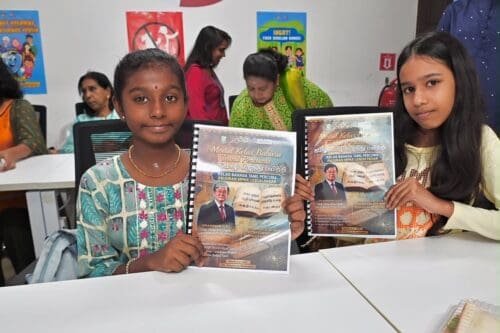
Nafizah said Tamil had a history spanning more than 2,000 years and was one of the oldest languages in the Dravidian language family.
She also highlighted the enduring legacy of Tamil literature, including ‘Thirukkural’ by Thiruvalluvar, which explores moral values, life and universal humanity.
“Through these classes, we can create an inclusive learning space while strengthening ties between communities through language and culture,” she said.
She expressed hope that the programme would serve as a small but meaningful step towards benefiting the wider community and fostering greater unity.
“Let us build a Malaysia of different colours but one soul, different cultures but one aspiration, a Malaysia that continues to flourish in unity and harmony,” she said.
For Tamil teacher M. Valaarmaty, 34, who has been teaching Tamil at SJKT Rajaji for the past 10 years, the programme represents an important opportunity to bring Tamil learning beyond the conventional classroom.
She said she was pleased to be involved in an initiative that encouraged people from different communities to learn Tamil, whether for reading and writing, speaking or everyday conversations.
“I think MPKK Lebuh Pasar has taken a very good initiative to teach the community Tamil, including Tamil speaking, writing and using the language in daily conversation,” she said.
Valaarmaty said learning another language could also open the door to understanding the culture and heritage of its people.
“As an Indian or as someone from any other race, learning another language is an intellectual experience. We become more knowledgeable, and when we learn Tamil, it can also make it easier for us to understand other people’s culture and heritage,” she said.
For her, the greatest value of the programme lies not simply in teaching participants how to read or write Tamil, but in ensuring the language continues to be spoken, understood and appreciated by future generations.
Chow said that from one modest classroom, the community could potentially nurture participants who would go on to discover Tamil literature, history and culture, turning a small educational initiative into a lasting investment in Penang’s multicultural heritage.
He urged participants to attend consistently, learn wholeheartedly and make full use of the opportunity.
“From a single class, we are not only producing participants who can read and write Tamil. We are also opening a space for a younger generation to discover the literature, history and culture that form part of the heritage of the Indian community,” he said.
Also present earlier was Penang PKR women’s chief K. Jayanthi.
Story by Kevin Vimal
Pix by Law Suun Ting
Video by Alissala Thian