

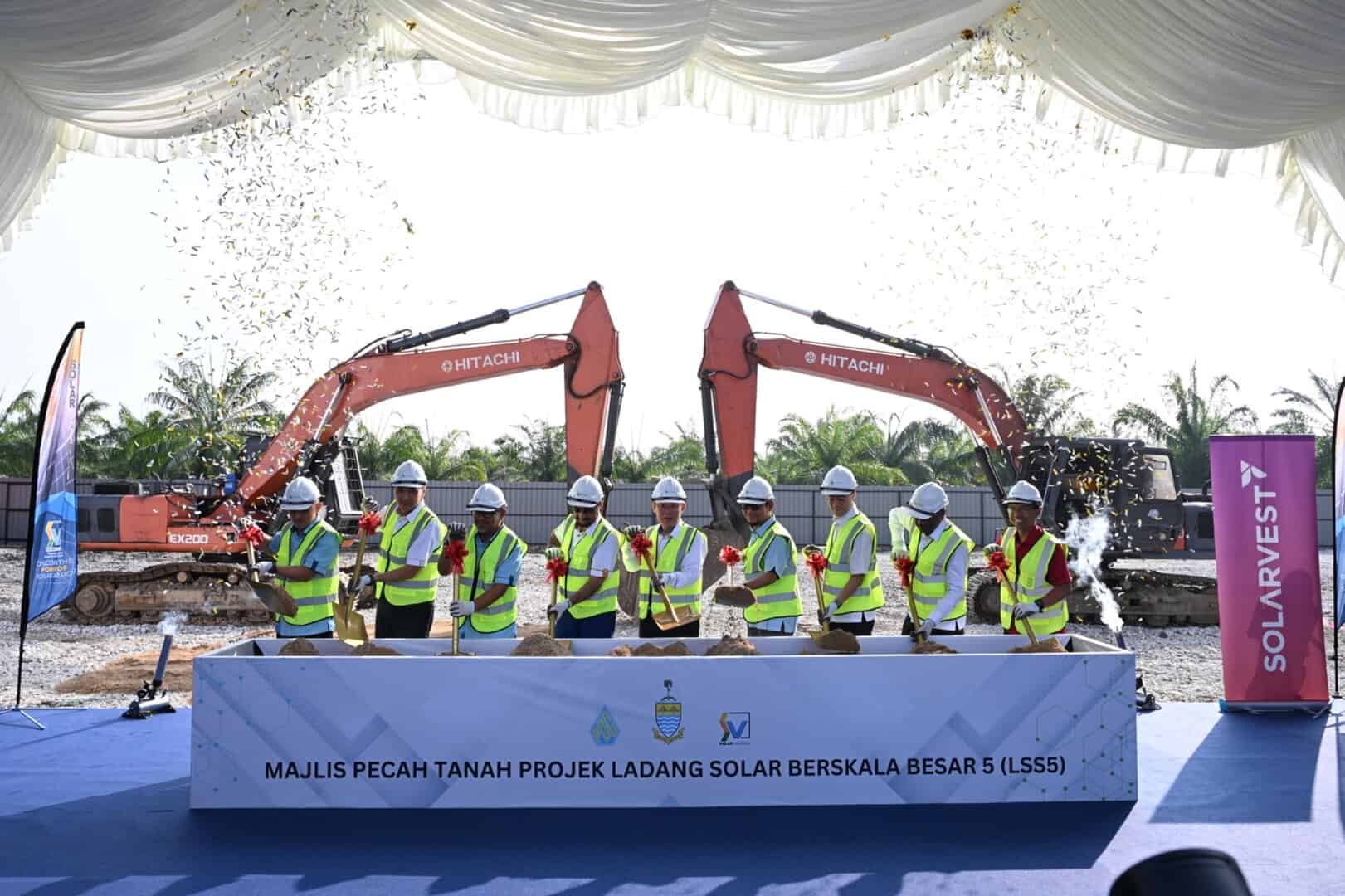

PENANG has taken another significant step towards a sustainable energy future with the groundbreaking of its fifth large-scale solar (LSS5) programme in Byram, Nibong Tebal today.
Spanning 82 acres, the LSS5 project is a strategic collaboration between Penang Development Corporation (PDC), via its subsidiary Solar Voltech Sdn Bhd, and Solarvest.
Chief Minister Chow Kon Yeow described the project as a major milestone in the state’s clean energy transition.
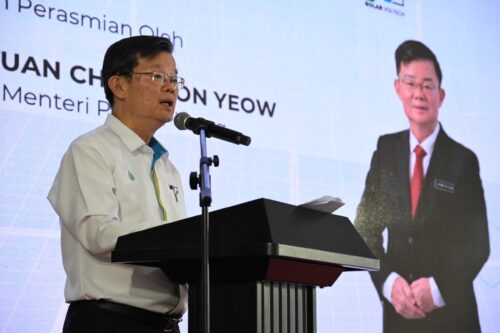
“With a capacity of 29.99 megawatt-peak (MWp) and an investment value of RM103 million, LSS5 is expected to deliver a substantial impact on Penang’s evolving energy landscape.
“The primary objective of this project is to accelerate the adoption of clean energy while strengthening the state’s energy security and sustainability,” he said during the ceremony.
He added that the availability of stable and green energy remains a key factor in reinforcing Penang’s position as a global hub for high-tech investments.
“The LSS5 development will further enhance the state’s growing renewable energy portfolio, complementing existing and planned initiatives such as LSS4 in Central Seberang Perai, solar installations at Penang Hill, as well as upcoming floating solar projects at Mengkuang Dam and Teluk Bahang Dam,” said Chow.
Also present at the event were Deputy Chief Minister II Jagdeep Singh Deo, Penang Local Government and Town & Country Planning Committee chairman Jason H’ng Mooi Lye, Penang Trade and National Unity Committee chairman Goh Choon Aik, Penang Infrastructure, Transport and Digital Committee chairman Zairil Khir Johari, Penang Housing and Environment Committee chairman Datuk Seri Sundarajoo Somu and Penang Rural, Agrotechnology & Food Security and Entrepreneurship Development Committee chairman Datuk Rashidi Zinol, PDC chief executive officer Datuk Aziz Bakar and Seberang Perai City Council (MBSP) mayor Datuk Baderul Amin Abdul Hamid.
Chow emphasised that the importance of such initiatives has grown following the enforcement of the Energy Efficiency and Conservation Act (EECA), which came into effect on Jan 1, 2025.
“The Act mandates large energy users in industrial and commercial sectors to adopt stricter energy-saving measures.
“LSS5 will serve as a key enabler in helping these sectors achieve Malaysia’s more ambitious national energy-saving target of up to 22% by 2040,” he said.
Amid rising climate challenges, Chow stressed that the transition to solar energy is crucial in reducing the state’s carbon intensity.
“Once operational by July 2027, the project is expected not only to supply clean energy but also to create skilled job opportunities and enhance grid stability in Nibong Tebal and its surrounding areas,” said Chow.
Meanwhile, during a press conference, Zairil provided updates on the proposed floating solar projects at Mengkuang Dam and Teluk Bahang Dam, which fall under the purview of Penang Water Supply Corporation (PBAPP).
He noted that progress has been slowed by the absence of federal guidelines, particularly due to the sensitive nature of installing solar panels on potable water dams.
“Approvals are required from multiple agencies, including the Department of Environment, and the lack of specific guidelines has been a bottleneck. As these dams supply drinking water, there are understandably higher levels of scrutiny,” he explained.
However, Zairil shared that the National Water Research Institute of Malaysia (Nahrim) has been appointed to develop the necessary guidelines for floating solar installations on potable water sources.
“We understand that the process is ongoing, and once the guidelines are approved, PBAPP is expected to be among the first to submit an application,” he added.
Story by Riadz Akmal
Pix by Noor Siti Nabilah Noorazis
Video by Muhammad Iqbal Hamdan