

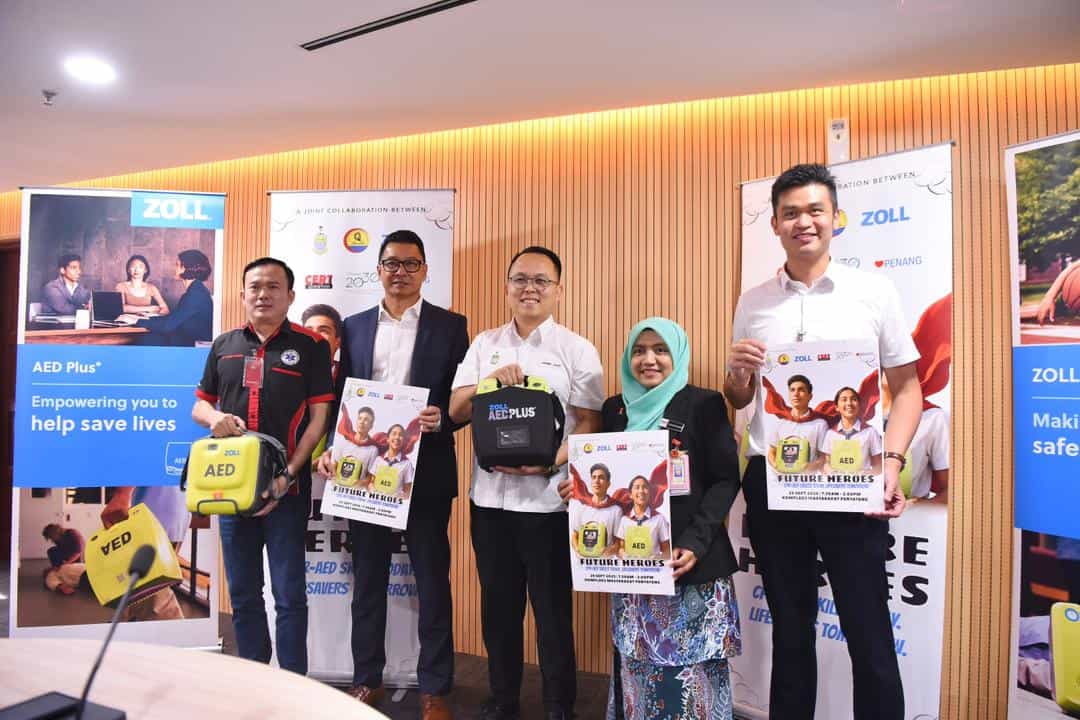

THE state government continues to advance its efforts to build a generation in Penang equipped to respond during emergencies through an upcoming training programme on cardiopulmonary resuscitation (CPR) and the use of automated external defibrillators (AEDs).
Led by the Penang State Health Department (JKNPP), the ‘Future Heroes’ CPR-AED Training Programme is scheduled to take place at Kompleks Masyarakat Penyayang on Sept 29, in conjunction with the World Heart Day.
The programme will train 2,800 students from a total of 37 secondary schools in the Northeast District.
State Youth, Sports and Health Committee chairman Daniel Gooi shared that the programme is more than just an event. It serves as a rallying point for the government, educators, NGOs and the public to unite under one mission to create a generation of future heroes.
“This is the first programme of its scale in Malaysia, bringing together the expertise of JKNPP, non-governmental organisations (NGOs) such as St. John, Red Crescent, Penang CPR Society, Penang First Responder, Community First Responders, and academic institutions.
“It also involves partnerships with industry players such as ZOLL Medical Malaysia, H2H Medicare Group, and others.
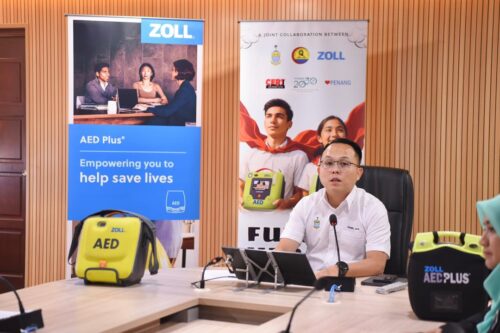
“What makes this programme truly unique is that it aims to become a sustainable, long-term effort, reaching all secondary schools in Penang within the next three years.
“This is not just a one-off event, but an ongoing commitment to build a generation ready to respond in emergencies,” Gooi said during a press conference at Komtar today.
Gooi also added that Penang’s efforts to promote CPR-AED awareness are not new. Launched in 2015, the Penang Safe Heart Programme laid the foundation for a growing movement that continues to spread life-saving knowledge, training, and equipment throughout the state.
“Since then, Penang has installed a total of 1,000 AEDs at 600 public locations. We will continue to innovate, collaborate and inspire,” he said.
Apart from that, Gooi said the programme will attempt to set a Malaysian Book of Records achievement for the largest number of students trained in CPR and AED in a single session, putting Penang on the national map as a leader in community lifesaving readiness.
“To ensure the success and sustainability of this programme, we are calling on sponsors and partners from the corporate sector, NGOs, and philanthropic organisations.
“Your support will help us expand training capacity, equip more schools with AEDs, and empower every Penang youth with the skills to save lives,” he added.
Gooi also noted that while CPR is currently included in the Form 4 curriculum, there is still a need for students to gain a deeper understanding of first aid.
Meanwhile, Datuk Christopher Barnabas, vice president of ZOLL Medical Corporation Japan and Asia-Pacific, said that with the installation of AEDs in public places in Penang since 2015, the survival rate of cardiac arrest has increased from 1% to 5 to 6%.
However, he noted that a gap still exists compared to the cardiac arrest survival rates of around 20% to 41% in countries such as Finland, Denmark, Sweden, Australia, France, Germany, Italy, Spain, the United Kingdom, Japan, and Singapore.
Christopher expressed hope that the ‘Future Heroes’ initiative will not only equip participants with first aid skills, but also boost people’s willingness and confidence to assist during emergencies.
“What these countries have in common is that they have mandated CPR-AED training at the school level.
“Why do we target secondary school students? First, to boost the bystander intervention rate during emergencies. Second, to enhance their confidence and sense of responsibility in taking action to save lives.
“Third, they are likely to share this knowledge with their parents at home, helping to raise awareness within families.
“And finally, this effort aims to create a generational shift. By conducting this training over the next 5 to 10 years, we will equip thousands of youths in our community with essential life-saving skills and empower them to become emergency responders as well train others,” he added.
Story by Tanushalini Moroter
Pix by Adleena Rahayu Ahmad Radzi