

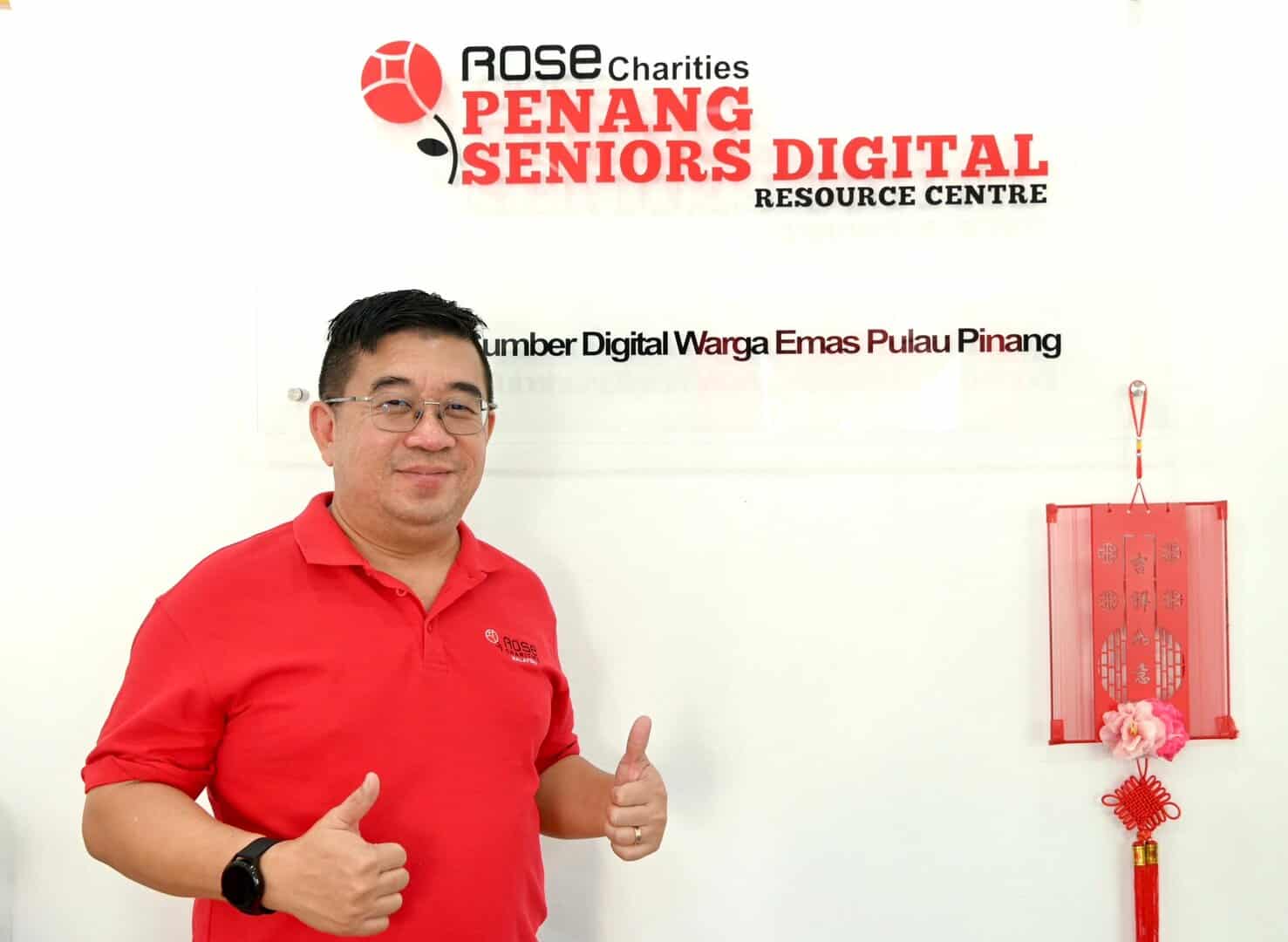

ROSE Charities Malaysia will enter a new phase of operations from 2026, with an expanded focus on children’s welfare and education while continuing its long-established programmes for senior citizens and community support, says its acting president Vince Yeoh.
Yeoh said that although he is currently serving in an acting capacity, his involvement with the organisation dates back 17 years, having founded the Malaysia chapter.
“At the moment, I am the acting president, but I have already been with this NGO for the last 17 years. I am the founder and the one who introduced Rose Charities to Malaysia, which is why my registration number is 001,” he said.
Rose Charities is an international non-governmental organisation headquartered in Canada, with a history of more than 30 years and chapters in 34 countries worldwide.
“The headquarters is based in Canada, and globally we have been operating for more than 30 years. The Malaysia chapter was set up 17 years ago and remains the only official chapter here,” Yeoh said.
He added that following the establishment of the Malaysia chapter, Rose Charities also assisted in setting up the Singapore chapter.
“In Southeast Asia and the region, we now have chapters in Cambodia, Vietnam, Malaysia, Singapore, Australia and New Zealand,” he said.
Yeoh explained that Rose Charities was originally formed as a support organisation for medical emergencies and disasters, providing humanitarian aid and counselling services.
“Our original function was to support medical emergencies and disasters. When disasters strike, we step in to provide support, including counselling and humanitarian assistance, similar to organisations like Tzu Chi,” he said.
However, he said Malaysia’s relatively low exposure to major disasters led the organisation to adapt its approach.
“When we came back to Malaysia, especially Penang, we realised there were not many disasters. So, we decided to do more groundwork involving seniors, children and health-related programmes,” he said.
Among its long-running initiatives is annual outreach to Orang Asli communities, which has been carried out consistently for the past 17 years.
“We visit Orang Asli communities at least once a year, and we also raise funds to provide solar panel systems in remote areas,” Yeoh said.
He said these efforts have been implemented in locations such as Parit, Tapah and several other areas, both within and outside Penang.
In Penang, Rose Charities placed a strong emphasis on senior citizens early on after identifying gaps in existing services.
“At that time, there were senior associations, but most were membership-based and did not have many activities. We decided to focus on creating activities and connecting different nursing homes and senior centres,” he said.
Yeoh said Rose Charities positioned itself as a neutral platform to facilitate collaboration, noting that Rose Charities has been able to work closely with Lions Clubs, JCI and various NGOs across Penang.
Prior to the COVID-19 pandemic, the organisation rented a centre to establish the Penang Senior Digital Resource Centre.
“The idea was that young people have places like the Penang Digital Library, but seniors have very limited space. So, we wanted to create a centre for them,” Yeoh said.
He said the centre functioned as a community hub where seniors could read newspapers, access free Wi-Fi and learn digital skills.
“The Penang Digital initiative was launched at our centre, and the Chief Minister Chow Kon Yeow came to officiate the launch before Penang Digital moved to Penang Institute,” he said.
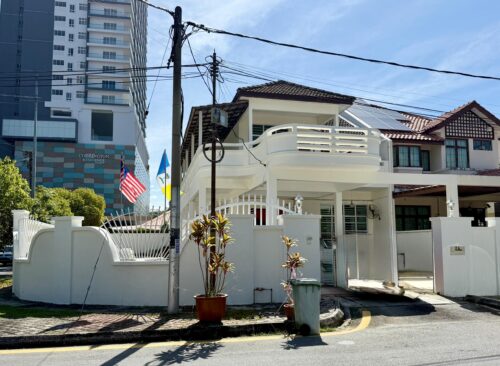
Rose Charities has since relocated to a new centre within the same neighbourhood at Jalan Persiaran Cantonment and will officially move in on Jan 1.
“We secured the premises last month, and the centre will officially be occupied on January 1. It will serve as an activity and gathering hub for seniors,” Yeoh said.
The organisation currently has about 800 members, with approximately 85% aged 60 and above.
“Senior means 60 and above. Most of our members fall into this category,” he said.
Activities at the centre include chess, qigong, dance, vocal training, music, Latin dance, memory enhancement, photography and digital literacy programmes.
“Some programmes are for members only due to limitations, while others are open to the public,” he said.
Yeoh said Rose Charities began teaching seniors basic digital skills even before the Covid-19 pandemic.
“We taught them how to use WhatsApp, make video calls, use e-wallets, load money, order food and attend Zoom meetings,” he said.
He said these efforts proved crucial during the pandemic.
“At least they were not so lonely during MCO. Different phones and systems made it challenging, but we guided them step by step,” he said.
Yeoh also highlighted social isolation among seniors as a serious issue, noting several cases of elderly individuals passing away alone.
“This year alone, we recorded nine cases of seniors passing away at home without anyone around,” he said.
“Our intention is to bring them out, let them talk to their peers and stay socially connected,” he added.
While senior programmes will continue, Yeoh said Rose Charities will place greater emphasis on children’s programmes from 2026 onwards.
“This is what we call a new era. Seniors will remain part of our focus, but we want to return to our original intention and concentrate more on children,” he said.
The first new initiative involves providing school uniforms to children from B40 and divorced families.
“Uniforms are basic needs, but many families struggle with this,” he said.
Another key programme involves supporting children who wish to pursue higher education despite financial hardship.
“There are children who want to study, but if they go to university, there is no income for the family. So, we support work-and-study arrangements,” Yeoh said.
Rose Charities assists with university enrolment fees, which can cost about RM2,500.
“Depending on the situation, we may pay half or even the full amount in hardcore cases,” he said.
Subsequent education costs are covered through partnerships with sponsors and education providers.
“We work with institutions such as INTI, Open University, Wawasan Open University and SIM Education Group,” he said, adding that high-performing students may qualify for full scholarships.
For vulnerable children, Rose Charities has adopted a structured financial adoption model.
“Instead of giving lump sums, we coordinate monthly contributions. For example, six donors contributing RM50 each to support one child,” he said.
He said the organisation works closely with government agencies to ensure proper mechanisms and compliance.
“We do not want to bypass the authorities. We work with the government and relevant departments to make sure everything is done properly,” he said.
Yeoh stressed that Rose Charities operates entirely on a volunteer basis.
“We do not have any paid staff. Everyone here is a volunteer. We all have our own jobs,” he said.
He added that the organisation maintains strict financial discipline.
“Whatever donations we receive, 90% goes back to society. Only 10% is retained for administrative costs,” he said.
Looking ahead, Yeoh said Rose Charities plans to gradually expand its programmes to Seberang Perai.
“We cannot expect seniors to travel far, so we will work with local leaders on the mainland to ensure sustainability,” he said.
He also emphasised the importance of leadership renewal in NGOs.
“I believe in term limits and succession planning. If leaders stay too long, there will be abuse and stagnation,” he said.
Yeoh said his long-term vision is for younger generations to eventually take over the organisation.
Story by Edmund Lee
Pix by Alissala Thian