

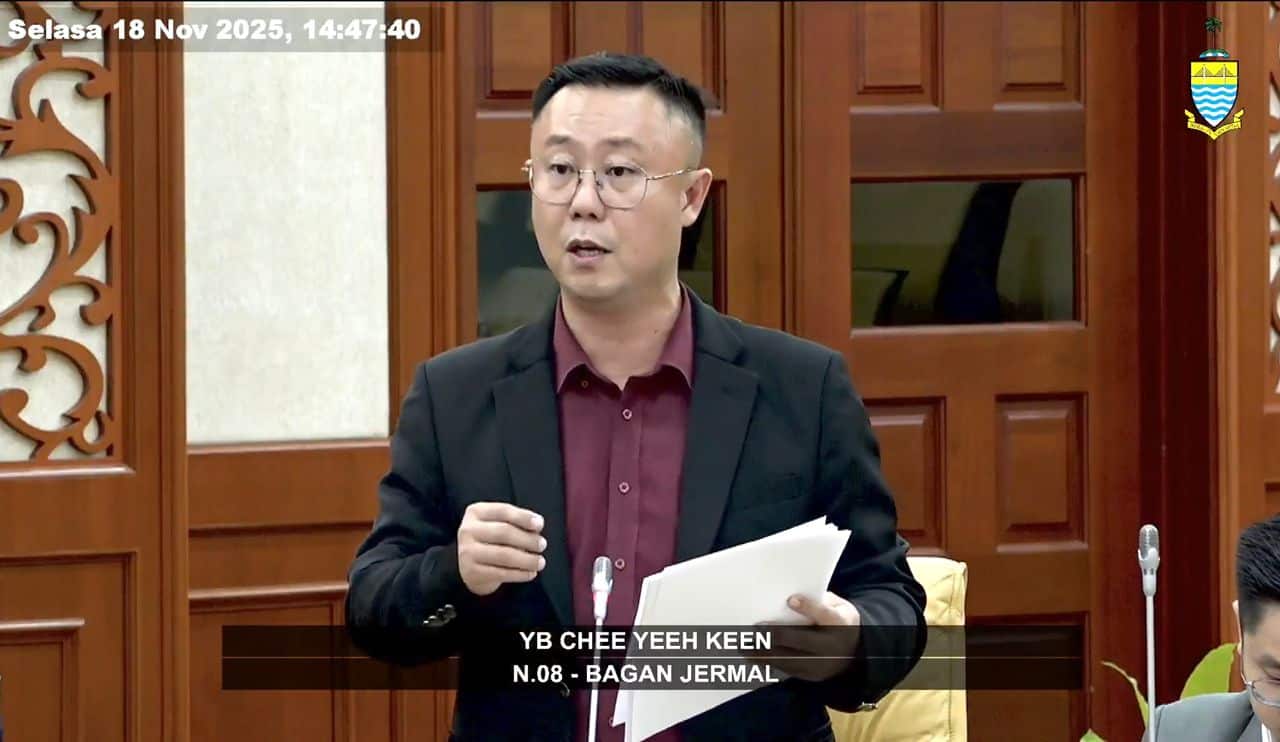

THE state government has been urged to seek clarification regarding the significant reduction in Penang’s Marris (Malaysian Road Records Information System) allocation for 2025 compared to 2024.
Chee Yeeh Keen (PH-Bagan Jermal) also called on the state government to engage with the Federal Government to review the current methodology used to determine maintenance responsibilities, specifically to assess whether these responsibilities should fall under the Marris allocation.
Chee emphasised that such a review is necessary to ensure road safety, environmental cleanliness, and the continued maintenance of public infrastructure.
“Marris is a special allocation from the Federal Government, channelled through the Ministry of Finance to the state government, which is then distributed to local authorities,” he said.
“For instance, the Seberang Perai City Council (MBSP) and Penang Island City Council (MBPP) receive the funds for the purpose of maintaining roads and public facilities.
“This allocation is used for the maintenance and improvement of public infrastructure, including road repairs, trench and drainage restoration, street and signal light upkeep, flood control facilities, and other essential community services,” he added during the State Legislative Assembly sitting at Light Street today.
Chee highlighted the reduction in the Marris allocation and its potential impact on public safety and the maintenance of state infrastructure, particularly within the administrative areas of MBSP.
According to Chee, the allocation data shows that while the state’s total Marris funding decreased by RM34.4 million (15.5%) from 2024 to 2025, MBPP’s allocation increased by 6.4%. In contrast, MBSP experienced a substantial reduction of 34.77%, equating to a RM47.5 million decline.
“This indicates that MBSP has faced a much larger reduction, significantly affecting infrastructure implementation across North, Central, and South Seberang Perai.
“Considering that Seberang Perai is the largest administrative area in Penang, with a population exceeding one million and serving as the state’s industrial, logistics, and primary residential area, the reduction in allocation poses significant risks to the implementation and maintenance of essential infrastructure,” he added.
Story by Tanushalini Moroter
Pix by Siew Chia En