

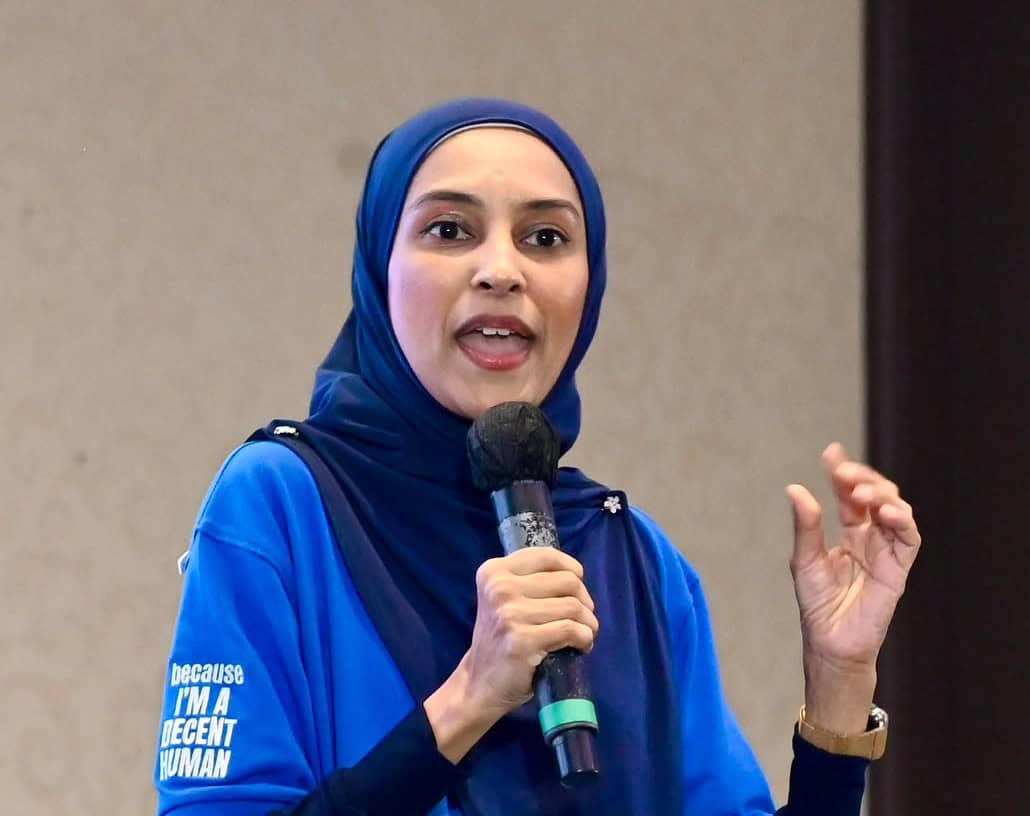

AN impassioned plea to overhaul Malaysia’s stray animal management system was made at the 15th Anniversary Dinner of Penang Animal Welfare (4PAWS), where Execute AWA committee member Zeheera Ali called for urgent reforms and stronger accountability in animal welfare enforcement.
Zeheera, representing Execute AWA founder Sue Ann Kong, told a packed ballroom at Berjaya Hotel that the country must move towards a more humane and systematic approach in managing stray populations, citing a sharp rise in reported animal cruelty cases.
She revealed that between 2016 and 2025, reported cases surged by 2,035 per cent, despite the enforcement of the Animal Cruelty Act 2015. However, she said the prosecution rate stood at only 0.22 per cent, which she described as deeply concerning.

“What about the cases that were never reported? Out of a 2,035 per cent spike in reported cases, less than 1 per cent lead to prosecution. What a disparity!” she said.
“To add salt to the injury, many states in Malaysia are adopting the ‘catch and kill’ method, the TRRD,” said Zeheera, whose husband Dr Firzan Aziz, also attended the dinner and is a member of Execute AWA.
Formally known as Trap-Reclaim-Rehome-Dispose (TRRD), the method has been widely criticised by animal welfare groups for involving the culling of stray dogs.
“What are we actually telling the public? What are we teaching our children, the next generation?” she asked, adding that there has been no publicly available data to demonstrate the effectiveness of TRRD.
“The Malaysia Welfare Animal Department has yet to release any statistics. None have been provided so far, and we’re still waiting,” she said.
Instead, she urged authorities to adopt Trap-Neuter-Vaccinate-Return-Manage (TNVRM), describing it as a more humane and sustainable alternative for controlling stray populations.
Citing international examples, she said the Netherlands had successfully managed to eliminate stray populations using similar approaches, and expressed confidence that Malaysia could move in the same direction with the cooperation of local authorities and stakeholders.
She also commended Negeri Sembilan for implementing TNVRM, and encouraged other states to follow suit.
Her closing remarks, delivered as a firm call for reform, drew loud applause from the audience, many of whom are animal lovers.
Story by K.H. Ong
Pix by Alissala Thian