


DIGITAL Penang and HR2eazy are joining forces to accelerate digital adoption among businesses in the state through an upcoming seminar aimed at introducing practical, AI-powered solutions for organisations of all sizes.
HR2eazy managing director Ratnaganesh J Rasamy said the seminar would target two key groups — micro and small businesses, as well as medium and large enterprises with each facing different challenges in their digitalisation journey.
“For startups and small businesses, many are still running their operations manually. Yet, from the moment they hire their first employee, they are already required to comply with regulations such as EPF registration within seven days.
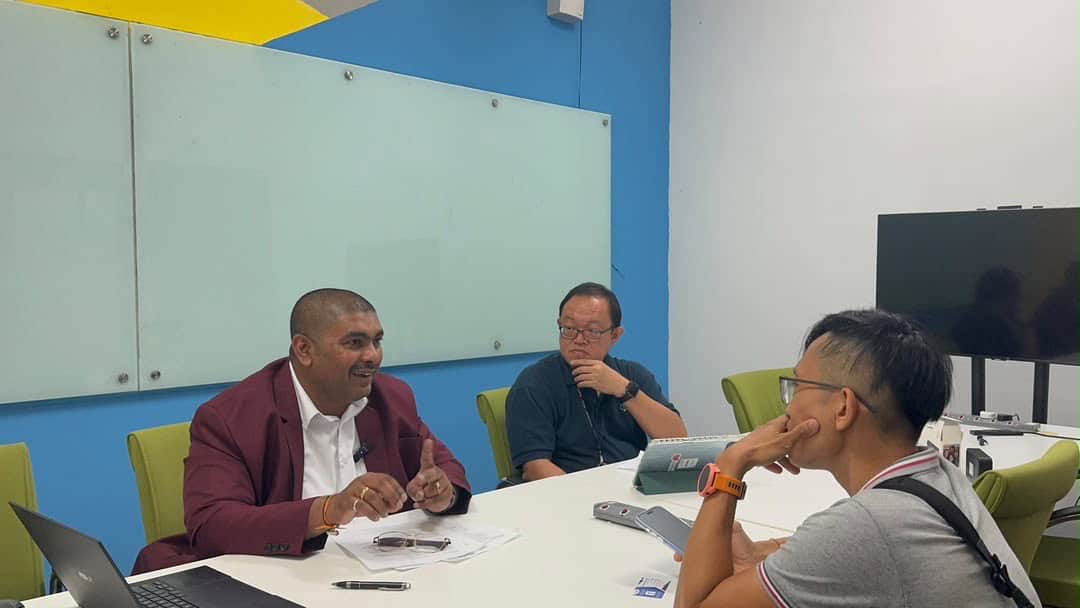
“We want to help them understand how digital tools can simplify these processes and what services are available to support them,” he told Buletin Mutiara during recent interview session.
Ratnaganesh noted that manpower and cost remain among the biggest barriers preventing smaller businesses from adopting digital solutions.
He explained that many small medium enterprises (SMEs) cannot afford dedicated Human Resources (HR) or payroll personnel, making compliance and administrative tasks burdensome.
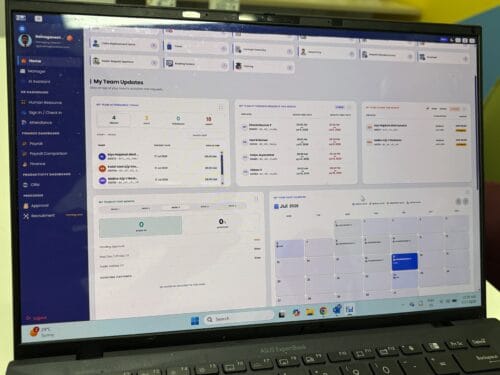
To address this, HR2eazy has developed an AI-enabled HR and payroll platform that allows business owners to manage attendance, leave applications, overtime claims and payroll processing through a single system.
“Business owners can monitor their workforce, approve applications and generate payroll through one platform. AI helps automate repetitive tasks, but we still maintain human oversight because payroll and compliance involve responsibilities that cannot be left entirely to AI,” he said.
The company is also planning to soft-launch its latest AI-enabled desktop solution on Aug 11.
According to Ratnaganesh, the system is designed to simplify onboarding processes by allowing employees to submit and update their own information digitally, reducing the administrative workload for employers.
“For small businesses, the challenge is not just buying a system. They also need people to operate it. What we are trying to do is reduce that burden by making the system easier to use and allowing AI to handle much of the routine work,” he added.
For larger organisations, however, the focus is not on payroll systems but on automating complex business processes.
Ratnaganesh said many medium and large enterprises already have established HR and payroll systems, but continue to rely on manual processes for operational functions.
He cited examples including hotel groups that manually calculate service charges based on employee seniority and contractual arrangements, logistics firms that manage trip-based driver payments, and healthcare providers that track doctors’ attendance and remuneration.
“These processes can involve several staff members spending days on calculations every month. By automating them and integrating them with payroll systems, companies can significantly improve efficiency and reduce errors,” he said.
Ratnaganesh stressed that AI should be viewed as a tool to support workers rather than replace them.
“AI is not here to take over people’s jobs. It is here to remove repetitive and time-consuming tasks so that employees can focus on improving operations and growing the business,” he said.
Meanwhile, Digital Penang SME and Community Development director Khooi Chu Boon said the collaboration supports the agency’s broader mission of building an inclusive and people-centric digital economy.
“What we are trying to achieve is to bridge the digital divide and ensure that everyone, including small business owners and communities that may not be digitally inclined, can participate in the digital economy,” he said.
Khooi noted that Penang is home to about 82,000 micro-enterprises, around 6,000 SMEs and approximately 350 multinational corporations.
While many larger companies have embraced digitalisation, he believes a significant proportion of smaller businesses continue to rely on basic tools and manual processes.
“From our engagements with businesses, we estimate that about 40 per cent have yet to adopt meaningful digital solutions. Some may consider spreadsheets as digitalisation, but when businesses want to scale and remain competitive, they need more robust systems,” he said.
He added that digital adoption is becoming increasingly important as younger generations enter the workforce.
“Gen Z and Gen Alpha are not just looking for jobs. They are also looking at whether a company is modern, technology-driven and capable of supporting their growth.
“If businesses fail to modernise, they may find it harder to attract and retain talent,” he said.
Khooi said SMEs should not feel pressured to digitalise every aspect of their operations at once.
Instead, he encouraged businesses to start with areas that offer immediate benefits, such as HR, payroll, accounting and operational management.
“To make the transition easier, we want to connect businesses with practical and affordable solutions. The objective is to lower the cost of adoption through training, advisory services and workshops while helping them understand how technology can improve their operations,” he said.
Looking ahead, Ratnaganesh said HR2eazy aims to further expand its AI capabilities by 2030, including the development of a smart HR assistant capable of processing complex commands and generating advanced workforce analytics.
“Our goal is to help businesses make better decisions using data. AI can assist managers by providing insights, comparisons and recommendations, but ultimately the final decisions will still be made by people,” he said.
Story by Edmund Lee