

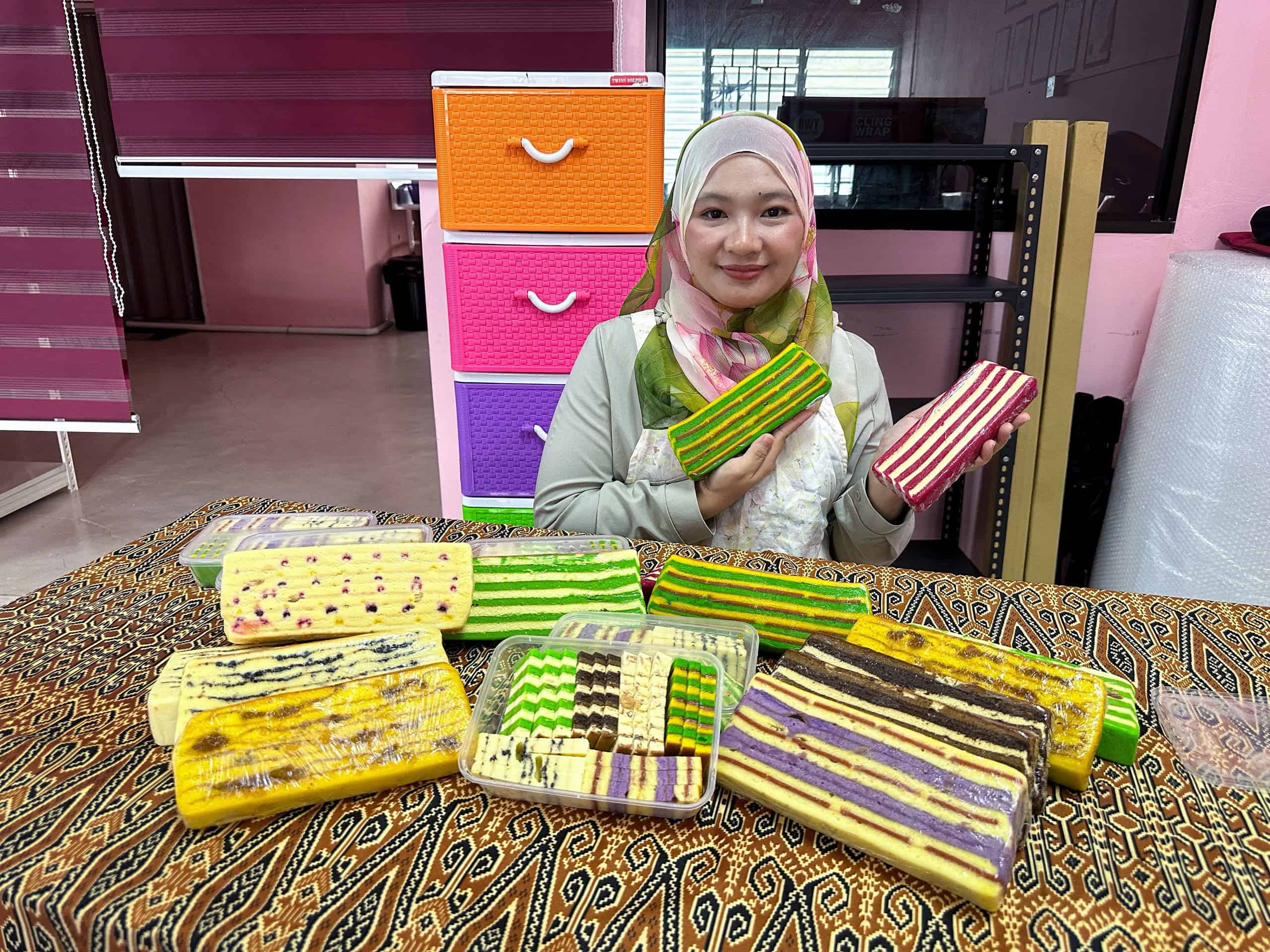

WHAT started as a small home-based business with an initial capital of RM250 has grown into a venture offering 40 flavours of Sarawak layered cake, with a shop, 20 agents and a growing customer base.
Nur Kartinie Zaidil, who runs Teh Lapis Kalisya, began selling the traditional Sarawak delicacy in 2017 after moving to Penang with her husband.
The Sarawak-born entrepreneur said she initially took orders from home while looking after her child, hoping to help supplement the family’s income.
“I started with just RM250, which I used to buy a small 18-litre oven and a hand mixer. The rest went towards ingredients.
“At first, I only took orders from home. My husband also helped by bringing the cakes to his workplace, where his colleagues would place orders,” she said during an interview with Buletin Mutiara at her shop in Kampung Melayu recently.
Encouraged by the response, Nur Kartinie and her husband began selling the cakes at night markets, starting at Sungai Ara and Perda, using just a table and a light.
She said the business was initially a hobby, with no fixed production schedule, before the Covid-19 pandemic and the birth of her second child interrupted her operations.
She resumed selling at night markets after the pandemic and gradually expanded her business through festive orders, events and a network of agents.
Nur Kartinie said she became more serious about the business in 2023 and 2024 before opening her shop under the Majlis Amanah Rakyat (MARA) programme about a year ago.
She now has 20 agents, including housewives, students and other small traders, who help sell her products.
“Some of my agents are housewives who take orders and sell the cakes to earn extra income. I also work with Sarawak students at Universiti Sains Malaysia (USM), who sell the products during their events.
“I believe the business should not only help me grow, but also create opportunities for others to earn an income,” she said.
She added that one of her agents in Muar, Johor, who had been working with her since 2019, could sell up to 200 pieces during the festive season.
Nur Kartinie said she had also received support from several agencies, including a RM15,000 grant through SME Corp Malaysia, as well as equipment and other assistance through government programmes.
From an initial selection of five to six flavours, her product range has expanded to 40, with recipes developed through her own research and development.
She said she wanted to introduce the traditional cake to younger customers by creating flavours that matched changing tastes, including matcha, Oreo, cheese and tiramisu.
She also experiments with less common combinations, such as pineapple tart-inspired layered cake, while retaining traditional favourites.
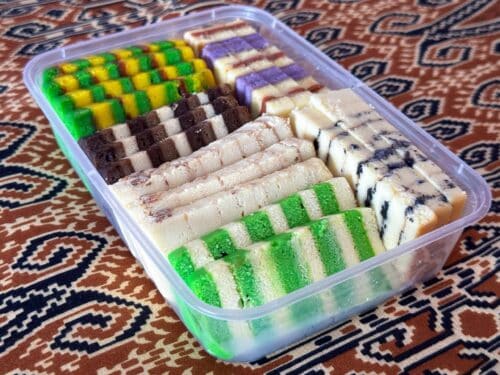
“Masam manis remains one of my signature flavours, while gula apong is another speciality that I brought from Sarawak.
“I want younger people to enjoy Sarawak layered cake too, so I keep developing new flavours based on what they like and what is trending,” she said.
Her cakes are priced between RM15 and RM45, depending on the flavour, while an eight-inch tray can cost up to RM200.
Besides individual orders, the business also caters for functions and events, offering assorted cake sets and individually packed goodies for occasions such as weddings and corporate gatherings.
Nur Kartinie said she now focused on operating from her shop and participating in events, having stopped selling at night markets to concentrate on production and fulfilling orders.
Most of her promotions are done through WhatsApp, while deliveries within Penang are arranged through Lalamove.
She said demand was particularly strong during the Hari Raya festive season, when agents placed larger orders, while sales during other months depended more on events and catering orders.
Opening a shop, however, has brought new challenges, particularly in managing rental payments, staff salaries and other operating costs.
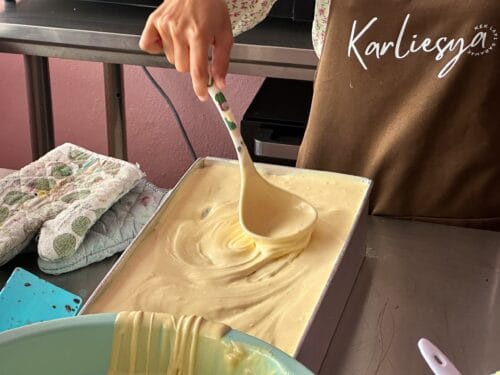
“When I was baking at home, I did not feel the same pressure because there were fewer commitments.
“Now that I have a shop and staff to pay, I have to keep pushing sales to make sure I can cover the expenses,” she said.
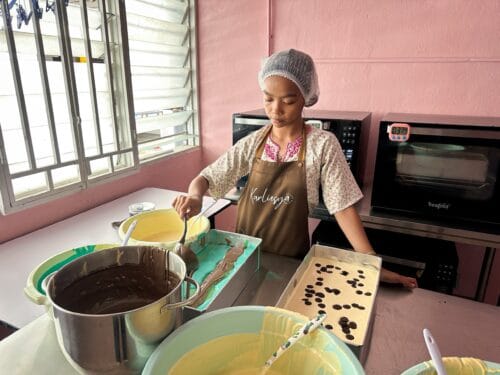
She currently has one permanent employee and several part-time workers, with the number of part-timers varying according to demand.
Nur Kartinie said she was also working towards obtaining halal certification, which she hoped would allow her to expand into supermarkets and reach a wider market.
She said the process was challenging because the business used more than 50 ingredients, and some suppliers did not have halal certification even when the ingredients appeared suitable.
“Having halal certification would make it easier for me to supply supermarkets and reach more customers. It is important if I want to take the business further,” she said.
Story by Edmund Lee
Pix Noor Siti Nabilah Noorazis