

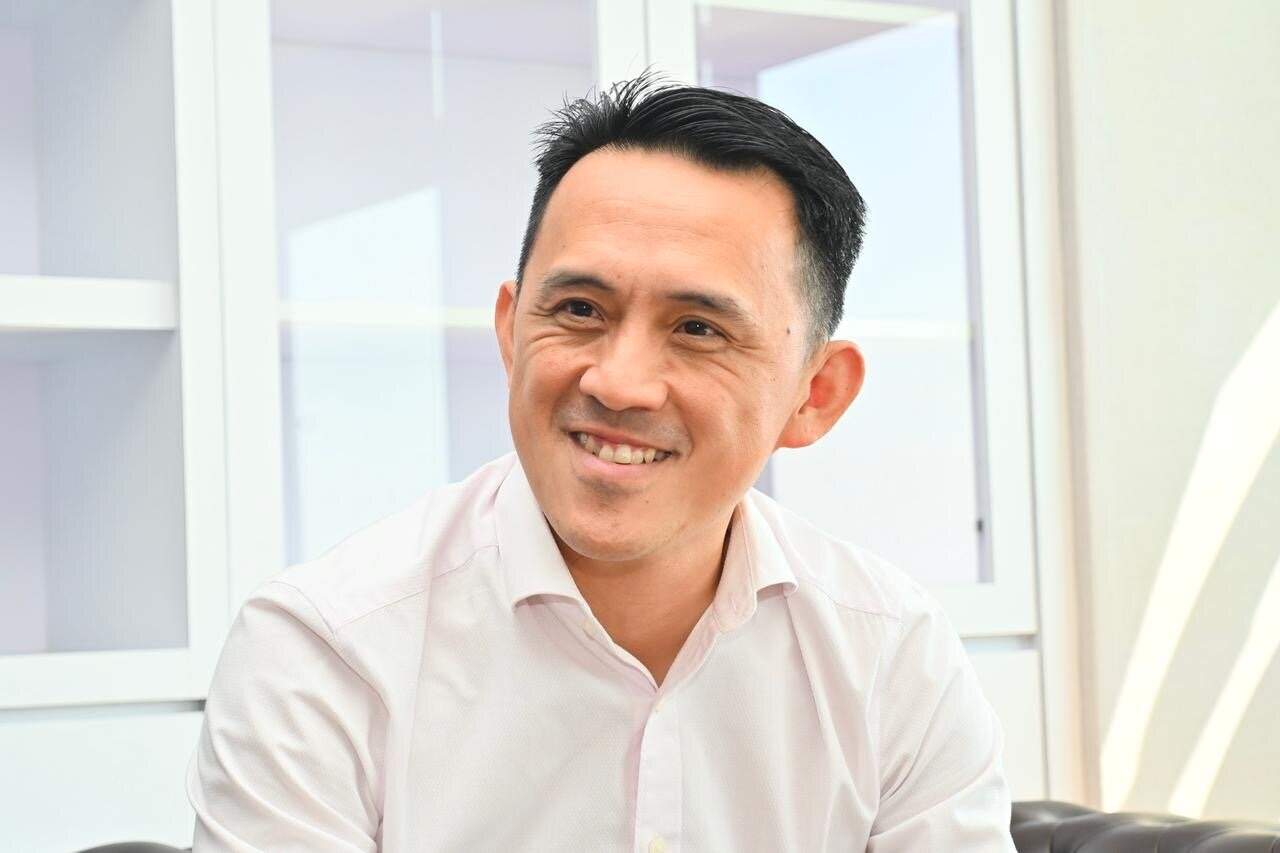

NEWLY-MINTED Penang Trade and National Unity Committee chairman Goh Choon Aik says he is all pumped up and determined to deliver results quickly after being brought into the state administration.
The two-term Bukit Tambun assemblyman said his long political journey, which began in 1995, had prepared him for the responsibility.
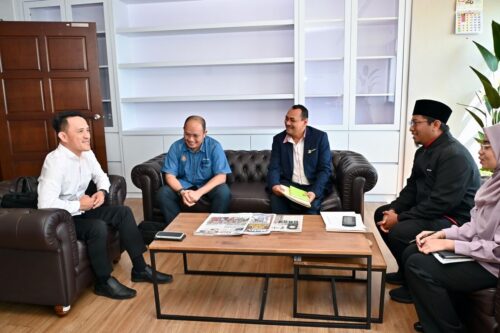
“I joined politics in 1995. I went through the whole process, from being a supporter, then a volunteer worker and helper for the party,” he told Buletin Mutiara exclusively after clocking in at his office in Komtar today.
The new exco member has vowed to make an immediate impact and is fully geared to get things going with the new portfolio, aspiring to be a ‘super-sub’ despite the short remaining term.
He also shared with Buletin Mutiara that he began working at the grassroots level through the Village Community Management Council (MPKK) and other community platforms before eventually contesting in the state election in 2018.
“After many years of working on the ground, I was given the opportunity to represent my party as the candidate for Bukit Tambun. This is now my second term as an assemblyman,” he explained.
Besides serving as an assemblyman, Goh said he also holds several positions within the party and was recently elected to the party’s central committee.
“After 26 years in the party, this was my first time contesting at the national level, and I was elected among the top seven out of 88 candidates,” he said.
He has also been appointed as deputy state chairman and state election director in preparation for the next general election.
Goh described his transition to the state executive council as swift, but said he had long prepared himself for greater responsibilities through active involvement in various state committees.
“I have attended many state executive council meetings covering flood mitigation, transport, trade, unity, and agriculture.
“I almost covered all committees as a member, and that helped me understand the daily work and discussions involved,” he said with a chuckle.
Like many politicians, he said his ambition has always been to contribute more to government administration.
“I think every politician, when given the chance to contest as an assemblyman, will have the ambition to hold administrative power.
“First, when we are in the opposition, we want to become the government. Then, as an assemblyman, everyone has the mission to become an exco member,” he said.
Goh emphasised the importance of empowering communities and grassroots leaders in policymaking.
“We want to empower the community and the grassroots. If not, the MPKK will only act like a postman receiving complaints and passing them on to the local council, assemblymen or exco. We want them involved in listening to the people and identifying ground-level problems,” he said.
Policies, he said, should reflect real challenges faced by the public.
“If we only sit in the office, we will not know the problems people face daily. Through community empowerment, we can address issues through policy changes, guidelines, or local government decisions,” he said.
Goh mentioned that some setbacks in his political journey had helped him grow as a leader.
“A series of incidents trained me to explain decisions made by party leaders and also taught me to be patient and accept decisions,” he said, referring to ups and downs that he faced in his political career.
On his own efforts, Goh said he had also pushed for several infrastructure and environmental initiatives, including advocating for the elevated highway from Juru to Sungai Dua and raising concerns over the biogas project in Kampung Valdor.
“I have been fighting the biogas issue since 2016, even before becoming an assemblyman,” he said.
Goh said the biogas project, which involves waste treatment from pig farms, had taken nearly a decade to materialise due to regulatory processes and technical issues.
“The project required approvals, including zoning, development orders, and environmental impact assessments. These processes took years, especially when there were changes in government,” he said.
He added that the African swine fever outbreak had also affected pig farm production levels.
“The system only began operating after several months of testing in 2025,” he said.
Goh said he has extensive experience in development and agriculture-related sectors, adding that it was his core sector.
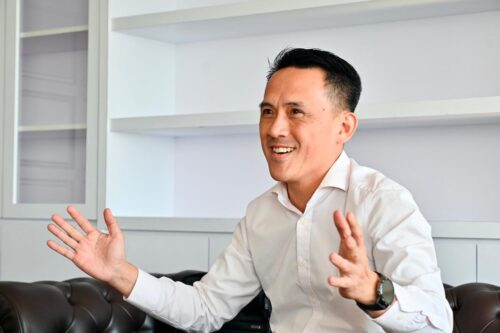
“I worked with the Penang Development Corporation (PDC) for six years and seven months and later served as a consultant for 21 years.
“My background also includes agriculture, aquaculture, and fisheries. In my constituency, we have chicken farms, egg farms, cattle, goat farms, and fish farms,” he said.
Goh said that as a councillor in Seberang Perai for several terms previously, much of his daily work was related to agriculture and fisheries.
“That is why many people associate me with agrotechnology and agricultural development,” he added.
Despite this background, Goh said he was comfortable with his new portfolio.
“Trade is not a big issue for me because I have been involved in development and investment matters for many years,” he said.
He said one of his immediate concerns would be addressing the rising cost of living, which affects families.
“The cost-of-living issue is very important as it is one of the key issues affecting people nowadays,” he said, saying he intends to work with federal agencies and stakeholders to address price pressures.
On another note, Goh also plans to strengthen support for small and medium enterprises (SMEs).
“For large foreign investments, agencies such as InvestPenang focus on attracting investors, but my role will also include strengthening infrastructure and support for local businesses.”
He added that developing industrial clusters would also help improve the state’s investment ecosystem.
“When we attract investors, we must offer not only land and infrastructure but also a strong technology ecosystem and incentives,” he said.
Goh also said he would continue sharing his views during state executive council meetings and contribute to collective decision-making.
“As the Chief Minister Chow Kon Yeow said, the state government practices collective decision-making and collective responsibility,” he said.
“I will share my views in meetings, especially when issues involve my constituency and the interests of the people.”
Story by Edmund Lee
Pix by Law Suun Ting