


THE Agreement on Reciprocal Trade (ART) between Malaysia and the United States is a newly concluded pact, and its direct impact on Penang has yet to be fully determined.
However, Chief Minister Chow Kon Yeow said the agreement is expected to create broader opportunities for the state’s electrical and electronics (E&E) sector to penetrate the United States market.
“In addition, the ART has the potential to attract new foreign direct investments (FDI) and generate more high-skilled job opportunities.
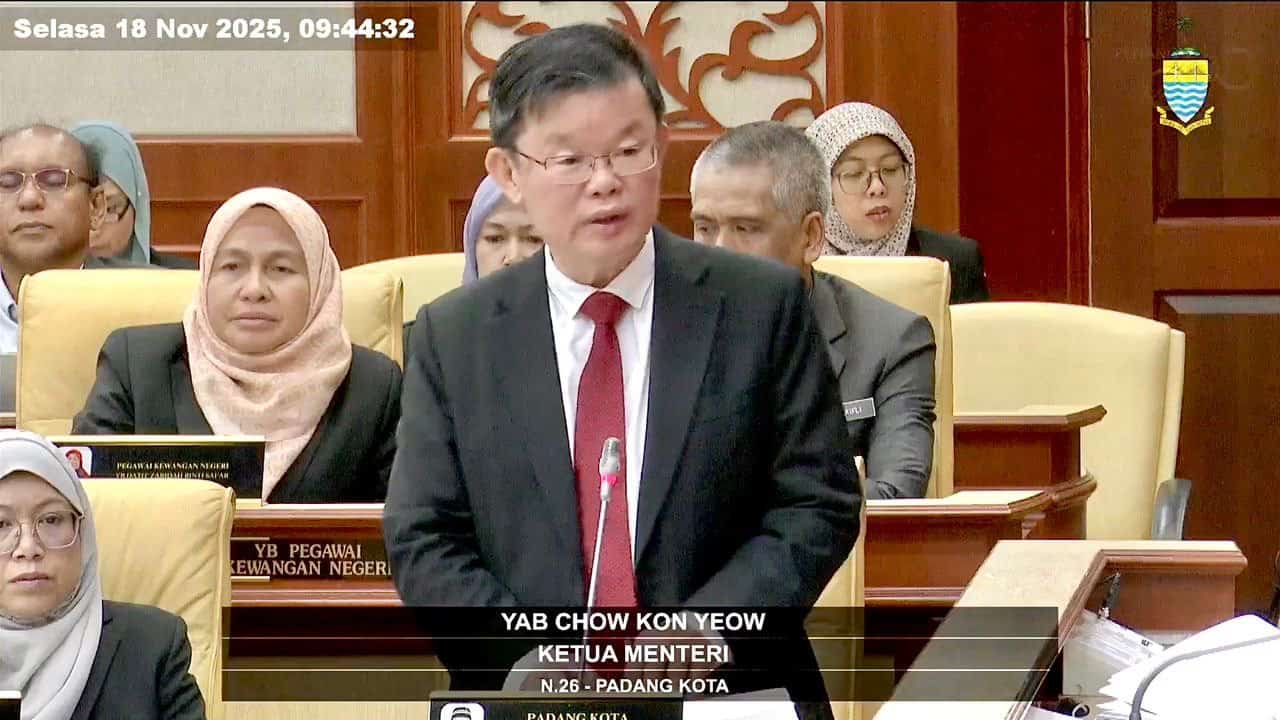
“At the same time, the implementation of the ART is anticipated to strengthen technical training programmes and enhance the local workforce’s capacity to meet the demands of high-tech industries, thereby supporting the state’s sustainable economic growth,” Chow (PH–Padang Kota) said in responding to an oral question from Izhar Shah Arif Shah (PN–Seberang Jaya) during the Penang Legislative Assembly session today.
Addressing the risks and opportunities for the state’s small and medium-sized enterprises (SMEs), agricultural sector and halal industry, Chow said the state government remains proactive in ensuring local businesses remain competitive through various economic empowerment initiatives.
“The ART is also expected to have a positive impact on the agricultural sector, particularly for commodities such as natural rubber, palm oil and other food products.
“In the halal industry, the ART is expected to provide tariff-free market access for local halal SMEs to enter the United States market.
“This initiative could make export activities simpler and more cost-effective, while enabling Penang’s halal SMEs to integrate into high-value global supply chains as strategic partners to companies from the United States involved in high-technology industries,” he added.
Responding to a supplementary question from Izhar on potential supply chain retaliation from other countries, Chow said that detailed explanations have already been provided by the relevant minister and by Prime Minister Datuk Seri Anwar Ibrahim himself during the parliamentary session.
“To illustrate this, imagine if the ART had not been concluded. The reciprocal tariffs originally imposed would remain unchanged and would not be reduced, resulting in a substantial, or even greater, impact compared to the implications of signing the ART.
“Even now, we continue to enjoy exemptions from these reciprocal tariffs, with 1,700 Malaysian export products valued at USD5 billion, or 12% of our exports to the United States, being exempted.
“With the ART in place and tariff rates clearly defined at lower levels, it provides greater stability and competitiveness for our industries. Our exporters can plan ahead with certainty regarding tariff structures.
“This ultimately helps protect local industries, enabling them to remain competitive and innovative,” Chow said.
He added that the ART has also elevated Malaysia’s status to that of a comprehensive strategic partner with the United States.
“Compared to Malaysia’s previous role as merely a regular supplier, we are now recognised as a key supply chain partner to the United States.
“This demonstrates their recognition of the critical role played by Penang’s E&E and semiconductor sectors, which are important supply chain partners for the United States.
“This is significant as it enhances our ability to attract more FDI from the United States and expands our export opportunities,” he said.
Story by Riadz Akmal