

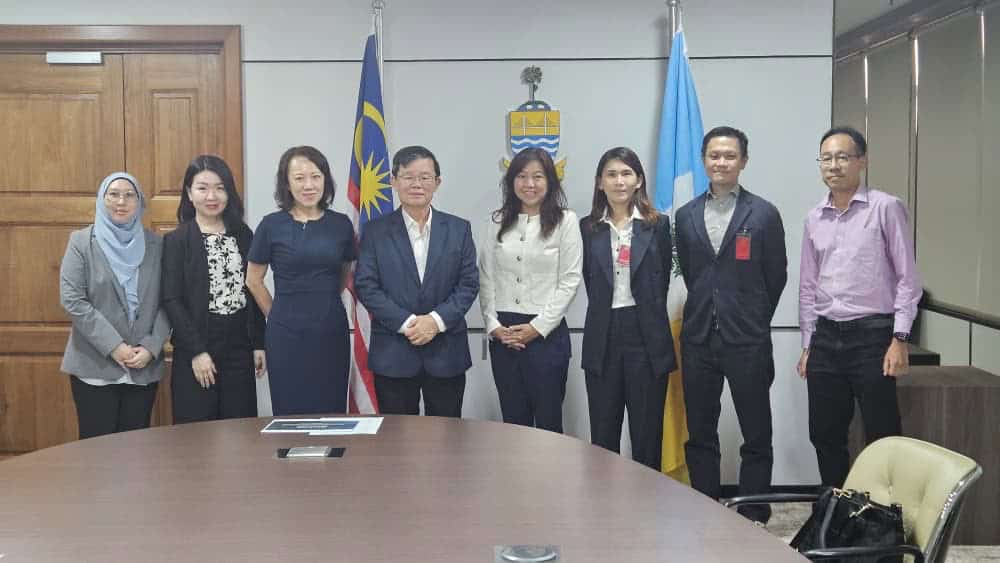

LATTICE Semiconductor is looking to work closely with the Penang government and Malaysia to develop an artificial intelligence (AI)-ready talent pipeline, with the aim of transforming engineering workflows and positioning the region as a leading hub for AI-augmented engineering.
Company’s corporate vice-president for software, solutions and applications engineering, Eleena Ong, said the engineering workforce is on the cusp of a major transformation as AI continues to reshape the way engineers design, verify, validate and innovate.
“Our goal is to build an AI-ready talent pipeline by collaborating with InvestPenang, universities and ecosystem partners to cultivate the next generation of AI-augmented engineers.
“Secondly, we want to share industry best practices by contributing practical frameworks, methodologies and lessons learned from Lattice’s own AI-driven workflow transformation.
“We also hope to strengthen industry-academia collaboration by bridging the gap through internships, research partnerships, hackathons and real-world AI engineering use cases.
“Ultimately, we want to position Penang and Malaysia as a recognised hub for AI engineering,” Ong said during a courtesy visit to Chief Minister Chow Kon Yeow at his office in Komtar today.
Also present were InvestPenang chief executive officer Datuk Seri Loo Lee Lian, Lattice Semiconductor vice-president for development engineering and Penang site lead Yeoh Siew Ling, senior director for applications and solutions engineering Steve Ong, and senior human resources manager Yeap Cheng Hock.
Lattice Semiconductor is a global leader in low-power programmable solutions, helping customers solve complex challenges across the network from the edge to the cloud in communications, computing, industrial, automotive and consumer markets.
The company serves two key business segments: Compute and Communications, as well as Industrial and Embedded.
Meanwhile, Yeoh said AI is fundamentally changing the way engineers work, making it essential for the local semiconductor workforce to embrace new technologies.
“Today, AI is already capable of assisting with software coding, semiconductor design and even chip design.
“That is why we want to work together with InvestPenang and local universities to develop workshops and training programmes that can eventually be incorporated into academic curricula. This will help ensure that engineers entering the semiconductor industry are AI-ready.
“By equipping our engineers with AI capabilities, we will be able to develop products that remain on par with global industry leaders. If we fail to do so, we risk falling behind and losing our competitiveness in the global landscape,” she said.
Chow welcomed the initiative, describing it as a timely effort to prepare Penang’s workforce for the future.
“On behalf of the Penang government, I welcome initiatives like this.
“We should focus on the positive outcomes that AI can bring. The key is to ensure our people are upskilled throughout this transformation, rather than being outpaced by technology or losing their jobs.
“By integrating AI into their existing work, they can improve productivity, enhance efficiency and create better solutions. That is the positive outcome we should strive for,” Chow said.
Story by Riadz Akmal
Pix by Ahmad Adil Muhamad