

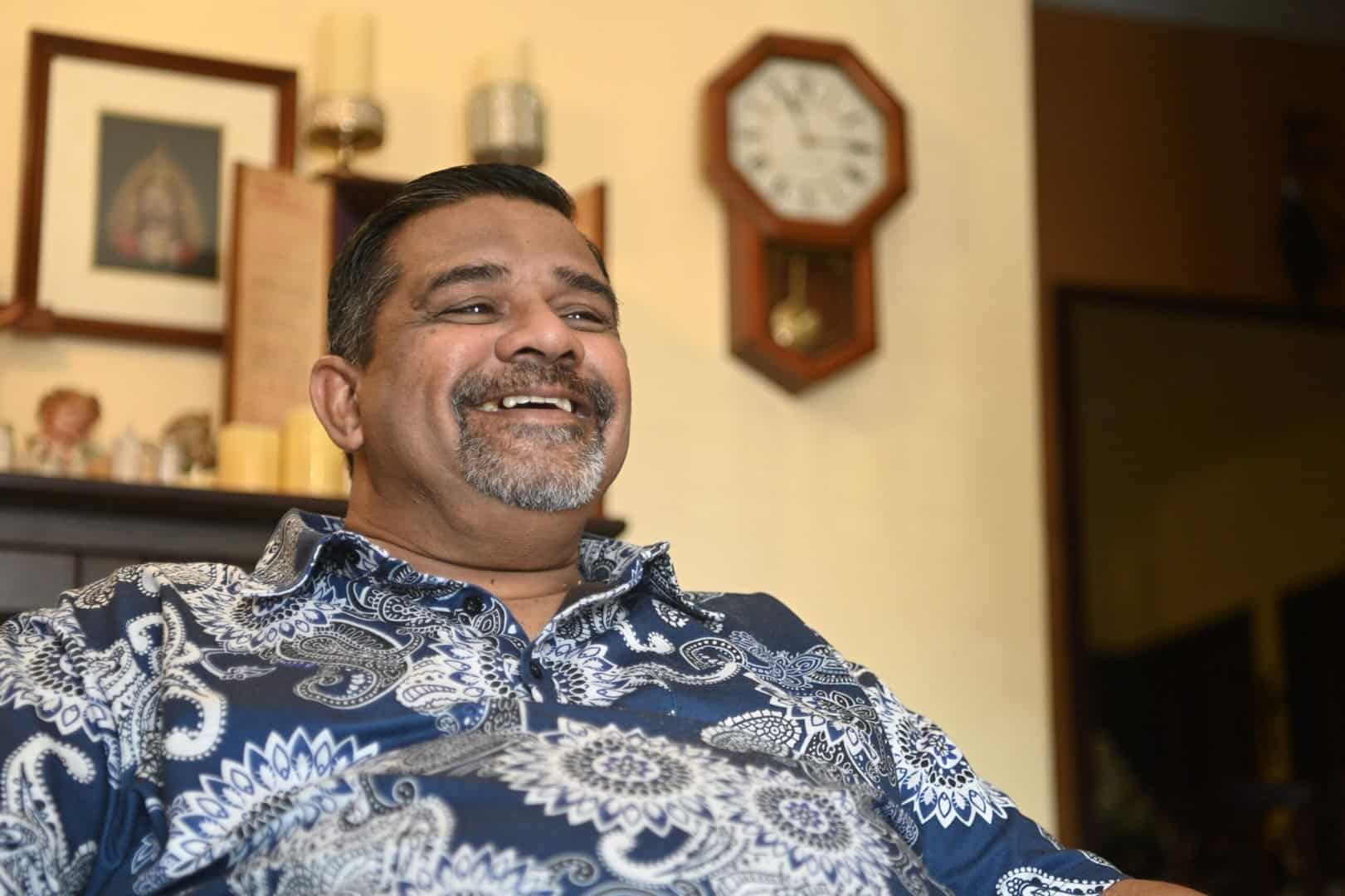

FOR Emmanuel Gerard Dorai, teaching was never just a profession. It was a vocation, a way of life lived wholeheartedly, without an on-off switch.
“Some people treat their job like a light switch; you turn it on when you go to work and turn it off when you leave. But a vocation stays with you,” he reflected.
That belief shaped the 66-year-old retired schoolteacher’s four-decade journey in education, touching countless lives across rural settlements, urban schools and one institution closest to his heart, St. Xavier’s Institution (SXI), where he spent the final 15 years of his service before retiring in 2020.
Born and bred in Penang, Emmanuel’s educational roots mirror his lifelong connection to La Sallian and Xavierian values.
He began his schooling at SK La Salle for primary education, continued at La Salle for lower secondary, and completed his Form Four and Five at St. Xavier’s Institution as part of the 1977 batch.
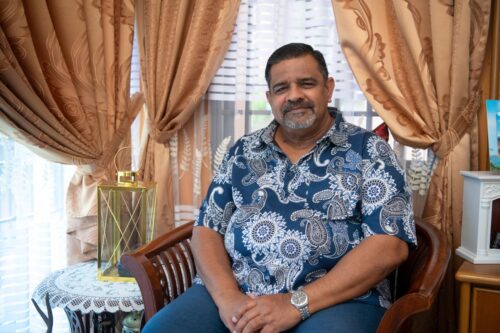
It was during his early school years, however, that the seed of teaching was planted. A kind yet firm Standard One teacher at La Salle, Mrs Ooi Saw Tin, left an indelible impression on the young Emmanuel through her patience, discipline, and compassion, particularly in the way she handled difficult students.
“That memory never left me.
“When people asked what I wanted to become, my answers were always the same; a teacher was always there,” he said during an exclusive interview with Buletin Mutiara at his residence in Island Glades on Feb 10.
Although his first application to teacher training was rejected, Emmanuel persisted. Encouraged by his mother to pray and remain steadfast, he received his acceptance letter just days later, a moment he considers a quiet turning point in his life.
His first posting in 1982 took him far from urban comfort to Jengka, Pahang, a place that tested resilience and strengthened character.
There was no electricity, no piped water and nights were lit by oil lamps. Teachers bathed at standpipes, collected muddy river water during droughts, and improvised lighting using wet-cell 12V batteries and later electricity from a settler’s generator.
“It was difficult, but it was life. And we, the teachers, learned to live it together,” he recalled.
It was in those early years that Emmanuel discovered the power of unity and community.
As the only non-Malay teacher in the school for two years, he was embraced by settler families, invited into homes, and treated as “orang kita”.
Education, for him, extended beyond textbooks. He coached hockey, building a team from scratch.
Within three years, several of his students represented the district and state, achievements he credits to collective effort rather than individual glory.
“The success was never mine alone. We were a family. All the teachers contributed their effort and time, even joining in the training,” he said.
After brief stints in Bagan Serai and Project INSPIRE at Universiti Sains Malaysia (USM), where he contributed to preparing remedial and enrichment educational materials for national-level distribution and lesson plans for lower primary schools in Sabah by Yayasan Sabah, Emmanuel returned to school teaching in Penang, serving at SK Minden Heights and SK Seri Permai before pursuing his long-held passion for literature.
At the age of 41, he enrolled in USM’s English Language and Literature Studies Degree Programme, earning his degree in 2005. A year later, he returned home, this time to St. Xavier’s Institution, his alma mater.
At SXI, he became known not only as a literature teacher, but as an educator who challenged stereotypes, encouraged dialogue and nurtured critical thinking. His classrooms were safe spaces for questions, especially the difficult ones.
One of his most memorable lessons revolved around a simple yet powerful idea: colourblindness.
“If I cut my hand, what colour is my blood?” he would ask his students. After playful guesses, he would answer, “Green — the colour of St. Xavier’s.”
“To you, the boy beside you is not Malay, Chinese or Indian. He is your brother,” he would tell them.
That philosophy left lasting impressions. One student, blind in one eye and often sidelined throughout his schooling, once told Emmanuel, “Sir, how I wish I had met you 11 years earlier.”
“That sentence still stays with me,” he said quietly.
Beyond academics, Emmanuel devoted himself to co-curricular life, serving as a band teacher for a decade despite openly admitting he could not play a single musical note. The band, like teaching, became part of his identity.
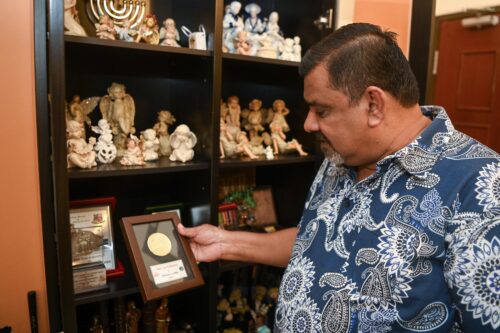
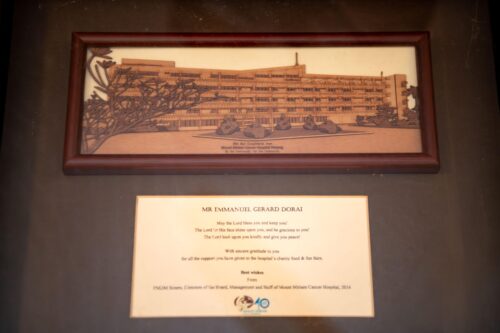
Outside school, his commitment to service extended into church and community work, running youth camps, promoting vocations across northern states for the catholic church, and helping organise the charitable ‘Ho Ciak’ food fairs in support of Mount Miriam Cancer Hospital for a few years.
Today, Emmanuel prefers not to call himself “retired”.
“I’m retreaded, like a retreaded tyre, still useful, still moving, just in a different way,” he said with a smile.
Though he no longer teaches in classrooms, he continues to mentor, motivate and maintain bonds with former students, colleagues and his own 1977 SXI classmates.
He values presence, visiting the sick, strengthening family ties and living without regret.
“Life does not stop when work ends. It continues, and it deepens,” he added.
Looking back, Emmanuel remains humble about his legacy.
“I am not perfect. I made mistakes, but I tried, not just to teach subjects, but to share life experiences,” he stressed.
For Emmanuel Gerard Dorai, teaching was never about producing students; it was about shaping human beings. And that lesson, quietly lived, continues well beyond the classroom walls, “Touching Hearts, Changing Lives”.
Story by Kevin Vimal
Pix by Siew Chia En