

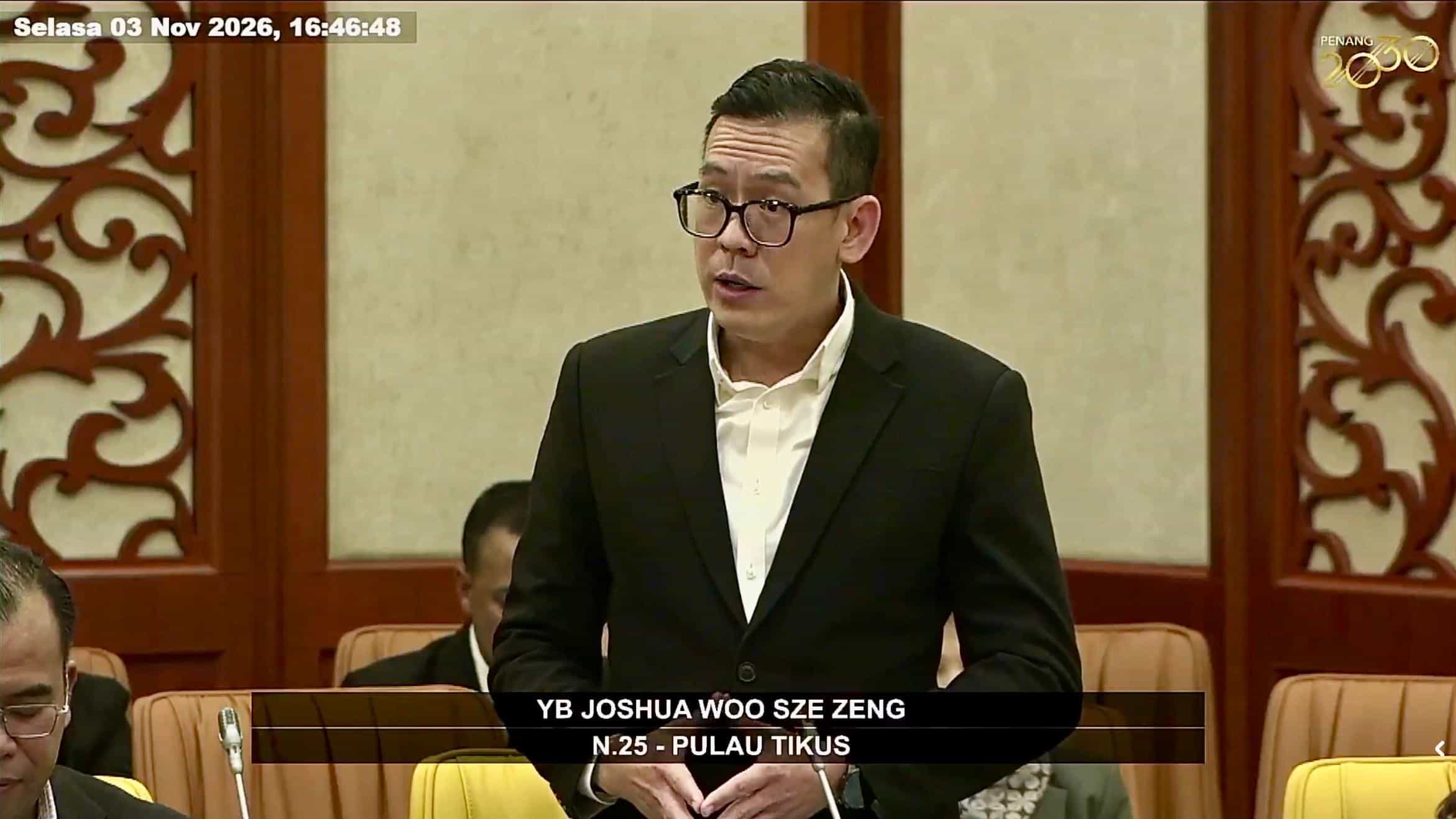

PULAU Tikus could become a leading digital nomad hub in Malaysia, bringing new business opportunities to local entrepreneurs while boosting the local economy, says its assemblyman Joshua Woo Sze Zeng.
He said Penang’s international recognition as a budget-friendly destination for digital nomads presents an opportunity for the state to attract more remote-working professionals and generate greater economic benefits for local businesses.
“Through networking with international professionals, young entrepreneurs will have opportunities to receive mentorship, exchange expertise, seek business partners and expand into overseas markets,” Woo (PH-Pulau Tikus) said when debating the 2027 Supply Bill at the State Legislative Assembly sitting today.
Woo said a Click Intelligence study in October 2026 ranked Penang first among 26 cities nationwide as a destination for digital nomads, based on factors such as the cost of living, internet connectivity, safety and digital facilities.
He also cited a Malaysia Digital Economy Corporation (MDEC) survey in 2023, which found that digital nomads in Malaysia spent an average of about RM8,000 monthly, mainly on accommodation, food and tourism.
To tap this potential, Woo proposed adopting a GLOW (Green, Liveable, Optimised and Walkable) plan to improve Pulau Tikus’ urban environment and make it more attractive to digital nomads.
Among the measures proposed were conducting an audit of pedestrian facilities within three months, building a safe and interconnected network of covered walkways, improving bus stops, planting more shade trees and expanding access to high-speed internet and co-working spaces.
He said these improvements will make it easier for residents and visitors to walk between homes, workplaces, shops, restaurants and recreational areas within 10 to 15 minutes.
The presence of digital nomads can also increase spending at local restaurants, cafes, grocery shops and accommodation establishments, creating jobs and raising residents’ incomes.
Separately, Woo expressed concern over the maintenance of Gurney Bay, saying damaged public facilities, poorly maintained landscaping and slow repair works have affected the image of the popular recreational destination.
He compared the situation with the Esplanade, which he said the Penang Island City Council (MBPP) has managed to keep clean, attractive and well maintained.
“If MBPP can do such a good job there, why is the contractor responsible for Gurney Bay still facing so many maintenance problems?” he asked.
Woo said the state government should review the contractor’s performance and contractual obligations, noting that previous penalties had apparently failed to resolve the persistent problems.
He proposed that Chief Minister Incorporated (CMI) conduct a comprehensive review of the maintenance arrangements and consider whether existing contractual terms are limiting the state government’s ability to take firmer action.
The maintenance arrangements at the Esplanade, including daily inspections, clear repair schedules and regular monitoring, could serve as a model, he added.
Woo also suggested that the state government consider transferring the management and maintenance of Gurney Bay to MBPP, citing the council’s experience in maintaining public recreational spaces.
He noted that the state government had allocated about RM200 million for Gurney Bay’s development, stressing that the public investment should deliver lasting benefits through proper maintenance.
On a third issue, Woo called for stronger enforcement powers for local authorities to address common public complaints, including illegal parking, vehicles obstructing pedestrian walkways, indiscriminate rubbish disposal, illegal dumping and obstructions along five-foot ways.
He said disturbances in residential areas, excessive noise and the feeding of pigeons and other wild animals can also lead to unhygienic conditions and pest problems.
However, local authorities face limitations in using digital evidence and collecting unpaid compounds, he said.
For instance, although CCTV footage can detect offences, issuing compounds directly based on such evidence remained subject to legal provisions and procedures. Unpaid compounds can also lead to lengthy court proceedings and additional prosecution costs.
Woo proposed that the state government work with the Federal Government to expand local authorities’ administrative enforcement powers.
He suggested allowing CCTV footage, photographs and videos that meet evidential requirements to be used to issue compounds for certain offences, subject to fair verification and appeal procedures.
“Local authorities are closest to the everyday problems faced by the people. They must therefore have sufficient powers to take action swiftly, fairly and at a reasonable cost,” he said.
Story by K.H. Ong