

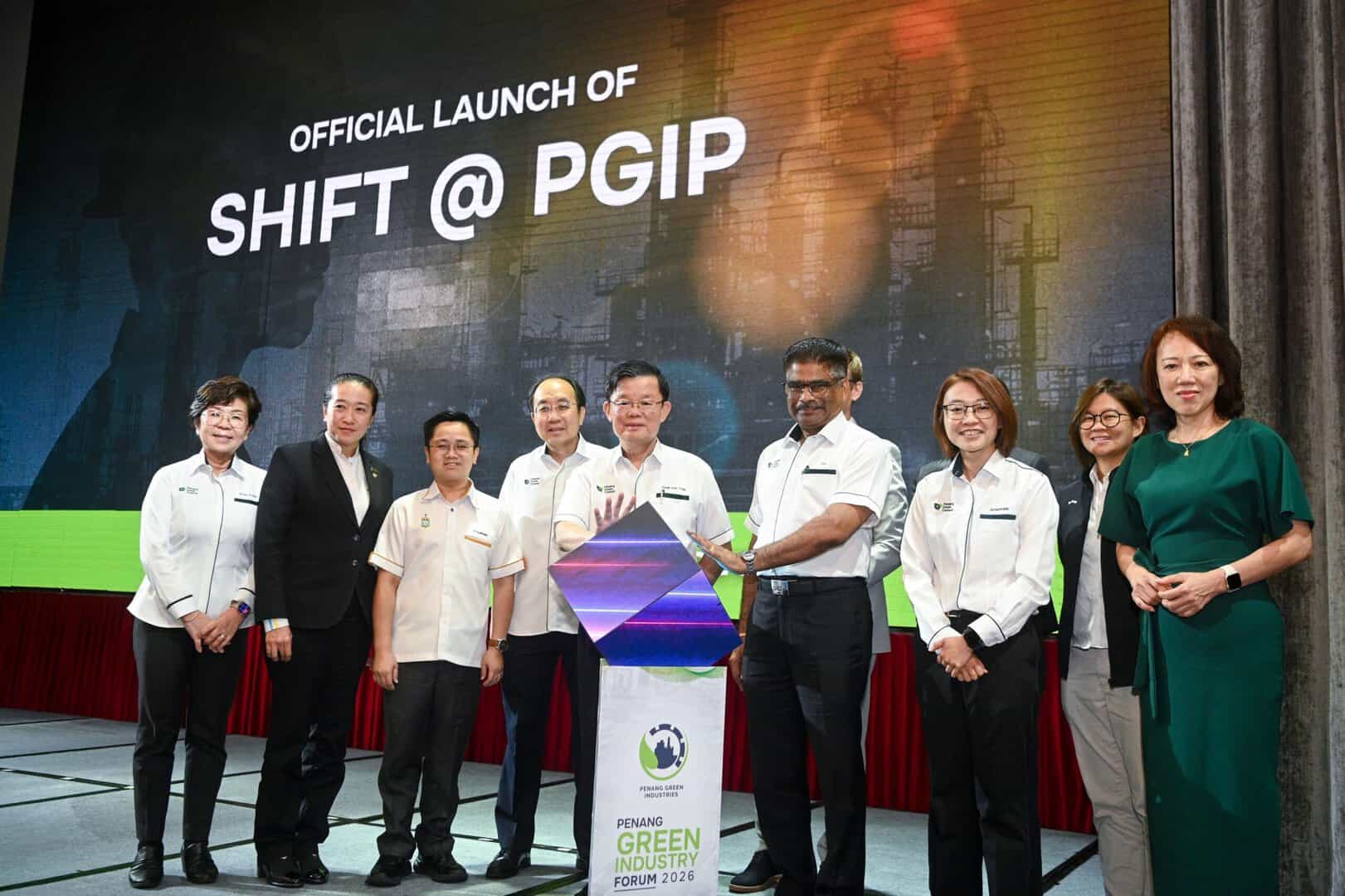

A MAJOR boost for Penang’s green manufacturing ambitions was unveiled today with the launch of a RM100 million Climate Mitigation Fund, a strategic collaboration between the Penang State Government and Alliance Bank Malaysia Berhad to accelerate the transition towards low-carbon, sustainable industrial practices.
The fund, which will be allocated in stages, with the first phase being disbursed at RM15 million, will support manufacturers, especially small and medium enterprises (SMEs), with preferential financing, advisory support, grants and working capital to help them adopt energy-efficient technologies, digitalisation and sustainable operations.
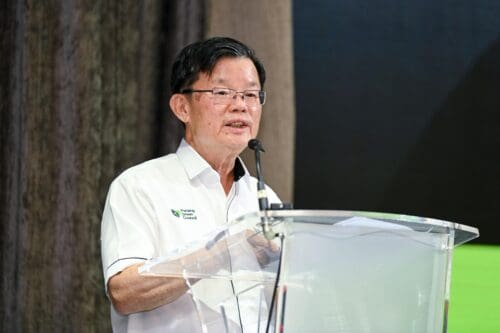
Chief Minister Chow Kon Yeow described the initiative as a crucial milestone in strengthening Penang’s position as a competitive and future-ready manufacturing hub.
“Sustainability is no longer optional. It is a business imperative. Global supply chains are evolving and environmental, social and governance (ESG) expectations are becoming more stringent.
“For Penang to remain competitive, our industries, especially our SMEs, must be prepared to adapt and lead,” he said when officiating the Penang Green Industry Forum 2026 at the Olive Tree Hotel in Bayan Lepas today.
Chow also announced that the Penang government is contributing RM5 million to the fund, underscoring the state’s commitment to enabling green industrial transformation.
The Chief Minister said the urgency of sustainability has been heightened by global energy uncertainties.
“In today’s global context, the urgency of sustainability has been further underscored by the recent energy crisis triggered by geopolitical tensions, including the conflict involving the United States and Iran.
“Disruptions to critical energy supply routes have impacted up to one-fifth of global oil flows, leading to price volatility, supply uncertainty and increased inflationary pressures worldwide.
“This situation reinforces the need for industries to strengthen resilience, reduce dependency on conventional energy sources, and accelerate their transition towards more sustainable and energy-efficient practices.”
He added that the Climate Mitigation Fund under the Penang Green Industry Programme (PGIP), reflects the state’s commitment to “enabling, not just encouraging, green industrial transition in Penang”.
The fund forms part of the newly launched SHIFT @ PGIP platform, Sustainable & Holistic Industry Forward Transformation, designed to provide a comprehensive pathway for industries, particularly SMEs, to build capacity and accelerate sustainability adoption.
“No single entity can drive this transformation alone. The strength of Penang’s ecosystem lies in its collaboration between government, industry leaders, SMEs, financial institutions and ecosystem partners,” Chow said.
Meanwhile, state Housing and Environment Committee chairman Sundarajoo Somu stressed that sustainability is now essential for Penang’s economic survival.

“For over 50 years, Penang has thrived as a global manufacturing powerhouse. However, to secure our next 50 years of excellence, our industrial development must align with something equally critical to our industry competitiveness, sustainability.
“Global supply chains are no longer evaluating solely on the cost and quality of our exports, they are heavily considering the carbon footprint behind them. ESG compliance has evolved from a voluntary corporate initiative into a mandatory prerequisite for participation in global trade,” he said.
The state government, Sundarajoo emphasised, is firmly committed to ensuring industries do not face the green transition alone.
“This forum is the direct result of this vision, designed to help our manufacturing industries adopt sustainable practices while maintaining economic efficiency.
“Together, we can ensure Penang successfully achieves its vision of becoming a leading Green Manufacturing Hub by 2030,” he further added.
Earlier, Penang Green Council chief executive officer Josephine Tan said sustainability, ESG compliance and carbon management are now central to business competitiveness.

“Sustainability, ESG compliance, and carbon management are now part of how businesses remain competitive, resilient, and relevant in global supply chains,” she said.
She highlighted the role of the Penang Green Industry Programme (PGIP) in supporting industries, particularly SMEs.
“We focus on helping companies understand their starting point, identify gaps, and move forward with clarity. This is especially important for SMEs, which form a significant part of Penang’s supply chain and are increasingly required to meet ESG expectations from global partners,” she added.
Tan said the Climate Mitigation Fund will provide financing and advisory support for SMEs and mid-tier companies to adopt green technology and energy efficiency improvements.
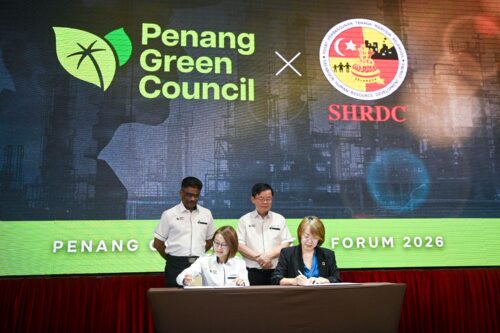
She also announced the formalisation of a collaboration with the Selangor Human Resource Development Centre to strengthen sustainability capacity building and talent development.
“Sustainability transformation does not happen in isolation; it requires strong ecosystem support,” she said, adding that the SHIFT framework will guide companies from assessment and training to collaboration, financing and recognition.
Alliance Bank Malaysia Berhad chief sustainability officer Roy Heong said the RM100 million fund reflects strong confidence in Penang’s manufacturing sector.
“The fund provides access to preferential financing rates and advisory support for the transition. It is important to have capital, but it is equally important that companies know how to use it purposefully to transform their business in the right way,” he said.
He described Penang’s manufacturing ecosystem as a major driver of global supply chains.
“This fund supports low-carbon transition, high-tech development, digital automation and IR4.0 adoption. It also provides preferential rates for working capital so companies can tap growth opportunities after they transition.”
He stressed that the programme is designed to be holistic.
“Many green loans only finance equipment. This is different, it includes working capital, grants and support for innovation. We want SMEs not only to go sustainable, but to be credible in doing so,” he said.
He also added that the fund prioritises Penang-based Malaysian companies and aims to keep the application process simple and fast.
“This is a low-carbon transition. Reducing energy reduces costs, and energy costs will continue rising over the long term. Sustainability is not a PR programme, it must deliver real business outcomes such as profitability, revenue growth and cost reduction.”
The Penang Green Industry Forum 2026 brought together government agencies, financial institutions, manufacturers and ecosystem partners to drive collaboration and accelerate Penang’s transformation into a regional leader in sustainable manufacturing.
Story by Kevin Vimal
Pix by Siew Chia En
Video by Law Suun Ting