

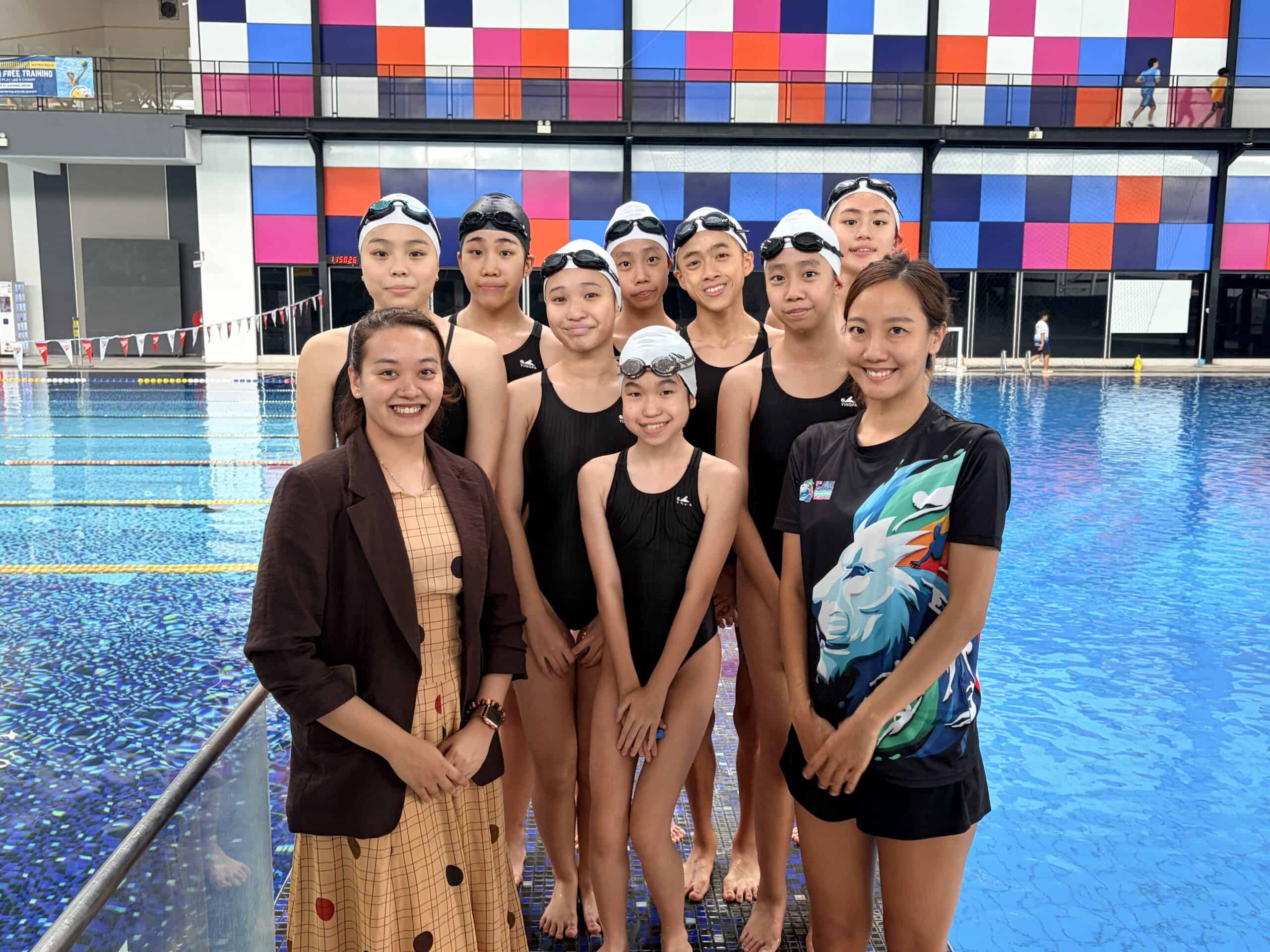

Beneath the graceful routines, synchronised movements and elegant smiles lies a sport that demands extraordinary discipline, endurance and years of unwavering commitment.
That is the message shared by Malaysia Artistic Swimming chairperson Tasha Jane, who believes Penang’s artistic swimming community is steadily building a strong foundation to produce future national representatives despite being a relatively niche sport.
Speaking during an interview with Buletin Mutiara at the Setia SPICE Aquatic Centre in Bayan Lepas, Tasha, who also serves as a board member of Malaysia Aquatics and the Penang Amateur Swimming Association, said Penang currently has more than 50 artistic swimmers across different age groups.
Although the number may seem modest, she is optimistic that the state’s young athletes possess the potential to reach greater heights.
“If they continue on this development pathway, I hope to see more of them representing Malaysia at the Southeast Asian (SEA) Games and beyond,” she said.
She noted that one Penang swimmer was already included in the national SEA Games squad that competed in Bangkok, Thailand, last year, describing it as an encouraging milestone for the state’s artistic swimming programme.
“Our goal is to continue nurturing these athletes so they can eventually represent Malaysia not only at the SEA Games but also at prestigious international competitions such as the Asian Championships and the World Championships,” she added.
To ensure a steady pipeline of young talent, Tasha said the association organises talent identification programmes twice a year.
However, she emphasised that artistic swimming requires far more than natural ability.
“It is a highly technical sport that takes years to master. Unlike some sports where results can come relatively quickly, artistic swimming requires patience, passion and perseverance.
“Parents also play a very important role because progress doesn’t happen overnight. It is a long-term journey,” she explained.
What sets artistic swimming apart from other aquatic sports, according to Tasha, is its unique blend of athleticism and artistry.
“It is a beautiful sport because you dance to music together with your teammates. Everything is carefully choreographed to appear effortless, even though every movement requires strength, precision and excellent teamwork.
“That combination of elegance and athletic ability is what makes artistic swimming so breathtaking,” she said.
The sport welcomes participants of all ages, with Penang’s youngest swimmers starting as early as six years old.
At the other end of the spectrum are the association’s master’s athletes, many of whom are women in their 40s and 50s who continue to enjoy the sport recreationally or competitively.
“There is really no age limit to learn artistic swimming. Whether someone wants to compete is entirely up to their personal goals.
“We have master’s competitions as well as elite competitions, so there is a pathway for everyone,” she said.
Parents interested in introducing their children to the sport are encouraged to contact the association directly.
“We arrange free trial classes so children can experience artistic swimming first. If they enjoy it, they can then enrol in our programme,” she said.
Training intensity varies according to each swimmer’s level.
She said the Penang state team trains five days a week, from Wednesday to Sunday, while beginners typically attend three training sessions weekly.
“For those who simply wish to enjoy the sport as part of school co-curricular activities or for recreation, leisure classes are also available once or twice a week,” said Tasha, adding that the team is already preparing for future overseas competitions, subject to invitations and international event schedules.
When asked about the most important qualities required in artistic swimming, Tasha highlighted breath control, stamina and attitude.
“Swimmers need excellent breath control because they perform difficult movements underwater for extended periods.
“They also need the stamina to complete an entire routine without running out of breath.
“But above all, I believe a good attitude is the most important quality. Every athlete needs discipline, humility and the willingness to learn. A positive attitude will take you a very long way,” she said.
Looking ahead, Tasha hopes artistic swimming will continue to grow in Penang and attract more aspiring athletes.
“We currently have about 50 swimmers in Penang, and we hope that number will continue to increase because this is such a beautiful sport and we want the knowledge and passion for it to be passed on to future generations,” she said.
Most of Penang’s current artistic swimmers are still in school, with nearly half of them aged below 12, underscoring the promising future of the sport in the state.
Story by Riadz Akmal