


CHIEF Minister Chow Kon Yeow has called on the Investment, Trade and Industry Ministry (MITI) to take note of concerns surrounding Malaysia’s latest electric vehicle (EV) policy, stressing the need to balance localisation with investor confidence and healthy competition.
He said while Malaysia should encourage local companies to enter the EV supply chain, promote technology transfer and create high-value jobs, policies should not lean towards protectionism.
“I hope MITI will take note of these concerns and continue to improve the way these policies are communicated and delivered,” he said when speaking at the McDonald’s Malaysia and Tenaga Nasional Bhd (TNB) Renewable Energy Partnership announcement at McDonald’s Batu Kawan today.
Chow said Malaysia needed to strike a delicate balance through clear communication and effective policy implementation to give investors and businesses confidence to invest and grow in the country.
“Localisation should strengthen the industry, not restrict competition,” he said.
He said recent concerns over the communication of the latest Completely Built-Up (CBU) EV policy, as well as the risk of excessive concentration in the sub-RM100,000 EV market, should be taken seriously.
“We are competing with other countries in the region for EV investment. Our policies must also give investors confidence to invest and grow here,” he said, stressing that consumers should continue to have choices as Malaysia seeks to attract investment, technology and competition in the EV sector.
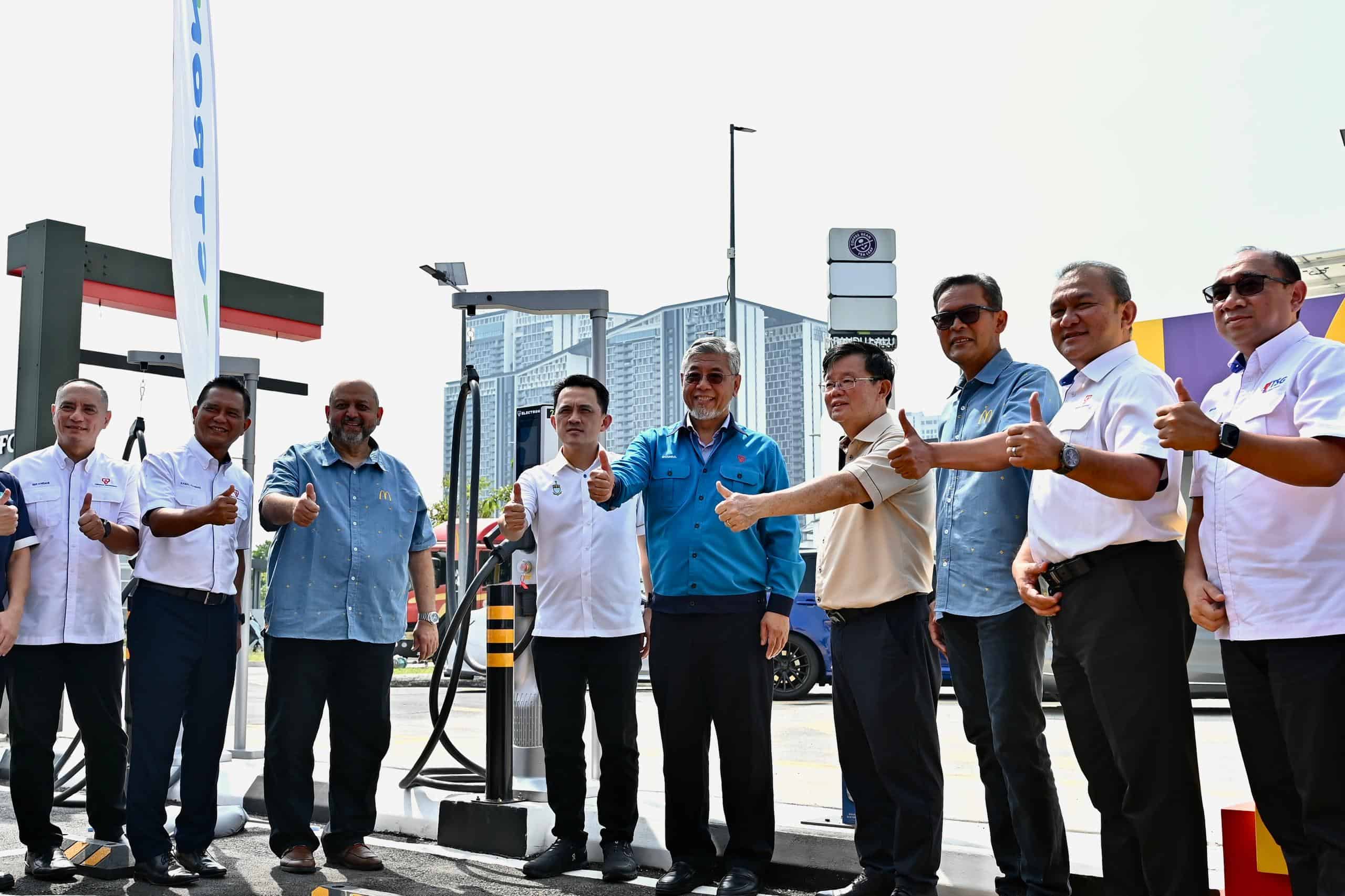
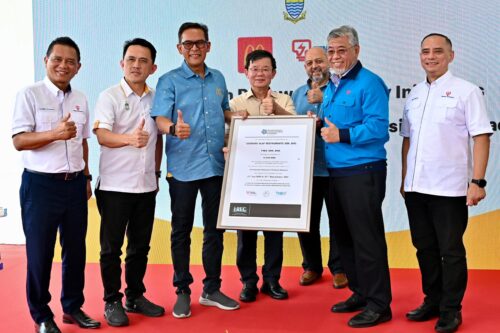
On the renewable energy partnership, Chow said the initiative demonstrated how government and industry could work together to turn energy transition targets into practical action.
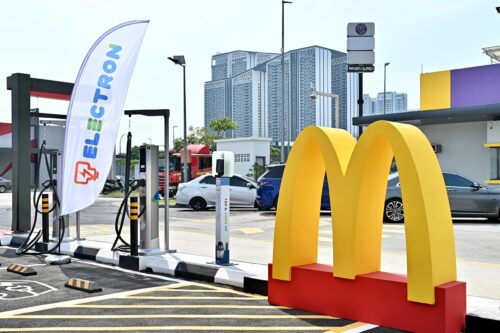
He said the TNB Electron facility at McDonald’s Batu Kawan was the first of its kind in the food and beverage sector, featuring a 200kW DC fast charger with two charging points, expandable to four. The facility was energised in May this year.
Chow, who is also the Batu Kawan MP, expressed hope that similar initiatives would be expanded to more McDonald’s outlets across Penang, with Batu Kawan serving as a model.
“For Penang, the energy transition is about our environment, economic growth, resilience and competitiveness,” he said.
He said Penang has set a target under the Penang Energy Framework to generate 10% of its energy from renewable sources and reduce electricity energy intensity by 25% by 2030.
Penang has also set a target of 500 EV chargers by 2030, with around 460 already available statewide.
“We are close to the target, but we must not stop there. As EV adoption grows, charging infrastructure must grow with it,” he said, adding that chargers were needed at places where people work, shop and eat.
Chow said initiatives such as the McDonald’s partnership could help expand the charging network while supporting the wider transition towards cleaner energy.
McDonald’s Malaysia managing director Datuk Azmir Jaafar said the initiatives were central to the company’s broader sustainability roadmap, supporting its efforts to reduce carbon emissions by transitioning towards cleaner energy sources and future-proofing its operations.
“We are proud to have TNB as a partner in this journey as we continue to scale sustainable practices across our restaurant network,” he said.
TNB president and chief executive officer Datuk Shamsul Ahmad said the partnership with McDonald’s would bring cleaner energy and green mobility closer to customers, while enabling businesses to participate in Malaysia’s energy transition agenda in support of the National Energy Transition Roadmap (NETR).
“This is how partnerships turn ambition into practical action,” he said.
Also present were state Trade and National Unity Committee chairman Goh Choon Aik, TNB chief retail officer Datuk Kamal Arifin A. Rahman and McDonald’s Malaysia director Datuk Mohammed Nasir Rakhir.
Story by Edmund Lee
Pix by Siti Nuratikah Rahmat