


DENTAL professionals should harness social media and digital platforms to educate the public on oral health, address misconceptions and encourage better dental care practices, says former Health director-general Tan Sri Dr Noor Hisham Abdullah.
He said social media had become an important tool for healthcare professionals to communicate scientific knowledge, share useful advice and better understand public concerns about health issues, including dental care.
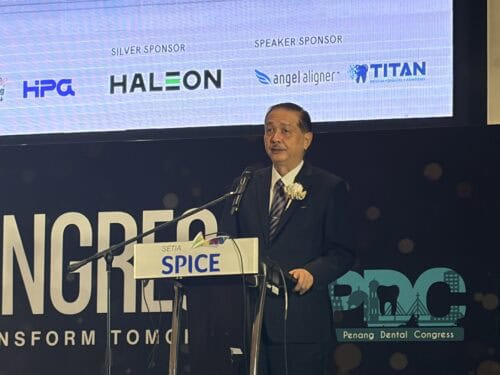
“Sometimes, we are very happy treating our patients, and our patients are also very happy with the services provided. But nobody knows about it except you and your patients.
“Today, we need to communicate through social media platforms and content media to share our knowledge and advice with the public,” he said.
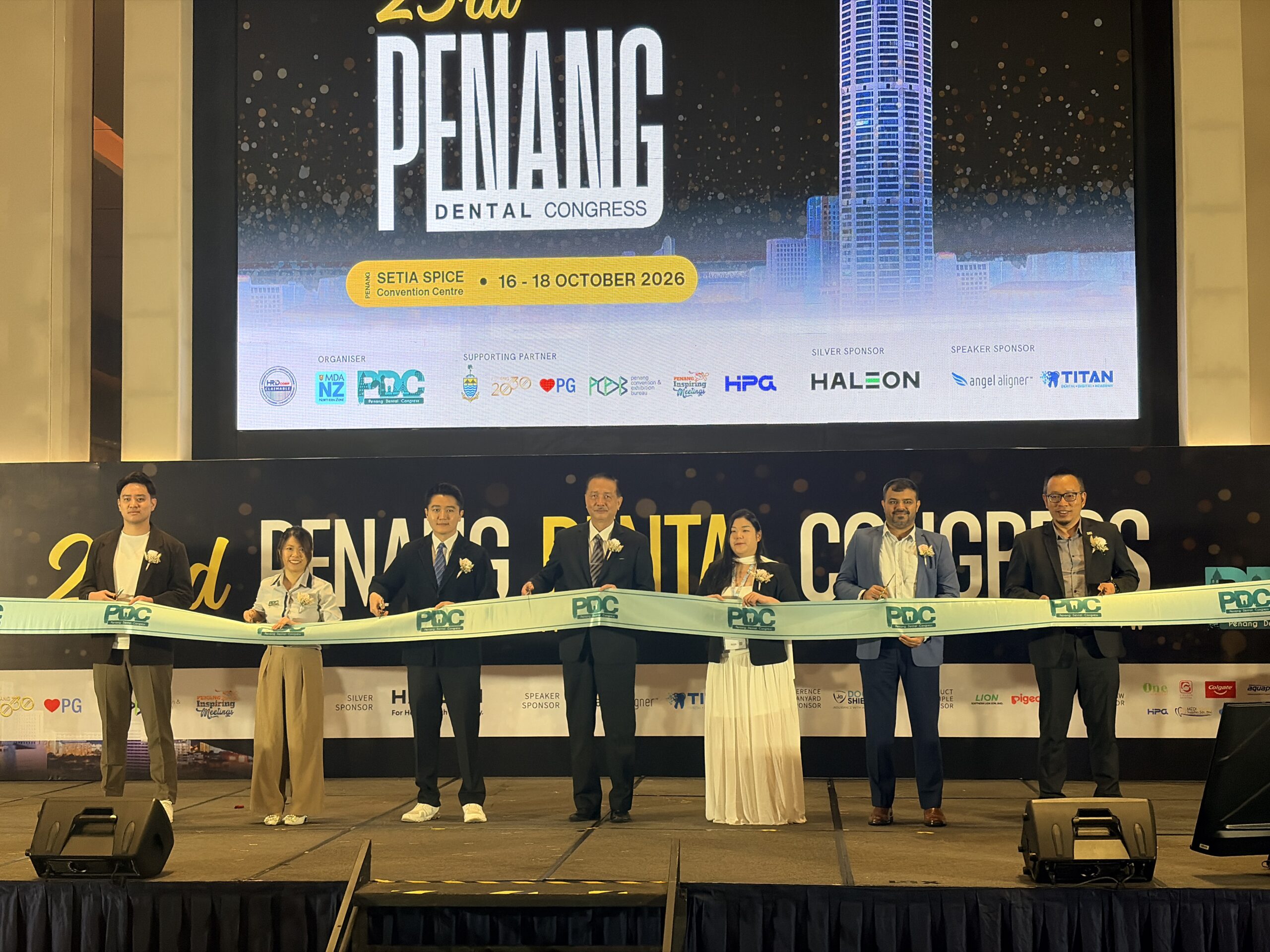
Dr Noor Hisham was speaking at the opening ceremony of the 23rd Penang Dental Congress (PDC) 2026 at the Setia SPICE Convention Centre in Bayan Lepas today.
He said social media could serve as a dynamic platform for risk communication, helping dental professionals address public concerns, correct misconceptions and influence behavioural changes towards better oral health.
He stressed that continuous public education was essential to building greater awareness of oral health and encouraging people to take a more proactive approach to dental care.
Turning to the future of dentistry, Dr Noor Hisham said the profession was entering an increasingly technology-driven era, with developments such as digital dentistry, artificial intelligence (AI), advanced materials and innovative treatment methods transforming healthcare delivery.
He noted that healthcare would continue to evolve through advances in AI, digital health, robotics and biomedical data.
However, he emphasised that technological progress alone was insufficient to transform the healthcare system, adding that innovation must be supported by established medical principles, scientific evidence and sound clinical judgement.
“Every day, medical and dental professionals make decisions based on history-taking, diagnosis, treatment planning, risk assessment and sound clinical judgement.
“Today, whatever we do must be substantiated by data, science and facts,” he said.
He added that genuine progress depended on striking a balance between established knowledge and new discoveries, allowing healthcare professionals to embrace innovation without losing sight of the fundamental principles underpinning their practice.
Reflecting on his years at the Ministry of Health, particularly during his tenure as director-general of Health and the Covid-19 pandemic, Dr Noor Hisham said one of the most important lessons was the need for healthcare systems to remain adaptable amid rapidly changing circumstances.
He described the pandemic as an unprecedented challenge that required healthcare authorities to make critical decisions while scientific understanding of the virus continued to evolve.
Decisions had to be made based on the best available evidence at the time, with strategies adjusted as new information emerged.
“No decision, or a delayed decision, is already a decision. Therefore, sometimes we need to make decisions to save lives,” he said.
Acknowledging that healthcare professionals might sometimes fear making the wrong decisions, he stressed that decisions should be guided by facts, scientific evidence and data, rather than allowing uncertainty to prevent necessary action.
“A wrong decision is better than no decision at all,” he said, highlighting the importance of timely action in situations where lives were at stake.
He added that the pandemic had demonstrated how healthcare systems could not afford to remain static, but must continuously learn, innovate and adapt to emerging challenges.
At the same time, he stressed that the ability to respond to change must be accompanied by a strong foundation in medical knowledge and public health principles.
Dr Noor Hisham also called for closer collaboration among healthcare professionals, including doctors, dentists, nurses, pharmacists, allied health professionals and researchers, saying that each had an important role in strengthening the healthcare system.
He said the pandemic had reinforced the importance of adopting a whole-of-government and whole-of-society approach, with healthcare responsibilities extending beyond the Ministry of Health to individuals, families, public institutions and private organisations.
“The health of the nation is not only the responsibility of the Ministry of Health. It is the responsibility of every individual and every family, coming together as one, including the public and private sectors,” he said.
Dr Noor Hisham added that bridging the gap between the public and private healthcare sectors was essential to improving cooperation, strengthening resilience and ensuring better health outcomes.
These principles, he said, were equally relevant to dentistry as the profession navigated rapid technological changes and evolving patient expectations.
Dr Noor Hisham urged dental professionals to embrace new technologies while remaining firmly grounded in scientific evidence, professional ethics and the needs of their patients.
He also encouraged them to develop creative ideas and innovative approaches to ensure the long-term sustainability of healthcare services.
Citing the challenges faced during the Covid-19 pandemic, he highlighted the need to explore alternative solutions to address hospital congestion and limitations in healthcare infrastructure.
He referred to China’s ability to construct a 10,000-bed hospital within 10 days during the pandemic, contrasting it with the challenges of building large-scale hospital facilities in Malaysia.
Rather than relying solely on conventional infrastructure development, he said healthcare authorities could explore more practical and creative alternatives to expand capacity when demand surged.
For instance, he said exhibition halls could be converted into temporary field hospitals, potentially creating capacity for 10,000 patients within seven days.
He cited the example to illustrate how innovative thinking and resourcefulness could help address pressing healthcare challenges without relying entirely on the construction of permanent facilities.
Ultimately, Dr Noor Hisham said healthcare professionals must continue to base their decisions on facts, science and data while remaining open to new ideas and approaches.
He also emphasised that adaptability and collective effort were crucial to overcoming challenges and building a stronger, more resilient healthcare system.
“It is not the strongest or the most intelligent who survive, but those who are most adaptable to their environment and challenges,” he said.
Also present were PDC 2026 organising chairperson Dr Soh Pei Chin, Malaysian Dental Association Northern Zone chairman Dr Yvonne Ng Yee Theng, and Malaysian Dental Association president Dr Chong Zhen Feng.
Story by Riadz Akmal