

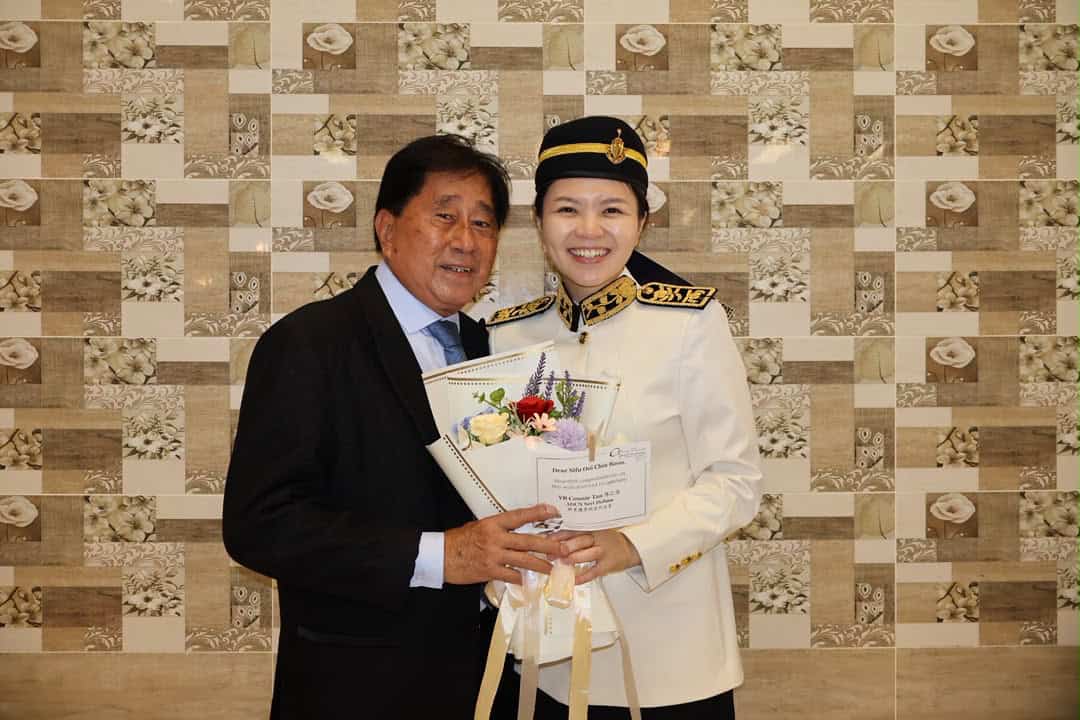

FRESH from receiving the Pingat Jasa Kebaktian (PJK) award from Penang Yang di-Pertua Negeri Tun Ramli Ngah Talib during the recent state investiture ceremony, former Citibank Penang head Ooi Chin Boon remains focused on what has become his life’s mission — helping senior citizens stay healthy, active and independent through free Qigong classes.
The 80-year-old, fondly known as “Sifu Ooi”, said while he was honoured by the state recognition, the greatest reward for him continues to be seeing people improve their health and quality of life.
“I don’t touch a single cent. I come here not to make money, I come here not to gain glory, but just to serve my fellow human beings,” he told Buletin Mutiara, while expressing his thankfulness to Seri Delima assemblyman Connie Tan for her support.
Ooi, who retired from the banking industry in 2002 after a distinguished career that saw him rise through the ranks, now dedicates much of his time to promoting healthy ageing among senior citizens.
He said many people spend the prime years of their lives pursuing career success and financial security but often overlook the importance of taking care of their health.
“We are so busy trying to make money and build a career that we forget to take care of ourselves. In the end, the money we make is spent on doctors and medicine to recover the health that we have lost,” he said.
According to Ooi, maintaining good health revolves around four key pillars — proper nutrition, regular exercise, quality sleep and effective stress management.
He said these areas are increasingly important in today’s fast-paced society, where people are constantly under pressure and often sacrifice their wellbeing for work and other commitments.
“When I was growing up, life was much slower. Today, everything moves very fast. If you don’t take good care of yourself, your health will suffer,” he said.
Ooi knows the value of an active lifestyle through personal experience.
Growing up in a financially challenged family, he developed a passion for football at a young age, often playing with a tennis ball because his family could not afford a proper football.
He began playing the sport at the age of 10 and continued until he was 78, accumulating 68 years of football experience before retiring from the game two years ago.
“I played football for 68 years. It helped me maintain my health and fitness throughout my life,” he said.
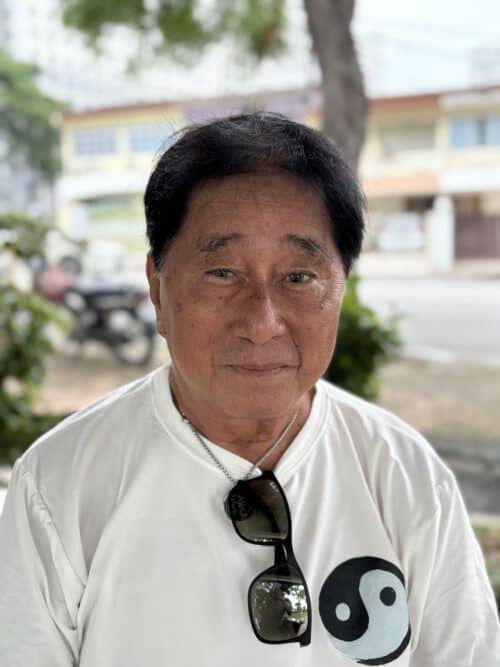
However, recognising that recovery from injuries becomes more difficult with age, he decided to switch to tennis, which he now plays three times a week.
“I can still play football, but if I get injured, it takes much longer to recover. So I decided to play a safer sport,” he said.
Apart from physical fitness, Ooi stressed that mental health deserves equal attention.
He observed that mental health conditions such as anxiety and depression remain heavily stigmatized despite becoming increasingly common in modern society.
“People think that if you go and see a psychiatrist, you are crazy. Actually, it is just another health problem and it can be treated,” he said.
To help people cope with emotional and psychological challenges, Ooi incorporates meditation into his teachings and encourages individuals to adopt healthier ways of dealing with stress.
He said many of his students come to him not only for exercise but also for guidance on managing anxiety, sleep issues and emotional wellbeing.
“Some of them cannot sleep well. Some of them are under stress. I teach them breathing exercises, meditation and ways to relax their minds,” he said.
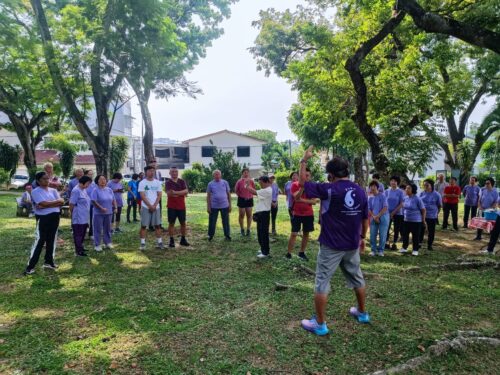
Ooi currently conducts free Qigong classes at Island Glades several mornings a week, attracting participants from different parts of Penang.
The sessions are open to everyone, although most participants are aged 60 and above.
He estimates that around 50 regular students attend the classes.
One of the key challenges faced by seniors, he said, is the risk of falling.
“When seniors fall, they can break a hip, suffer serious injuries and lose their independence. Once that happens, their quality of life can be affected significantly,” he said.
To address this issue, he incorporates balance, coordination and movement exercises into his classes to help participants improve stability and reduce the risk of falls.
Ooi also advocates a holistic approach to health that extends beyond exercise.
He encourages his students to adopt healthier dietary habits and consume more natural foods that support overall wellbeing.
Among the foods and supplements he frequently recommends are ginger, turmeric, moringa, probiotics and other nutrient-rich fruits and vegetables.
“Where possible, I encourage people to go natural first. If your body can get what it needs from food, that is always better,” he said.
Describing himself as a graduate of the “School of Hard Knocks”, Ooi said much of his knowledge was acquired through personal experience and continuous self-learning.
Rather than spending his retirement watching television or entertainment programmes, he devotes his spare time to reading books, research articles and health-related materials.
“I am not a doctor, but I spend a lot of time learning. I read about health, exercise and wellness because I want to share useful knowledge with people,” he said.
After retiring, he also studied Qigong under three different masters to deepen his understanding of the practice.
For Ooi, healthy ageing is not merely about living longer but about maintaining one’s independence and ability to enjoy life.
He likened the human body to a vehicle that requires regular maintenance.
“You cannot buy a car and expect it to run forever without maintenance. The older the car gets, the more attention it needs. The same applies to our bodies,” he said.
Living in the neighbourhood since 1976, Ooi noted that a significant proportion of residents are senior citizens, many of whom are retired government servants who settled there decades ago.
He estimated that about 60 per cent of the community’s residents are now seniors.
This, he said, underscores the importance of providing activities and support systems that enable older adults to remain active and socially connected.
“There is a difference between existing and living. Existing is simply going through the motions every day. Living is enjoying every moment while you are alive,” he said.
Ooi added that many retirees lose their sense of purpose after leaving the workforce and end up spending their days waiting for time to pass.
His hope is that through Qigong and community engagement, seniors will realise that life remains meaningful long after retirement.
“My message is simple. There is still life after 60 and 65. Don’t just wait to die. Continue to move, continue to learn and continue to enjoy life,” he quipped.
Story by Edmund Lee