

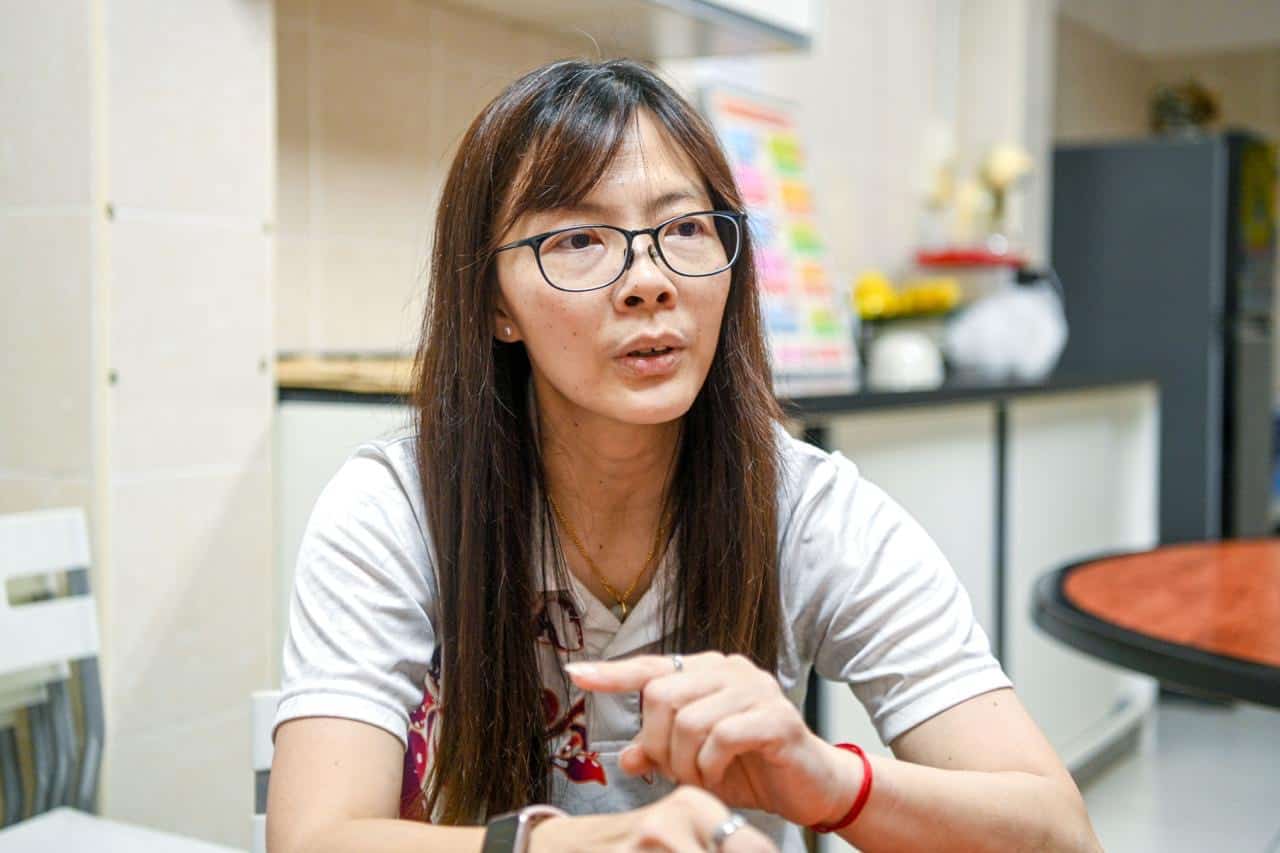

FORMER Malaysian national badminton player Lee Yin Yin has successfully transitioned from elite sport to education, bringing the discipline, resilience and determination forged during her years in the national setup to her role as assistant headmistress of SJK (C) Union.
The 49-year-old former women’s singles player said badminton has shaped her life far beyond the court, providing lessons that continue to guide her as an educator and administrator.
“Whether in sports or education, discipline and determination are very important. These are values that I try to apply in my work and also pass on to students,” she told Buletin Mutiara during an interview recently.
Lee’s badminton journey began under the guidance of her father, Lee Gin Cheng, now 75, who introduced her to the sport at a young age.
Growing up in a badminton-rich environment, Lee often followed her father to the courts, where he played alongside some of Malaysia’s badminton greats, including the late four-time All England champion Datuk Eddy Choong and Datuk Teh Kew San.
“I was still very young then. My father would bring me along and train me. Choong was one of my earliest mentors and I learned a lot from him during my formative years,” she recalled.
Lee said her father was instrumental in laying the foundation for her badminton career.
“At that time, my father trained me personally and encouraged me to compete. He was my first coach and my strongest supporter,” she said.
Her competitive journey began at the age of 11 in 1988 when her father encouraged her to participate in the Malaysian School Sports Council (MSSPP) competition.
“My father recommended me and asked me to go for the selection and the rest was history,” she quipped.
She quickly progressed through the school circuit and advanced to the national-level MSSM championships, where she began attracting the attention of selectors.
After completing her Form Five examinations, Lee joined the national squad directly.
“At that time there was no sports school or integrated sports-and-academic system like there is today. After Form Five, I joined the national team,” she said.
Lee spent seven years in the national setup, initially training in Cheras before the establishment of the Bukit Jalil National Sports Complex.
Lee mentioned that life as a national player was demanding, with rigorous twice-daily training sessions designed to prepare athletes for international competition.
“We trained in the morning and again in the afternoon. The training started around 9am until 11am before continuing later in the day.
“The training was very tough. During my first year under the Chinese coaches, we did a lot of running. I remember running about 25 rounds, which was close to 10,000 metres at the running track,” she said.
Lee trained under several renowned international coaches, including former Chinese world champion Han Jian, while later experiencing the endurance-focused methods of Danish coaching great Morten Frost.
“The Chinese coaches emphasised technical skills and discipline. Morten Frost focused a lot on stamina and endurance.
“Every coach had a different philosophy and we learned a lot from all of them,” she said.
She also recalled learning from Korean badminton great Park Joo Bong and observing the determination displayed by Korean and Japanese players.
“Park Joo Bong emphasised mental strength. Korean and Japanese players were known for their determination and commitment. Those were important lessons for us,” she said.
Lee said some training sessions even included swimming pool workouts and intensive conditioning programmes aimed at improving overall fitness.
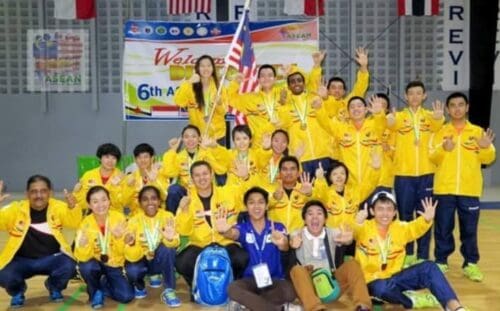
Throughout her national career, she was exposed to major international competitions and trained alongside many of Malaysia’s top players.
She competed in programmes linked to prestigious tournaments such as the Thomas Cup, Uber Cup and Sudirman Cup.
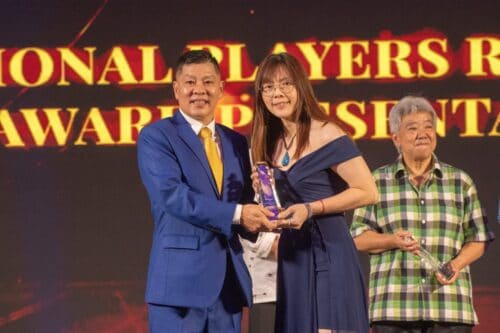
One of her fondest memories was helping Malaysia capture the Sudirman Cup Division Two title.
“We played against teams such as England and managed to win. It was a proud moment because countries like China, Indonesia and Korea were already among the strongest badminton nations,” she said.
Lee also shared the training court with notable Malaysian players such as Lee Wai Leng and witnessed the rise of future stars including Wong Choong Hann and Penang-born doubles specialist Chin Eei Hui.
“Penang has always produced many talented badminton players. During my time there were quite a number of Penang players in the national setup.
“After Eei Hui, there were fewer Penang players breaking through at that level. I hope more young players from Penang can make it in the future,” she said.
Lee believes aspiring athletes must have clear goals if they hope to excel.
“You need determination and you must know what you want to achieve. If you want to succeed, you need to set your own targets and work towards them,” she said.
However, injuries eventually disrupted her playing career.
Following the 1998 Commonwealth Games, Lee was diagnosed with knee and back injuries that limited her ability to continue competing at the highest level.
“I had knee problems and back issues. Sometimes it was difficult to sit or stand comfortably.
“Because of the injuries, opportunities became more limited and eventually I decided it was time to move on,” she said.
Lee left the national setup in 2002 and returned to Penang, where she embarked on a career in education while continuing to contribute to badminton development.
From 2002 to 2019, she coached SJK (C) Union’s badminton team, helping nurture young players while balancing her teaching responsibilities.
“I didn’t really play anymore. My focus shifted towards coaching and guiding students.
“Coaching requires patience because every child learns differently. You need to motivate them and help them improve step by step,” she said.
Lee added that although coaching methods have evolved over the years, the core values required for success remain unchanged.
“Training methods must change according to the times, just like teaching methods in schools.
“But discipline, determination and perseverance will always be important,” she said.
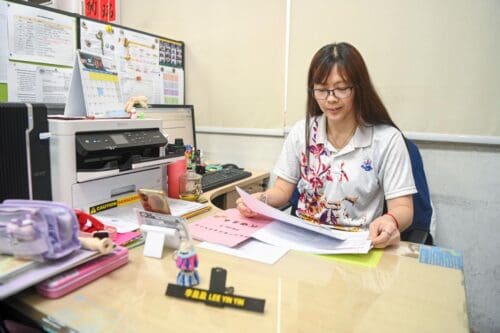
Since becoming assistant headmistress of SJK (C) Union in 2018, Lee has focused primarily on administrative responsibilities and student development.
“Administrative work is very different from badminton, but the discipline I learned from sport helps me manage responsibilities and overcome challenges,” she said.
A mother of three daughters aged 19, 15 and 11, Lee said none of them are interested in pursuing badminton as a career.
“They have their own interests and passions, and I respect their choices. I don’t force them to follow my path in badminton,” she said.
While badminton played a major role in her life, Lee said she wants her daughters to pursue the fields that make them happy.
“Badminton was my journey. They will have their own journeys and dreams to pursue,” she added.
Lee hopes young athletes will learn from the example set by Malaysian badminton legend Datuk Seri Lee Chong Wei.
“My advice to young people is to have determination, persevere through difficulties and never give up when things become challenging,” she said.
Story by Edmund Lee
Pix by Siew Chia En