

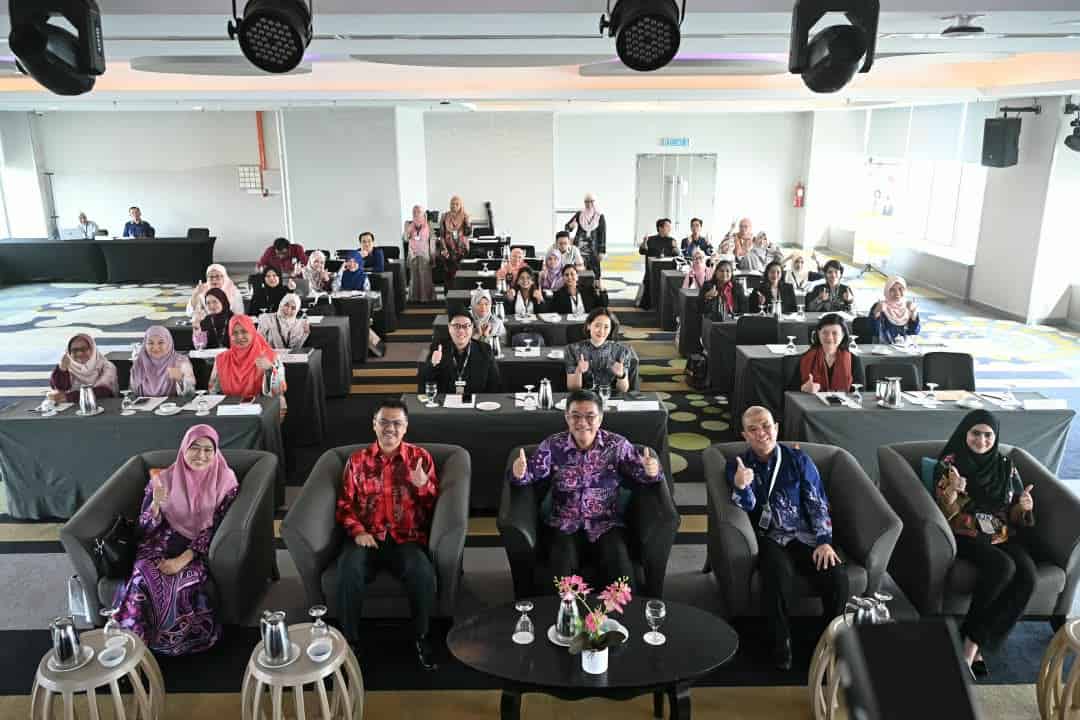

STRONG language skills and the ability to navigate artificial intelligence (AI) will be increasingly crucial for Penang and Malaysia to remain competitive and connected in a rapidly changing global landscape, said state Tourism and Creative Economy Committee chairman Wong Hon Wai.
Speaking at the inaugural UiTM Academy of Language Studies Northern Region International Conference (ALNIC) and IID Convention 2026 at Mercure Beach Hotel in Tanjung Bungah today, Wong said language was more than a means of communication, describing it as an important asset in fostering international collaboration and cross-cultural understanding.
“Language is not merely a tool of communication; it is the bridge that connects us to the world. It is an asset, an invaluable form of capital that enables international collaboration and cross-cultural understanding. In short, language is a competitive edge,” he said.
Wong said this was particularly important for Malaysia, given its multilingual and multicultural society, where leaders and citizens needed to communicate effectively with people from diverse backgrounds.
“This is undoubtedly a far more demanding task compared to leaders in largely monolingual societies,” he said.
Sharing his personal practice, Wong said he made it a habit to read nine newspapers daily in three different languages, using speed-reading techniques to keep abreast of domestic and global developments.
“Beyond proficiency in Bahasa Malaysia, English and Mandarin, the three main languages of Malaysia, I also communicate fluently in dialects such as Cantonese and Hokkien,” he said.
Wong added that linguistic diversity remained one of Malaysia’s valuable assets in strengthening cross-cultural engagement and cultivating talent capable of operating confidently on the global stage.
“Only by cultivating multilingual talent can we ensure that Penang, and Malaysia as a whole, continues to shine on the global stage amidst the tides of globalisation,” he said.
On artificial intelligence (AI), Wong said the technology was already influencing how people searched for information, communicated across languages, produced digital content, learned, conducted research and made decisions.
“For educators, researchers and creative practitioners, AI creates new possibilities. For communities and smaller organisations, it may also provide new ways to share knowledge and reach audiences that were previously difficult to access,” he said.
However, he stressed that access to AI must be accompanied by strong literacy and communication skills.
“Having access to AI does not necessarily mean knowing how to use it well,” he said, adding that one of the most important skills for 21st-century students was the ability to communicate with people from different backgrounds as well as with machines.
The two-day conference, which started today, will end tomorrow, with over 30 individuals from various backgrounds participating.
Meanwhile, ALNIC 2026 programme director Noor Azli Affendy Lee said the conference was established as a platform bringing together research, innovation and practice, involving academics, researchers, advocates, practitioners and students.
He said the theme, “Innovative Pathways in Language, Literacy and AI-Enhanced Education for Community Empowerment”, reflected the organisers’ belief that research and innovation should extend beyond academic discussions and ultimately benefit institutions, professions and communities.
“What we hope to explore over these two days is not technology in isolation, nor innovation simply for the sake of being new. Language and education are at the centre of the discussion, while asking how emerging technologies, new approaches to learning and stronger engagement with communities can contribute to meaningful change,” he said.
Noor Azli said bringing ALNIC together with the IID Convention 2026 also provided an opportunity to connect research with innovation and create a broader platform for exchanging not only findings, but also ideas, approaches and practices.
He expressed appreciation to the keynote and plenary speakers, strategic partners, supporting organisations and participants from Malaysia and abroad for contributing to the inaugural edition.
The two-day conference also seeks to encourage participants to exchange ideas beyond their respective fields and build meaningful professional and academic connections.
Wong, meanwhile, congratulated UiTM Academy of Language Studies campuses in Penang and Kedah, as well as everyone involved in organising the inaugural event, and wished ALNIC and the IID Convention continued success in the years ahead.
Story by Kevin Vimal
Muhammad Iqbal Hamdan