

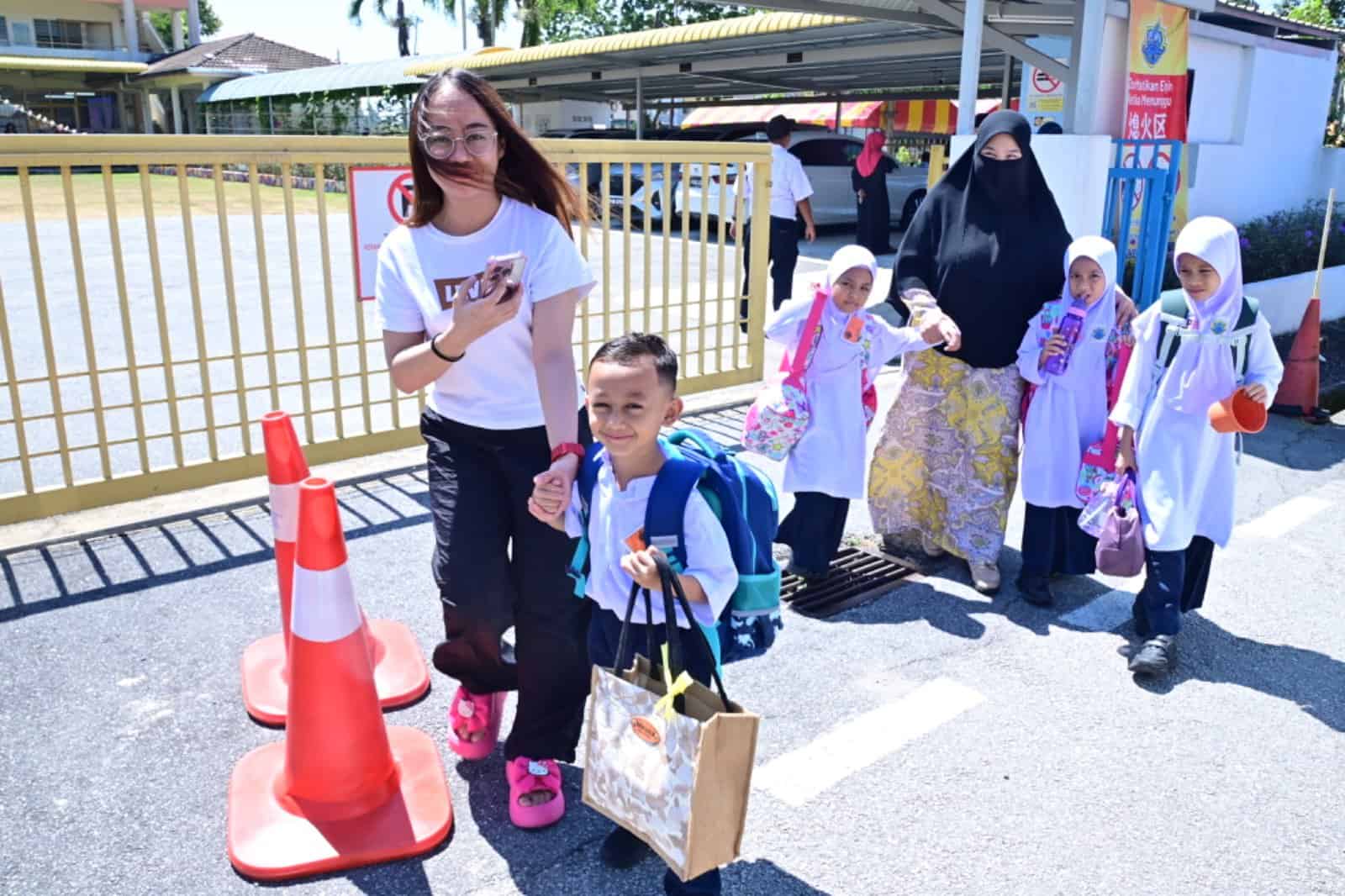

DESPITE being a national-type Chinese primary school, SJKC Sin Min in Sungai Pinang, Balik Pulau, has a majority Malay enrolment, reflecting a growing trend among Malay parents who are keen for their children to learn Mandarin.
It is also learnt that SJKC Aik Keow in Penaga and SJKC Kuang Yu in Kuala Muda, both in the North Seberang Perai District, similarly have a majority Malay enrolment.

Chairman of the Sin Min school board of directors, Wong Soon Theam, said that of the eight pupils registered for Standard One this year, seven are Malays and one is Chinese. Last year, the school admitted eight Year One pupils, all of whom were Malays.
He added that Sin Min currently has a total enrolment of 50 pupils from Standard One to Standard Six — comprising 25 boys and 25 girls — an increase of two pupils compared to last year. Of the total enrolment, 74% are Malay pupils.
Explaining why more Malay families are choosing national-type Chinese schools, Wong cited discipline and the opportunity to learn Mandarin as key factors.
“I believe it is due to the discipline in the school and the desire to learn Mandarin as an additional language for a better future,” he told Buletin Mutiara in an interview today.
However, Wong acknowledged that studying in a Chinese school can be challenging for pupils without a basic foundation in Mandarin, as even the Year One syllabus has become increasingly demanding.
“Recognising this challenge, the school has conducted and will continue to conduct extra lessons to support the pupils,” he said.
“As a feeder school to SMK Sacred Heart, we are proud to receive feedback that our pupils demonstrate a high level of discipline and Mandarin proficiency when they progress to secondary education.”
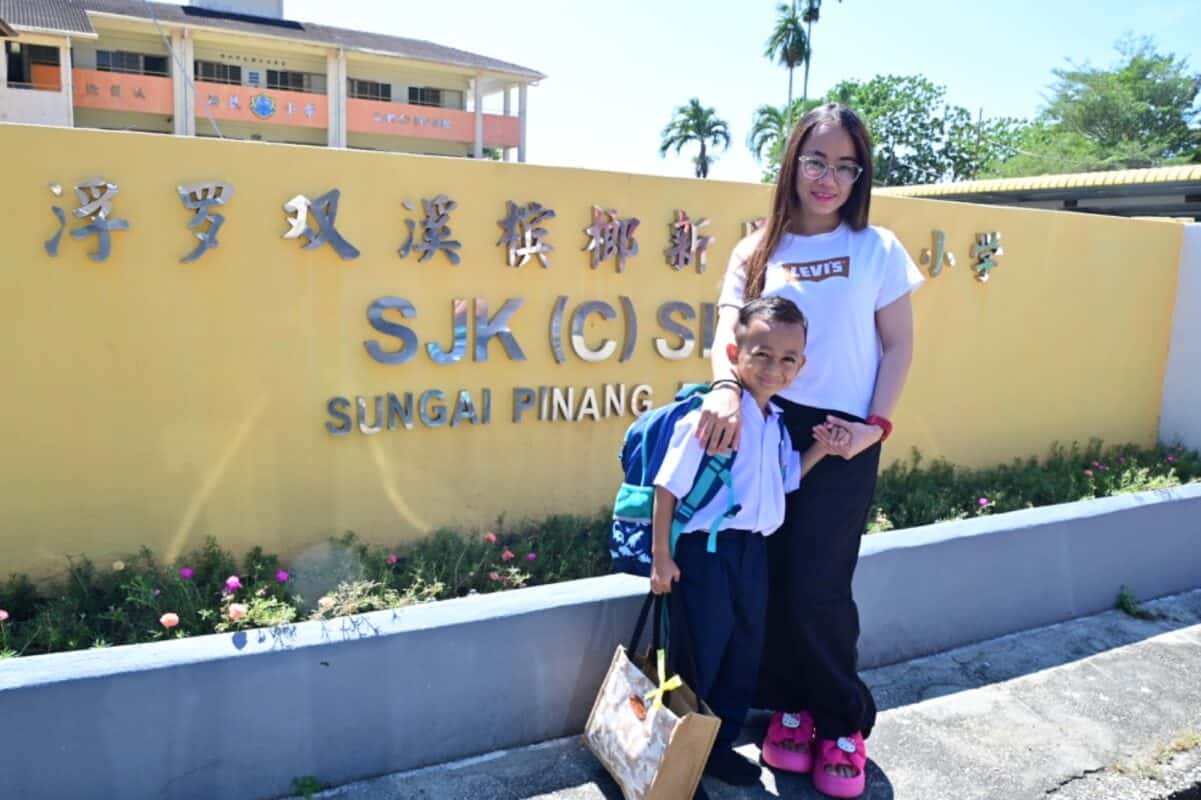
Parent Nurkhalidah Mohd Alladin, 34, said her son, Thaqif Eshan Rostam, was excited on his first day of school and woke up as early as 6.30am. The family lives in Bukit Kecil, Sungai Pinang, not far from the school.
“I registered my son at Sin Min because I am concerned about the many bullying cases reported in some other schools, and I also want him to learn Mandarin. Chinese schools are known for their academic excellence. Furthermore, with fewer students in each class, teachers can better monitor their progress,” said Nurkhalidah, a factory officer.
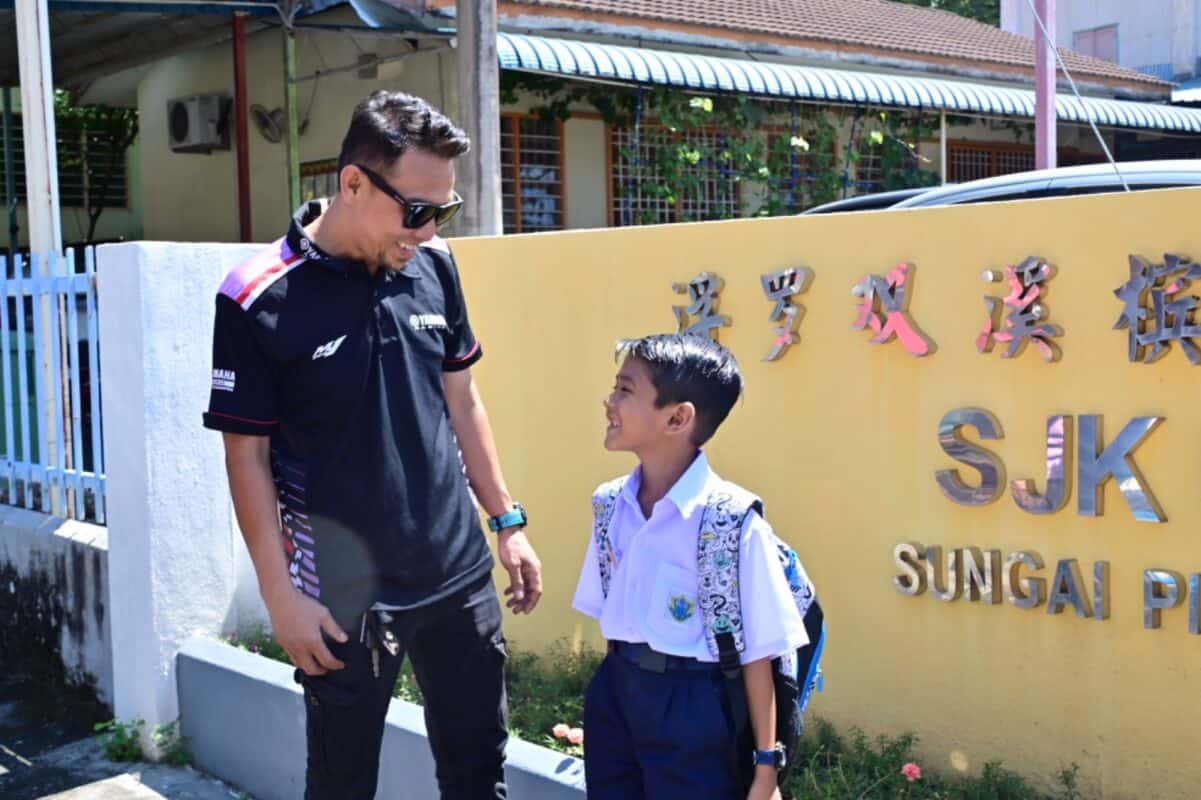
Another parent, Zawawi Zamberi, said his son, Zafriel Nawfal, is happy studying at Sin Min for the second consecutive year.
“My father retired as a clerk at Sin Min, and now his grandson has enrolled here. I want Zafriel to learn Mandarin because it will give him more job opportunities,” said Zawawi, a 36-year-old mechanic.
“He loves watching Chinese movies on YouTube and has been doing so since before kindergarten. He tends to speak Mandarin more with friends and also converses in Mandarin with his cousins.
“I must credit the school’s principal, Puan Voon Bee Leong, for her dedication and care,” said Zawawi, a 36-year-old mechanic.
Meanwhile, SJKC Chin Hwa in Pantai Acheh, Balik Pulau, has expanded its inclusive education efforts by opening an additional special needs class this year, following the introduction of its first such class last year.

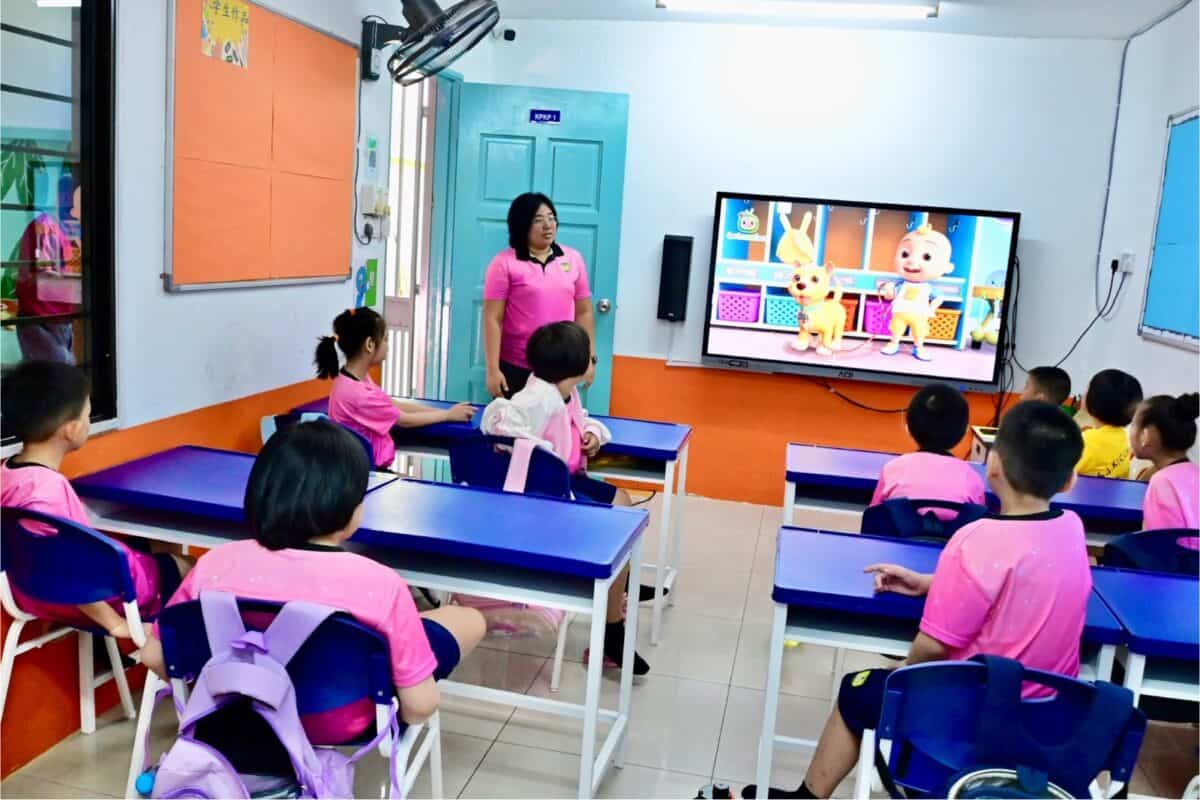
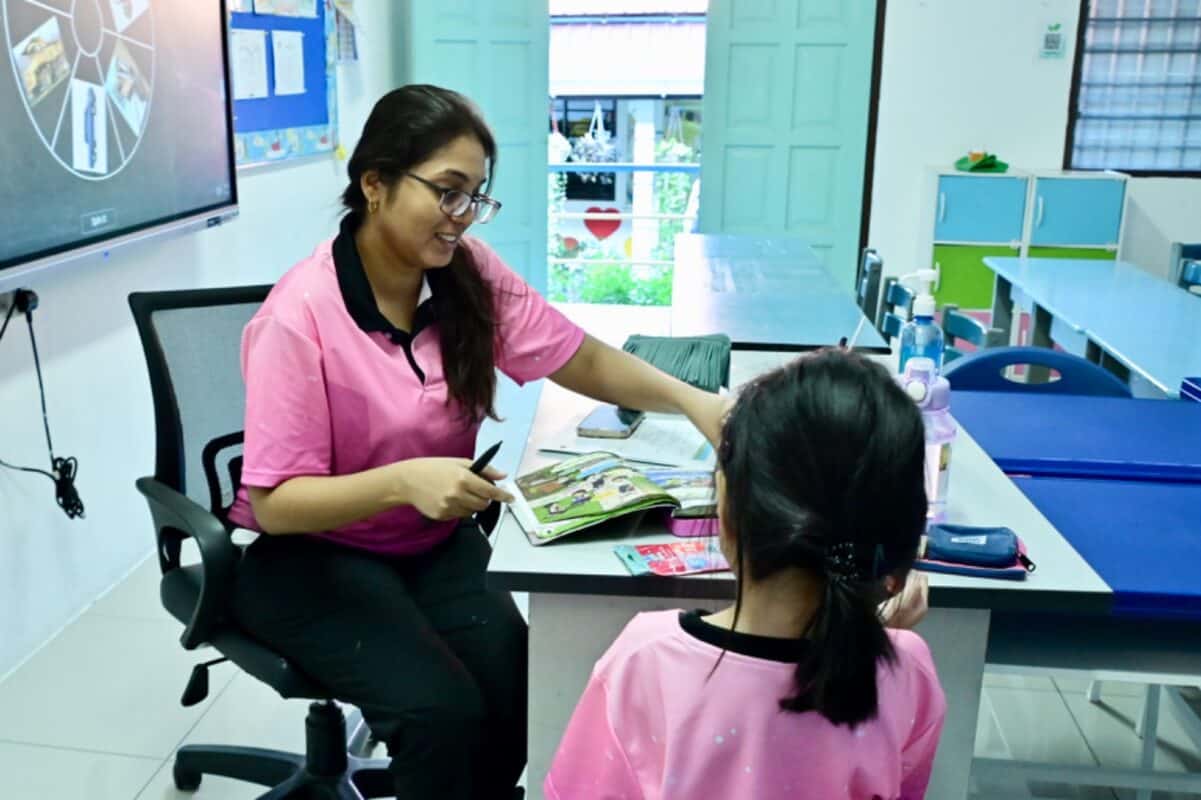
Chairman of the school board of directors, Look Ban Chu, said the school admitted seven pupils with special needs in its inaugural intake last year and enrolled six Standard One pupils this year, four of whom are special needs children.
“The school is pleased to have two specialist teachers this year to help run the special needs classes,” he said.

At the state level, Penang State Education Department (JPNPP) director Mohammad Dziauddin Mat Saad said a total of 19,705 pupils entered Standard One this year, a decrease of 492 compared to 20,197 last year, a decline likely influenced by a falling birth rate.
Of the total, 10,147 are boys, and 9,558 are girls.
“In terms of racial composition, 12,755 pupils are Malays, followed by 5,022 Chinese, 1,514 Indians and 414 pupils from other ethnic groups. Standard One enrolment involves 271 primary schools throughout Penang,” he said.
For the record, more than 400,000 children began their primary school journey nationwide this year, while 423,646 students entered Form One for the 2026 academic calendar.
Story by K.H. Ong
Pix by Law Suun Ting