


PENANG’s land tax revision has not only modernised the state’s revenue framework but also uncovered thousands of long-standing land record issues, highlighting the scale of administrative reform underway.
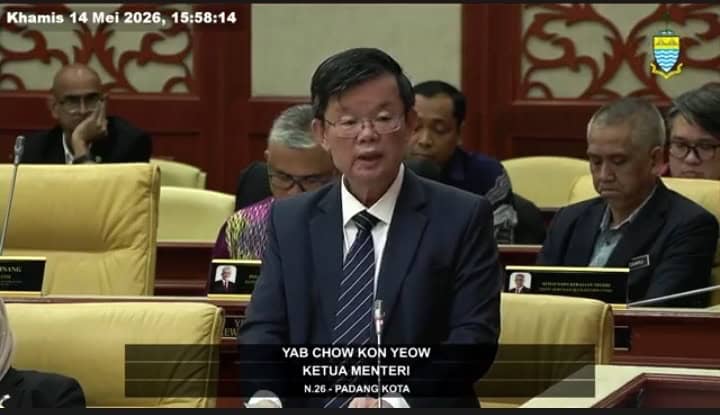
Winding up the debate at the State Legislative Assembly today, Chief Minister Chow Kon Yeow said the review went far beyond taxation, describing it as a comprehensive “cleansing” of land administration following the shift from manual to computerised systems.
“The issue of tax revision has become one of the most debated matters. Therefore, allow me to provide a concise but comprehensive explanation, as this issue has also been addressed through previous written and oral replies,” he said.
One of the most significant outcomes of the review was the discovery of 11,263 problematic land titles or tax accounts.
“The review also served as a comprehensive update and ‘cleansing’ of land data following the transition from manual to computerised land administration systems,” Chow said.
The exercise identified cases involving overlapping ownership, duplicate active accounts and wrongly registered districts.
“Tax rates are now determined based on current land usage to ensure fairness and equity to all landowners.”
He stressed that the overhaul was long overdue, as the system had not been reviewed since 1994.
“The 2026 land tax revision was implemented based on the need to restructure Penang’s land taxation system to make it more modern, organised, transparent and fair in line with rapid economic, social and development changes.”
“This review is not politically motivated, but a necessary measure to ensure the state government’s long-term fiscal sustainability.
“After nearly 32 years without revision, the state government has taken a clearly non-populist step,” Chow further emphasised.
He also reassured the public that most landowners continue to pay modest land taxes.
“Records show that 89 percent of land tax accounts are below RM500. This clearly indicates that the majority of landowners in Penang continue to pay low and reasonable land taxes even after the 2026 revision,” Chow added.
He also explained that the restructuring also standardised tax rates between urban and rural areas and simplified outdated classifications, especially in developed areas such as Bayan Baru, Bukit Jambul, Seberang Jaya, Bertam and Bandar Cassia which had previously been taxed at rural rates.
Chow said the revised rates were benchmarked against other states to maintain competitiveness.
He noted that Penang had gone the longest without revising land tax rates since 1994, compared with Selangor (2003 and 2016), the Federal Territories (2006), Pahang (2019), Johor (2020) and Melaka (2024).
“Even after revision, Penang’s commercial land tax rate of RM3.25 per square metre remains lower than Johor’s RM7.84 and Kuala Lumpur’s RM4.60,” he said.
The chief minister emphasised that the revision was carried out after nearly two years of studies and public engagement.
“The state government stresses that the 2026 land tax review was implemented carefully, systematically and in accordance with proper procedures,” he said.
To ease the burden on the rakyat, the state introduced a 50 percent rebate, exemption of late payment penalties, flexible payment periods and appeal channels.
The government also plans to continue providing land tax rebates for the next two years, with the percentage to be finalised later.
Chow also addressed leasehold land concerns, noting that leasehold titles number about 34,000, less than 10 percent compared with freehold titles, and only 805 titles have fewer than 10 years remaining.
“The Penang government currently has a comprehensive, fair and welfare-oriented lease extension policy for state and mukim leasehold landowners,” he said.
Under the policy, residential and agricultural landowners receive up to 90 percent premium discounts, business landowners get 80 percent discounts, while industrial landowners enjoy discounts between 30 percent and 75 percent subject to conditions.
“Since 2024, a total of 232 lease extension applications have been received and processed by the state government, demonstrating its continued commitment to ensuring leasehold landowners continue to benefit from secure land tenure,” Chow stated.
He added that granting freehold ownership is currently implemented on a limited basis and subject to special consideration under PTG Circular No. 3/2025.
Story by Kevin Vimal
Pix by Muhammad Iqbal Hamdan