

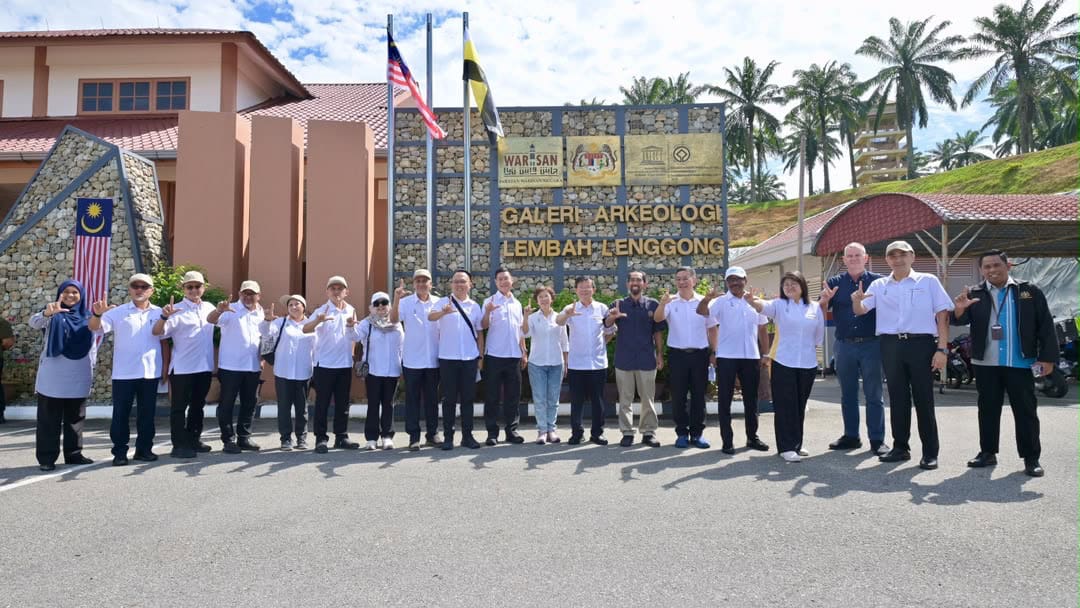

CHIEF Minister Chow Kon Yeow today led a high-level Penang government delegation on a one-day work visit to the Lenggong Valley, a Unesco World Heritage Site, renowned for its rich archaeological and geological heritage, dating back thousands of years.
The work visit was organised by Think City, with its senior director, Matt Benson, accompanying the delegation throughout the programme. He was present at each stop to facilitate the visit and provide insights into the significance of Lenggong Valley’s archaeological and heritage conservation efforts.
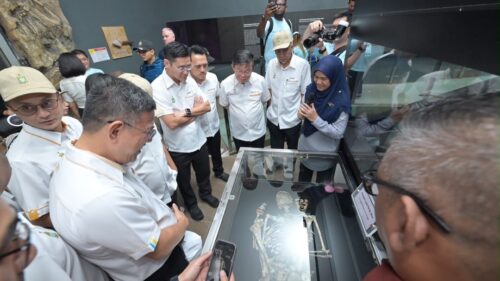
The delegation’s first stop was the Lenggong Archaeological Museum, where they received a comprehensive briefing from Department of National Heritage (JWN) Central Zone director Rafidah Abdullah on the valley’s historical significance and ongoing conservation efforts.
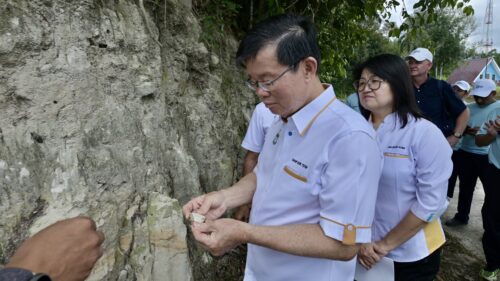
The visit also took the delegation to the site linked to the massive Toba supervolcanic eruption, which occurred about 74,000 years ago and left volcanic ash deposits across the region, making the area an important location for archaeological and geological studies.
They were also briefed about Malaysia’s oldest known human ancestor, Perak Man, whose remains are displayed at the museum.
Being a symbol of the country’s rich prehistoric heritage, he had lived around 10,000–11,000 years ago, during the Mesolithic (Middle Stone Age).
The delegation later proceeded to Bukit Bunuh, one of the most significant archaeological sites in Lenggong Valley, where they were briefed by Rafidah and geo guide Abdul Nasir Jalaludin, who represented Rumah Tiang 16.
During the briefing, Rafidah revealed that the government had acquired 77 hectares of land surrounding Bukit Bunuh to safeguard its unique meteorite impact site and rare stone artefacts.
“We completed the acquisition of the 77-hectare area in 2024 and are now in the process of fencing the site to better protect it.
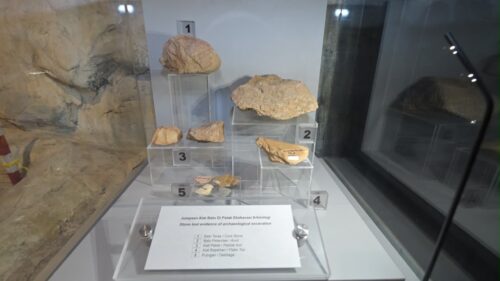
“We have identified and marked areas where the stones are found because these stones keep disappearing. Visitors often take them home as souvenirs or personal collections, making it increasingly difficult to preserve the site,” she said.
Rafidah explained that the rare stones were first identified through research conducted in 2010 and were formed following a meteorite impact estimated to have occurred about 1.83 million years ago, making the site significantly older than the Toba volcanic eruption.
“The stones here are extremely rare because they were formed by a meteorite impact. Some of them even contain embedded prehistoric stone tools, making them scientifically invaluable,” she added.
She noted that the area was once filled with such stones, but many had gradually disappeared over the years due to visitors removing them.
“Back in the 1990s, this place was covered with these stones. Today, many of the larger ones are gone.
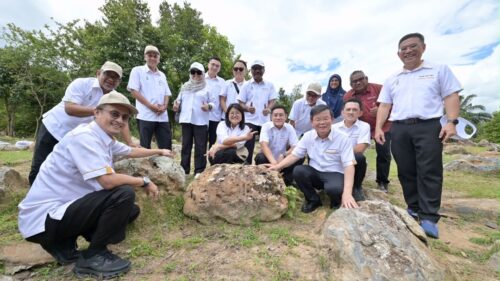
“That is why fencing the area has become a priority to ensure future generations can continue to appreciate and study this important heritage site,” she said.
Meanwhile, Abdul Nasir shared the local folklore associated with Bukit Bunuh, recounting the legend of a poverty-stricken couple whose willingness to sacrifice ultimately led to the discovery of hidden treasure.
He also distinguished the legend from the area’s recorded history, explaining that Bukit Bunuh was once regarded as a dangerous location during the communist insurgency, where numerous killings were believed to have taken place.
The visit provided the Penang delegation with valuable insights into heritage conservation, archaeological research and sustainable site management, highlighting the importance of preserving historically significant landscapes for education, tourism and future generations.
Story by Kevin Vimal
Pix by Law Suun Ting
Video by Siew Chia En