

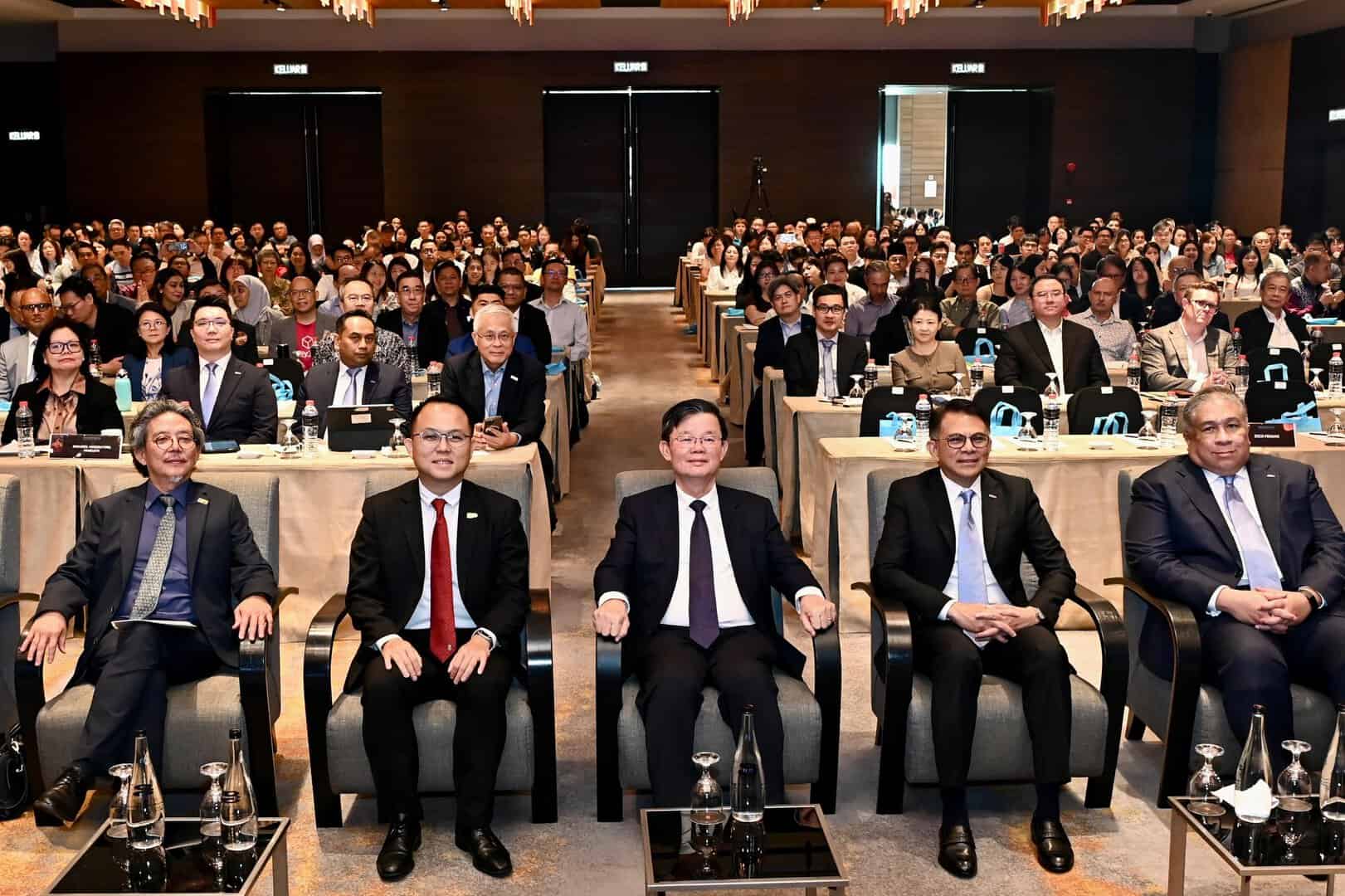

AS global economic uncertainty continues to reshape trade, investment and business operations worldwide, Penang must move beyond merely attracting multinational corporations (MNCs) and focus on nurturing more home-grown champions capable of competing on the global stage.
Chief Minister Chow Kon Yeow said the state’s future competitiveness would depend not only on its ability to secure investments, but also on how effectively local businesses, particularly small and medium enterprises (SMEs), are empowered to move up the value chain.
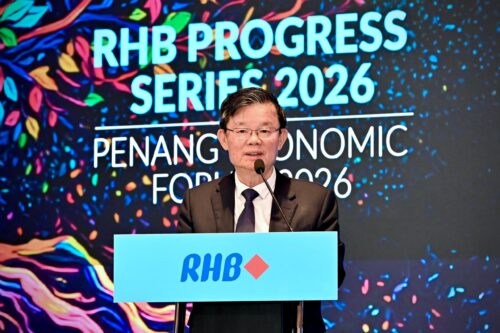
Speaking at the opening of the Penang Economic Forum 2026 at G Hotel earlier today, jointly organised by RHB Banking Group and Penang Institute, Chow stressed that resilience belongs to economies that adapt ahead of change rather than react to it.
“We cannot simply speak about becoming a more innovative and globally connected economy. We must put in place the institutions, policies and ecosystem that make it possible,” he said.
The Chief Minister noted that businesses globally are grappling with geopolitical tensions, shifting trade relationships, supply chain realignments, rising operating costs and rapid technological disruption.
Citing recent national economic indicators, Chow said nearly 38,000 jobs were lost nationwide while the SME Sentiment Index fell to a record low of 45.1 in the first half of 2026, reflecting growing concerns over weakening demand, rising costs, talent shortages and sustainability requirements.
Despite these challenges, Penang continues to demonstrate strong economic fundamentals.
From 2018 to 2025, the state attracted RM230 billion in approved manufacturing investments, four times the amount secured between 2010 and 2017. In 2025, Penang remained Malaysia’s largest exporter, contributing 38.1% of total national exports.
However, Chow cautioned that investment attraction alone was insufficient.
“The real challenge is converting these advantages into higher productivity, stronger innovation, better-paying jobs and greater value creation,” he said.
He added that Penang’s competitiveness must be driven by efficiency, technological capability and a future-ready workforce.
Aligned with the Penang2030 vision, Chow said the state has continued investing in digitalisation, entrepreneurship development and talent cultivation, with more than 1,000 micro, small and medium enterprises (MSMEs) participating in Industry 4.0 programmes.
He also highlighted the success of the Penang Silicon Design @5KM+ initiative, which has helped establish Malaysia’s strongest integrated circuit (IC) design ecosystem, now home to more than 50 IC design companies.
Looking ahead, Chow said Penang must produce more successful local enterprises capable of scaling internationally and eventually becoming publicly listed companies.
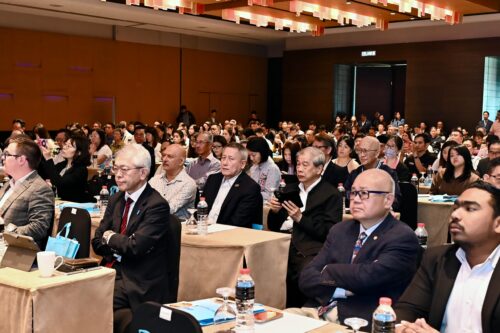
“As of May 17, 2026, Penang had only 106 public-listed companies. For a state that contributes so significantly to Malaysia’s exports and manufacturing output, I believe we can do better.
“Every successful listed company begins as an SME. The next SkyeChip, Pentamaster, ViTrox or regional technology champion may very well be sitting in this room today,” he said.
To support this ambition, Chow said the state is advancing plans for the Penang International Financial Centre (PIFC), which aims to provide high-growth companies with greater access to venture capital, private equity, cross-border investment networks and capital market expertise.
He revealed that the PIFC white paper is expected to be completed by the end of July or early August this year.
Meanwhile, RHB Banking Group chief executive officer and group managing director Datuk Mohd Rashid Mohamad said Penang remains one of Malaysia’s most dynamic economic success stories, underpinned by a strong ecosystem of multinational corporations, local enterprises and entrepreneurs.
“Penang’s strength lies not only in its strategic position or industrial base, but in the depth of its ecosystem, a combination of global corporations, local enterprises and a vibrant community of entrepreneurs,” he said.
Rashid noted that SMEs continue to serve as the backbone of the state’s economy, supporting employment, innovation and integration into global supply chains.
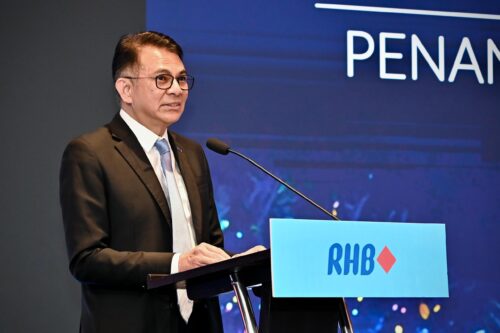
“The opportunity before us is not simply to attract investment, but to ensure more Malaysian businesses participate meaningfully in these growth opportunities,” he said.
He added that the next phase of growth would depend on how effectively SMEs and mid-sized companies strengthen their capabilities and deepen their participation in regional and global supply chains.
Acknowledging the increasingly complex global business environment, Rashid said access to financing remains a critical enabler for SMEs, particularly as businesses navigate volatility, digital transformation and sustainability requirements.
“This is where collaboration becomes essential. No single institution can address these challenges in isolation,” he said.
He emphasised that forums such as the Penang Economic Forum should serve as platforms that translate ideas into action.
“The true measure of success will not be what is discussed in this room. It will manifest in the strength of partnerships formed and opportunities unlocked which will provide stronger support for businesses.
“That is where real progress is made,” he added.
During a media conference after the forum, Chow reiterated that empowering SMEs remains a key priority for the state and its partners.
He said efforts are being undertaken through various training and talent development programmes, including the Silicon Design Initiative and CHIP Academy, to strengthen the capabilities of local companies.
“There are a lot of opportunities outside. Are we ready for it? That’s the issue,” he said, adding that SMEs require access to technology, financing, markets and competency-building initiatives to better support MNCs and capture new opportunities.
Commenting on the role of the forum, Rashid said the discussions must ultimately lead to tangible outcomes.
“It is not about just the forum. It is more of what do we do next, how we can execute those ideas, not just get the insight,” he said.
Separately, when asked about preparations for National Journalists’ Day (Hawana) 2026, Chow said the Penang government has been working closely with the Ministry of Communications for the past several months ahead of the national celebration.
“This is a programme by the Ministry of Communications. For the past two to three months, we have been engaged by the ministry and informed that the celebration will be held in Penang this Saturday, with a dinner reception on Friday, to which the state is also contributing.
“We hope Hawana this year will be a success,” he said.
Also present earlier were Entrepreneur Development and Cooperatives Minister Steven Sim Chee Keong, Penang Institute executive director Datuk Dr Ooi Kee Beng, and others.
Story by Kevin Vimal
Pix by Siti Nuratikah Rahmat
Video by Law Suun Ting