

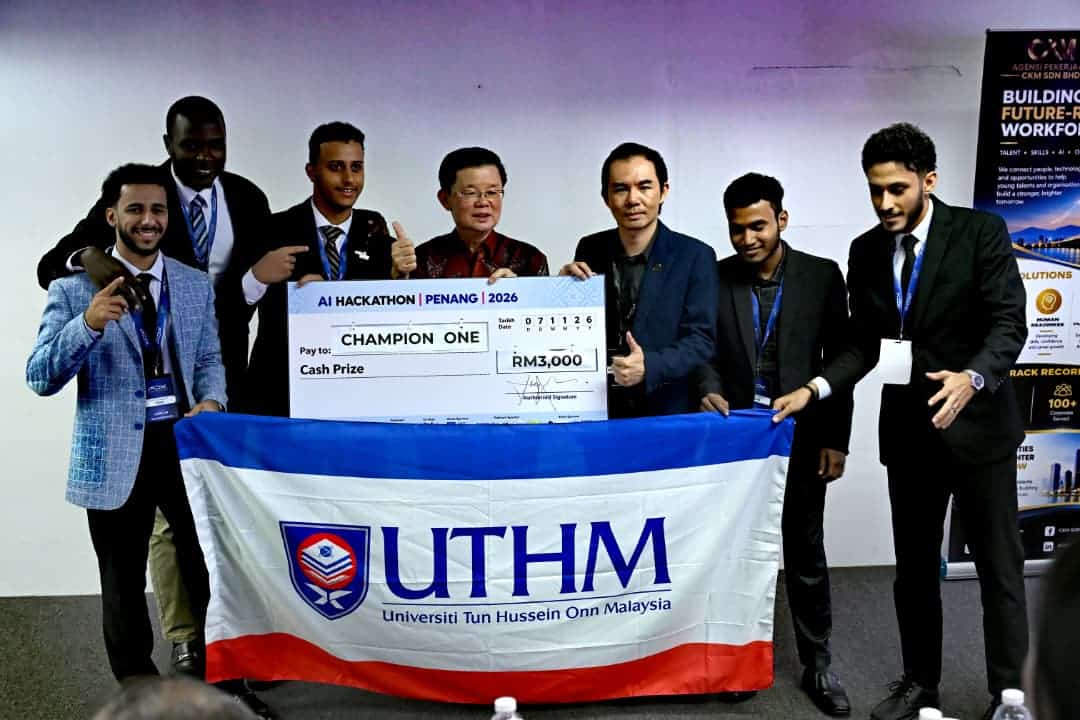

AFTER four weeks of intensive learning and development, the AI Future Makers Bootcamp 2026 (AIFM) concluded with 20 finalist teams pitching their artificial intelligence (AI)-powered projects to industry judges, showcasing solutions aimed at addressing real-world challenges.
The initiative aims to move students beyond basic AI tool usage towards developing practical AI-powered solutions for industry challenges. It also seeks to bridge the gap between academia and industry through mentorship, hands-on experience and pitching opportunities, while nurturing critical thinking, teamwork and digital innovation among young talent.
Chief Minister Chow Kon Yeow, who attended the closing ceremony and prize presentation, said Penang’s future economic growth depended not only on attracting investments and building factories, but also on developing skilled local talent who could secure meaningful employment and grow alongside the state’s technology sector.
He drew parallels between the bootcamp and Penang’s semiconductor industry, which has developed over more than five decades through generations of workers acquiring technical knowledge and skills through hands-on experience and shared learning.
“In 1972, we opened the country’s first free trade zone in Bayan Lepas. Many of the first workers had never seen a microchip. They learned on the job, and they learned from each other.
“A generation later, their children were the engineers running those very factories today. Some of you may be those children. Some of you may be their grandchildren as well, because we have already more than 50 years of semiconductor history in Penang,” he said.
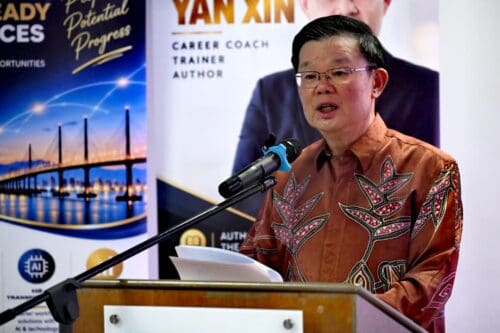
Chow also highlighted how AI was changing the way people searched for jobs and how companies recruited employees, making it increasingly important for students and employers to adapt to the evolving workforce.
“It is a timely challenge because AI is already changing how people look for work and how employers look for people. We see it every day now. Students ask AI to explain the lecture they miss.
“Job seekers use it to polish a resume in minutes. And on the other side of the desk, many companies now use AI to sort those same resumes before a person ever reads them,” he said.
To strengthen industry-academia collaboration, Chow said the state government had established the Penang Talent Focus Group under the My Penang My Workplace initiative to bring industry players, universities and human resource practitioners together to better match local talent with employment opportunities.
“In June this year, we launched the Penang Talent Focus Group under the My Penang My Workplace initiative. It brings industry, universities, and human resources practitioners to the same table so that talent and opportunity can find each other faster,” he said.
He also urged business owners and human resource practitioners to look beyond conventional recruitment criteria and provide young talent with opportunities through internships, mentorship and industry engagement.
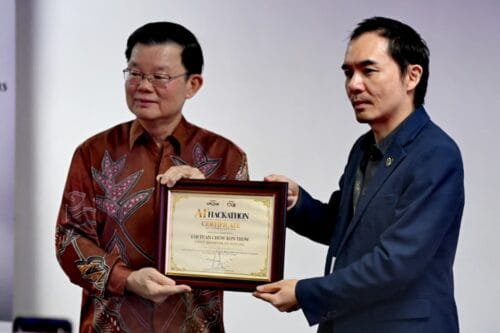
“But good ideas still need someone willing to give them a chance. To the business owners and HR practitioners, you have seen what this team can do. Take a second look at the applicants whose CV does not fit the usual mold. Offer an internship, an hour of mentoring, or simply a conversation. Sometimes that is all it takes for a younger person to see a future in Penang,” he said.
Chow further encouraged participants to continue learning from one another and develop their ideas locally, emphasising that Penang’s progress depended on creating opportunities for its people to grow.
“Students brought the code. Professionals brought years of hiring and leading people. Together, you turn it into ideas you could stand up and pitch. It is Penang’s question too.
“We can attract the investment and build the factories, but Penang only moves forward if our people find the right job, grow in it, and choose to stay. So keep asking, keep building, keep learning from each other the way you did here. And when your idea is ready, build it in Penang,” Chow said.
Before the prize presentation, Chow also reflected on the state’s semiconductor legacy and its efforts to nurture the next generation of innovators.
“More than 50 years ago, Penang learned to make chips. Today you have shown that Penang can also make its future makers,” he said.
The competition featured 20 finalist teams: DabeU, SLarpers, AI?, Glecxus, A-I do it, Connexion, CTech, IT1503, Pulau Pinang Electronic Pioneer (PiEP), sixseven, Five Minutes Reach, 3Musketeers, Alkids, Chit Ko Ko, Code X, OverwatchEnjoyer, Void Breakers, T&J, EAQ and 2Real.
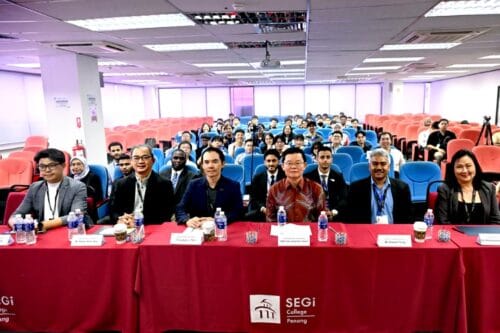
Present as well were AIFM 2026 Chairman Ts Lukas J. Tan and SEGI College Penang student experience head Vincent Tung Chin Aun, along with judges Digital Penang digital coach Fazlu Muhyudin, Malaysia Progressive Entrepreneurs Chamber of Commerce (MPE) Director of Youth & Young Entrepreneurs Soh Yan Xin, Veon Szu and Kok Thye Founder Khaw Veon Szu, Tactevo Consulting Founder and CEO Deanna Tung and Tessolve Semiconductor ASEAN regional head vice president Muthurama Gurusamy.
Void Breakers emerged as the champion, receiving RM3,000, while Chit Ko Ko took first runner-up with RM2,000 and PiEP placed second runner-up with RM1,000.
Two Teamwork Awards, each carrying RM500, went to Team AI? and Team A-I do it, while four Creativity Awards, each worth RM750, were presented to Chit Ko Ko, Void Breakers, PiEP and EAQ.
Through initiatives such as the AI Future Makers Bootcamp, Penang aims to continue developing digital talent and strengthening industry collaboration to prepare its young workforce for an increasingly AI-driven economy.
Story by Ammar Mikhail Aamer
Pix by Muhammad Iqbal Hamdan
Vid by Law Suun Ting