

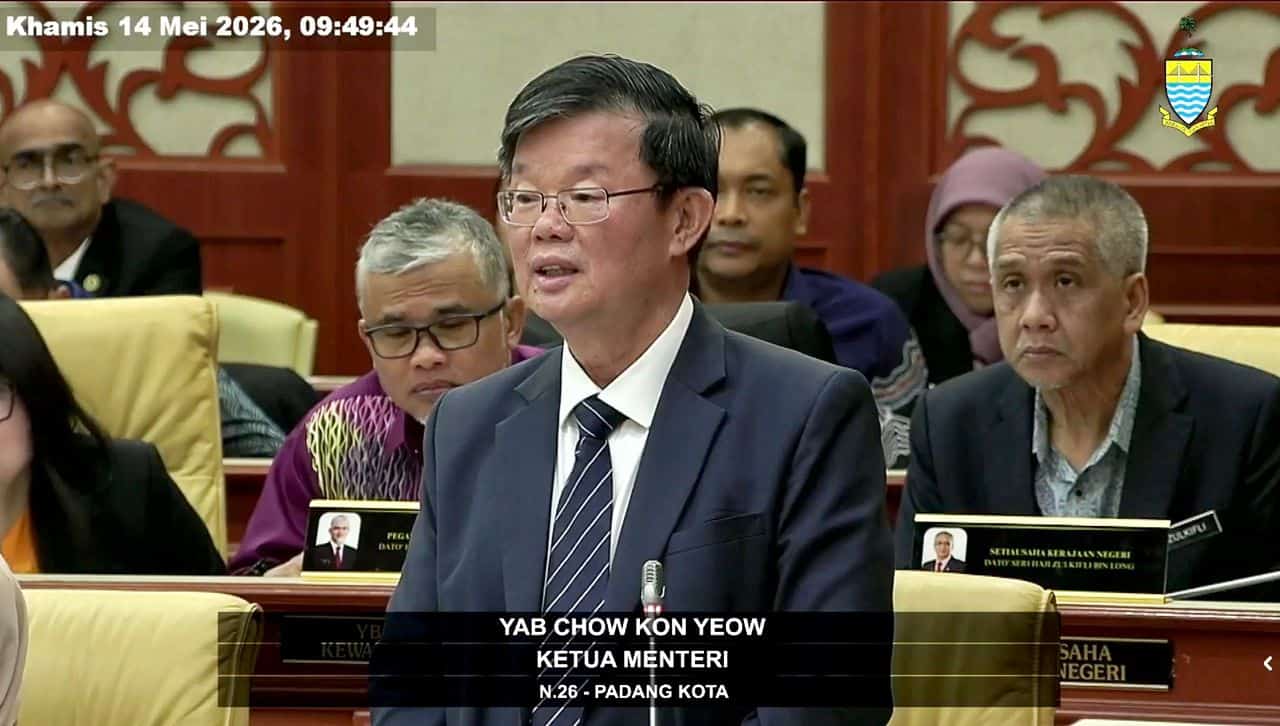

PENANG is reinforcing its strategy of prioritising high-value, technology-driven industries as the state records RM32.9 billion in approved investments in 2025, alongside strong export performance of RM573 billion.
Chief Minister Chow Kon Yeow (PH – Padang Kota) said the state continues to attract quality investments, particularly in the electrical and electronics (E&E), semiconductor and medical device sectors, underpinned by its strong industrial ecosystem and skilled workforce.
“The investment performance of Penang in 2025 shows encouraging achievements and remains one of the main contributors to the state’s economic growth.
“The state continues to attract high-quality investments, especially in high-technology manufacturing such as E&E, semiconductors and medical devices,” he said in reply to an oral question by Ong Ah Teong (PH – Batu Lanchang) in the State Legislative Assembly earlier today.
He added that RM32.9 billion in approved investments were recorded based on data from the Malaysian Investment Development Authority (MIDA), driven by ecosystem strength, infrastructure readiness and Penang’s strategic role in global supply chains.
“The steady policy environment and continued support from the state government have also increased confidence among foreign and domestic investors,” he said.
On trade performance, Chow said exports reached RM573 billion while imports stood at RM382 billion in 2025.
“Overall, export and import performance through both major entry points reflects a high level of trade activity and underscores Penang’s role as an important node in regional and global supply chains, particularly for high-technology and high-value-added goods,” he said.
He noted, however, that detailed breakdowns between Penang Port and Penang International Airport are not currently available.
In the supplementary discussion, Chow outlined Penang’s increasingly selective approach in attracting investors, focusing on industries that strengthen the state’s supply chain and technological ecosystem.
He said Penang prioritises industries that maximise value creation while minimising excessive resource use such as land, water and labour.
“In Penang, we prioritise industries or investors that can connect with our supply chain and bring high technological value, while also using resources efficiently such as land, water and labour. This is part of our consideration in attracting investors,” he said.
Chow acknowledged that the state previously turned away some land-intensive, low-value industries.
“In the past, there were investors from certain types of industries that we felt did not add value to our ecosystem, so we recommended they go to neighbouring states that may have larger land areas,” he said.
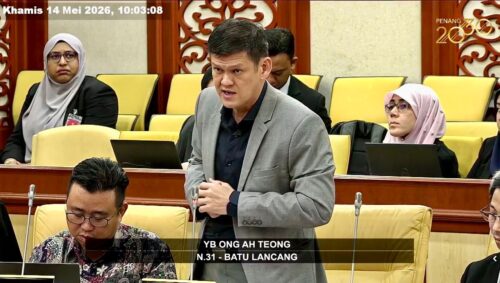
Chow also stressed the concept of opportunity cost in land allocation decisions.
“If we sell 100 acres to Investor A, then we lose the opportunity cost of 100 acres to promote the industries we actually want. That is Penang’s approach,” he explained.
He added that privately developed industrial parks now provide additional flexibility, allowing some investors to remain in Penang without consuming state-managed land.
Chow also pointed to rising global demand driven by artificial intelligence (AI), cloud computing and advanced manufacturing technologies, despite geopolitical uncertainties.
“Due to technological changes such as AI and cloud computing, there are factories that are extremely desperate to expand their capacity,” he said.
He revealed that investor urgency has intensified significantly.
“Last week, a factory came and asked me to consider 100 acres. ‘Quickly, I want it yesterday, not tomorrow,’ because customer orders are so strong that they cannot meet capacity demand,” he said.
“If we cannot meet their requirements, they will have no choice but to look at other locations,” he added.
Chow said Penang’s niche strength in high-tech manufacturing continues to provide resilience amid global uncertainty.
“Despite major challenges, we are fortunate to be a state with niche sectors.
“With the expansion of AI, cloud computing and related technologies, our future at this point remains strong and bright,” he said.
Story by Kevin Vimal
Pix by Alissala Thian