

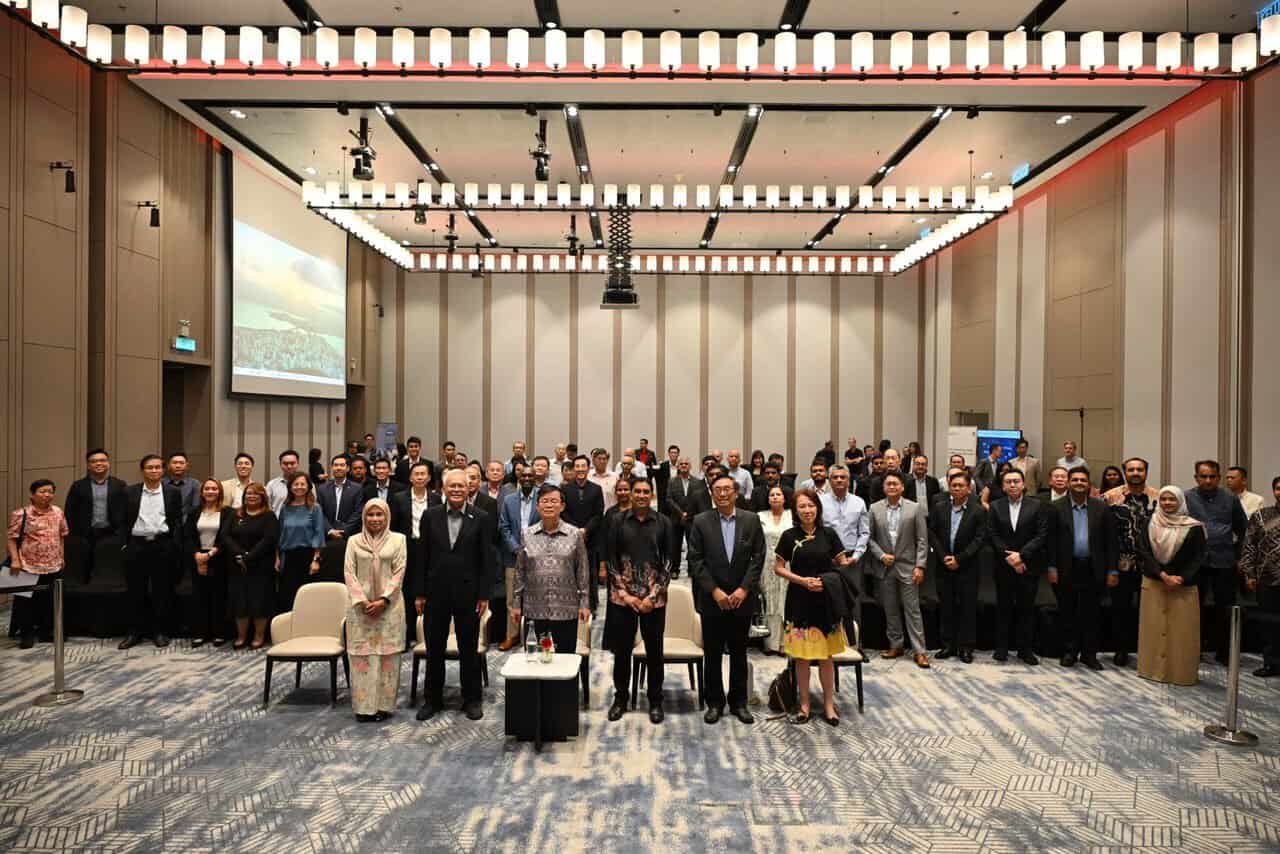

PENANG’s semiconductor industry has remained the backbone of the state’s economic growth for more than five decades, evolving from a modest outsourced semiconductor assembly and test (OSAT) hub into one of the region’s most established and integrated semiconductor ecosystems.
Chief Minister Chow Kon Yeow said Penang’s remarkable transformation has been driven by a strong industrial foundation comprising more than 350 multinational corporations (MNCs), over 6,500 manufacturing-related small and medium enterprises (SMEs), and a highly skilled workforce.
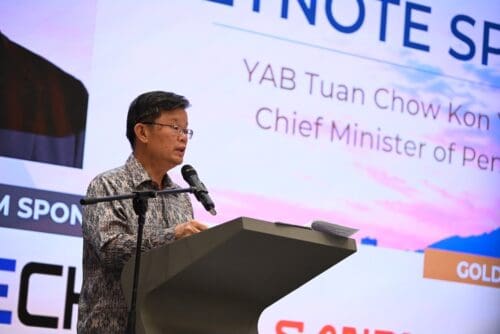
“From our early beginnings in the OSAT sector, Penang has grown into one of the most mature and comprehensive semiconductor ecosystems in the region today,” Chow said during the MSIA–Penang Chief Minister Dialogue 2026 held at the Penang Marriott Hotel in Gurney Drive this evening.
Also present were InvestPenang chief executive officer Datuk Loo Lee Lian, Northern Corridor Implementation Authority (NCIA) chief executive officer Mohamad Haris Kader Sultan, and Malaysia Semiconductor Industry Association (MSIA) president Datuk Seri Wong Siew Hai.
Chow noted that the resilience and strength of Penang’s industrial ecosystem continue to be reflected in the state’s investment performance.
“In 2025, Penang ranked third among Malaysia’s leading investment destinations, recording RM22.4 billion in approved manufacturing investments,” he said.
According to Chow, the electrical and electronics (E&E) sector, together with machinery and equipment industries, remained the primary engines of growth, contributing RM17 billion or 74% of the state’s total approved manufacturing investments.
While welcoming the encouraging investment figures, Chow acknowledged that the global semiconductor industry is currently facing a rapidly evolving and increasingly challenging environment.
“Geopolitical tensions, developments in conflict regions, trade uncertainties, evolving tariff regimes, fluctuations in energy prices, as well as supply chain and logistics disruptions continue to pose significant challenges for businesses worldwide.
“Amid these uncertainties, I would like to reaffirm the Penang government’s unwavering commitment to strengthening the state’s industrial capabilities and enhancing our position within the global semiconductor value chain,” he said.
Chow stressed that effective policymaking must be guided by real-world industry insights and continuous engagement with stakeholders.
“As technologies evolve and business environments change, governments must remain responsive, agile and aligned with industry needs,” Chow said.
Chow stressed that effective policymaking must be guided by real-world industry insights and continuous engagement with stakeholders.
He said the state government places great importance on regular dialogue with industry players as part of efforts to strengthen policy support, improve regulatory efficiency, facilitate business growth, and develop future-ready talent, while also addressing innovation, sustainability and compliance needs.
Meanwhile, Wong said MSIA has strengthened its role as the collective voice of Malaysia’s semiconductor industry over the past five years, championing industry priorities, enhancing stakeholder engagement, and supporting initiatives that drive the sector’s advancement.
“Beyond advocacy, MSIA has also intensified its efforts in talent development and SME capacity building to ensure the industry remains competitive and future-ready,” he said.
Wong highlighted Penang’s pivotal contribution to Malaysia’s semiconductor success story, noting that the state has been at the forefront of the industry’s development for more than five decades.
“What began as a manufacturing hub has evolved into a globally recognised semiconductor ecosystem spanning integrated circuit (IC) design, advanced manufacturing and automation,” he said.
At the same time, Wong noted that Malaysia continues to attract substantial foreign direct investments (FDIs), creating significant opportunities for further growth and expansion.
He said the National Semiconductor Strategy (NSS) provides a clear roadmap for Malaysia to move beyond manufacturing and into higher-value activities.
“Under the National Semiconductor Strategy, Malaysia aspires to progress from ‘Made in Malaysia’ to ‘Made by Malaysia’.
“The semiconductor industry will play a critical role in driving this transformation through greater emphasis on design, development and innovation.
“This means transforming Malaysia from the heart of manufacturing into the brain of innovation for the global semiconductor industry,” he said.
Story by Riadz Akmal
Pix by Adleena Rahayu Ahmad Radzi
Video by Siti Nuratikah Rahmat