

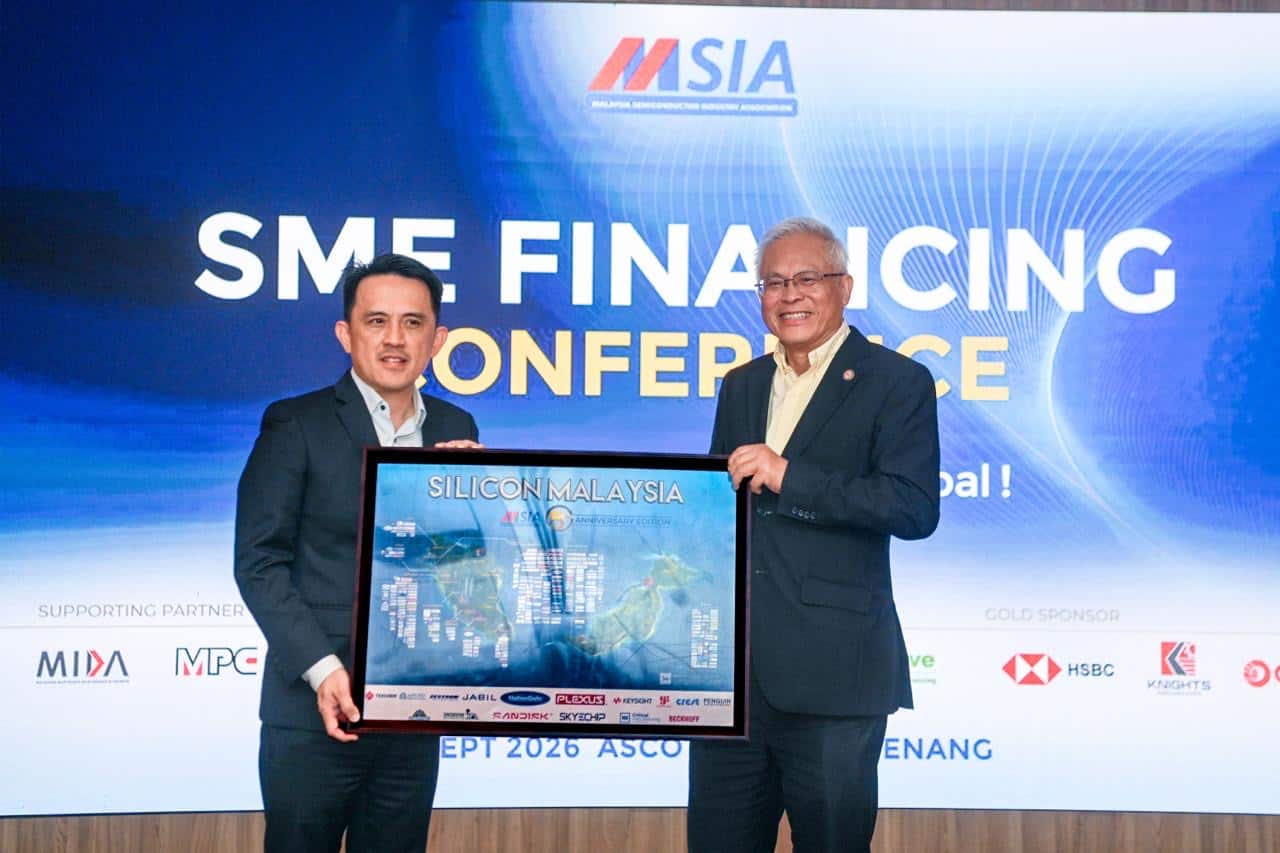

SMALL and medium enterprises (SMEs) are the backbone of the economy, creating jobs, supporting local communities, strengthening supply chains and laying the foundation for a more inclusive and resilient economic landscape.
However, Penang Trade and National Unity Committee chairman Goh Choon Aik said access to finance remains one of the biggest barriers hindering SMEs from reaching their full potential.
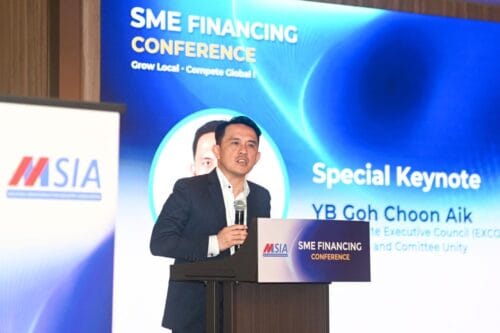
Speaking during Day Two of the SME Financing Conference at Ascott Gurney Penang in George Town today, Goh said the discussion on SME financing should go beyond simply asking how much an SME could borrow.
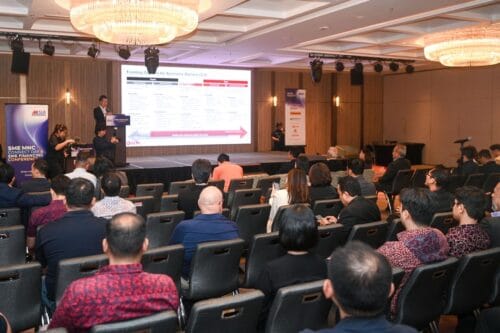

“The more important question is: does the SME have access to the right financing, at the right time, and for the right purpose?” he said.
Goh highlighted five key areas that should form the foundation of a more comprehensive SME financing ecosystem namely working capital financing, expansion and upgrading, supply chain financing, green financing and growth financing.
On working capital financing, he said even healthy businesses could face cash-flow pressures, particularly when they had to fulfil orders and cover operating costs before receiving payments from customers.
“An SME may have confirmed orders, but it still needs money to purchase raw materials, pay workers, manage inventory and meet operating expenses before receiving payment from customers,” he said.
As such, he stressed the importance of financing mechanisms that were accessible, timely and responsive to the actual cash-flow cycles of SMEs.
“The second area, expansion and upgrading, is crucial in helping SMEs move beyond survival and towards sustainable growth,” he said.
Goh said businesses needed financing to purchase new machinery, automate production, adopt digital systems, improve productivity and expand their production capacity, particularly as industries became increasingly technology-driven and competitive.
“Our SMEs should not remain suppliers of yesterday.
“We want them to become the technology-enabled, productive and competitive suppliers of tomorrow,” he said.
Turning to supply chain financing, Goh said this was particularly important for an industrial economy such as Penang, where many SMEs had the potential to become suppliers to multinational corporations (MNCs).
However, he noted that some SMEs might lack the working capital needed to fulfil larger orders despite having secured business opportunities.
Supply chain financing, he said, could help bridge this gap by allowing financing to follow the strength of established business relationships.
“When an SME receives a confirmed purchase order from a financially strong corporate customer, financing should be able to follow the strength of that business relationship,” he said.
According to Goh, this would enable financing to serve as a bridge connecting local SMEs with multinational supply chains.
“Our objective should not simply be to attract multinational investment, but to ensure that local SMEs have the capacity to participate in the value created by that investment,” he said.
The fourth area, green financing, is becoming increasingly important as businesses transition towards a low-carbon economy.
Goh said SMEs needed access to financing to invest in energy-efficient machinery, renewable energy, waste reduction, water efficiency and other green technologies.
He stressed that green financing should not be viewed solely as an environmental instrument, but also as a tool to strengthen business competitiveness.
“Reducing energy consumption can reduce operating costs. Improving resource efficiency can improve productivity.
“Adopting green technologies can also help SMEs meet the environmental requirements of multinational customers,” he said.
Meanwhile, growth financing would be essential as SMEs expanded and their financial requirements became more sophisticated.
Goh said traditional working-capital loans might no longer be sufficient for larger and more established businesses, which could require a combination of bank financing, credit guarantees, equity financing, venture capital, development financing and other alternative financing instruments.
“The financing ecosystem must therefore evolve together with the business,” he said.
He pointed out that a start-up, a growing manufacturer and a company seeking to enter global markets would each have different financing requirements.
“SME financing should not be treated as a standalone financial issue.
“It is closely connected to productivity, technology, market access, supply chains, sustainability and job creation,” he said.
For Penang, Goh said the approach should be clear which is to finance, upgrade, connect, green and grow SMEs.
“If we can connect financing with real business opportunities, we can create a stronger local SME ecosystem,” he said.
Goh stressed that the ultimate objective should go beyond simply helping SMEs secure financing.
“Instead, financing should enable businesses to build capacity, access larger markets, participate in global supply chains and create higher-value opportunities for the people of Penang.
“That is how SME financing can become not merely a financial tool, but an instrument for inclusive and sustainable economic growth,” Goh concluded.
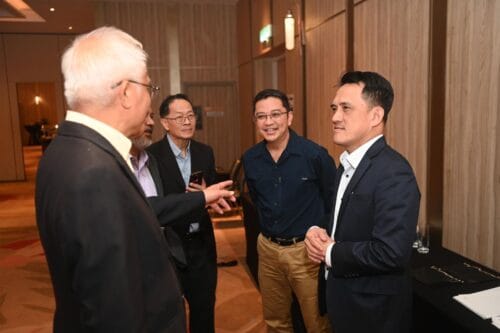
Also present during the event was Malaysia Semiconductor Industry Association (MSIA) president Datuk Seri Wong Siew Hai.
Story by Riadz Akmal
Pix by Siew Chia En