


THE Traffic Management Plan (TMP) for the Penang Light Rail Transit (LRT) Mutiara Line project is submitted and reviewed on a monthly basis to keep pace with the evolving nature of construction works.
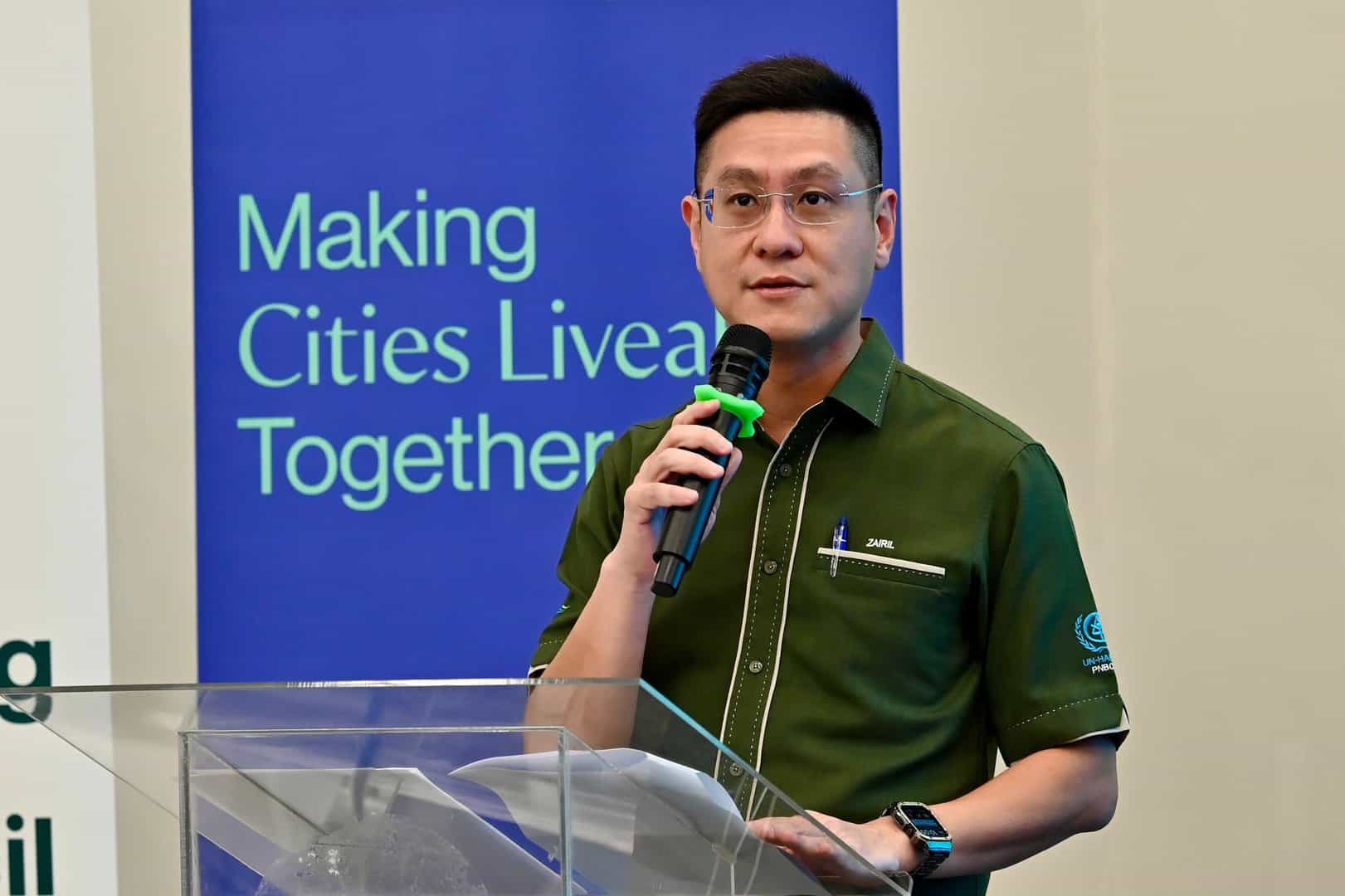
Penang Infrastructure, Transport and Digital Committee chairman Zairil Khir Johari said the project owner, Mass Rapid Transit Corporation (MRTC), submits the TMP to the Penang Island City Council (MBPP) every month for evaluation.
“The plan is thoroughly scrutinised by all relevant technical departments before it receives approval.
“As this is a dynamic project, the scope of work changes from time to time.
“Construction may be relocated or schedules adjusted, which is why the TMP must be updated monthly,” he told reporters after attending the Penang Green Council’s Penang Nature-Based Climate Adaptation Programme (PNBCAP) Awards Ceremony at Think City @ UAB Building in Gat Lebuh China today.
Zairil said any changes arising from revised traffic plans would be communicated early through official channels, including MBPP’s platforms and social media.
“For public transport users, any adjustments to bus routes will be announced by Rapid Penang.
“These are carefully planned measures and not last-minute decisions,” he said.
Addressing concerns over traffic disruptions during the upcoming festive season, Zairil said MRTC and main contractor SRS Consortium had assured the state government that road closures would be kept to a minimum.
“For the Chinese New Year period, there will be no major lane closures. Any necessary works will be carried out at night and will avoid peak hours,” he said.
He added that authorities aim to avoid road closures altogether during festive periods, although construction activities may continue at a reduced pace.
“Whether work is fully halted depends on the contractor, but typically during major celebrations such as Chinese New Year, activities may pause for one or two days,” he explained.
Earlier, Transport Minister Anthony Loke had instructed contractors involved in the Mutiara Line LRT project to continuously implement traffic mitigation measures to prevent severe congestion, particularly as construction intensifies across the island.
He said the directive followed a rapid increase in works, including in areas near Penang International Airport (PIA), which are expected to experience greater traffic impact due to the movement of heavy machinery.
The ministry has also urged close coordination between contractors, local authorities and the state government to minimise disruption to road users.
Construction of the Penang LRT Mutiara Line began this year.
The 29.5-kilometre rail alignment will link 21 stations across the island and be supported by park-and-ride facilities, feeder bus services and two main depots.
Once completed, the line will serve major locations including Penang International Airport, the Bayan Lepas Free Industrial Zone, George Town’s city centre and Penang Sentral, as well as areas near police stations in Jalan Tengah, Bayan Baru, Sungai Nibong and Jelutong.
Speaking on climate adaptation efforts, Zairil said urban heat has become a daily challenge in Penang’s densest neighbourhoods, prompting the implementation of urban greening projects across George Town and Bayan Lepas through Nature-based Solutions (NbS).
“These initiatives aim to cool streets, buildings and public spaces, and were recognised today at the PNBCAP Awards Ceremony,” he said.
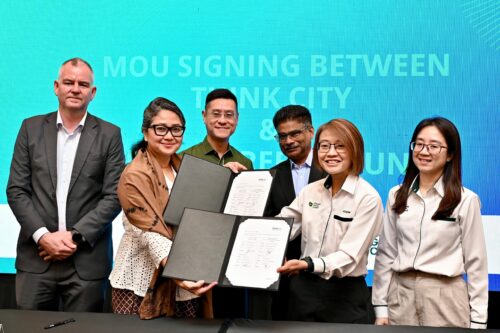
The event also marked the signing of a Memorandum of Understanding (MoU) between Think City and the Penang Green Council (PGC) to formalise long-term collaboration in advancing climate action, environmental sustainability and community resilience in the state.
“As climate pressures intensify, cities can no longer treat adaptation as a distant concern for future generations. It is an urgent responsibility that must be integrated across planning, infrastructure, communities and institutions,” Zairil said.
He stressed that climate resilience is central to the Penang2030 vision of building a greener and more liveable state.
“In practical terms, if our streets are too hot to walk, public spaces are uncomfortable and outdoor livelihoods are exposed to heat stress, our urban systems will not function as they should,” he added.
Zairil noted that the PNBCAP programme began more than 30 months ago and brings together multiple agencies to address climate impacts through integrated approaches combining nature-based solutions with conventional infrastructure.
“Under PNBCAP, MBPP has led initiatives such as pocket parks and extensive tree planting to reduce the urban heat island effect.
“These interventions show how climate adaptation can be translated into tangible improvements to the urban environment,” he said.
Also present at the ceremony were Penang Housing and Environment Committee chairman Datuk Seri Sundarajoo Somu, PGC chief executive officer Josephine Tan Mei Ling, MBPP mayor Datuk A. Rajendran, Penang Drainage and Irrigation Department (DID) director Ooi Soon Lee, Chief Minister Incorporated (CMI) general manager Datin Bharathi Suppiah, PNBCAP programme manager Dr Kwan Soo Chen, Think City Board of director Suryani Senja Alias, Astaka Kota Selera chairman Datuk Dr Shahul Hameed Syed Mohamed and Power Science founder Dr Khong Yoon Loong.
Story by Riadz Akmal
Pix by Siti Nuratikah Rahmat