

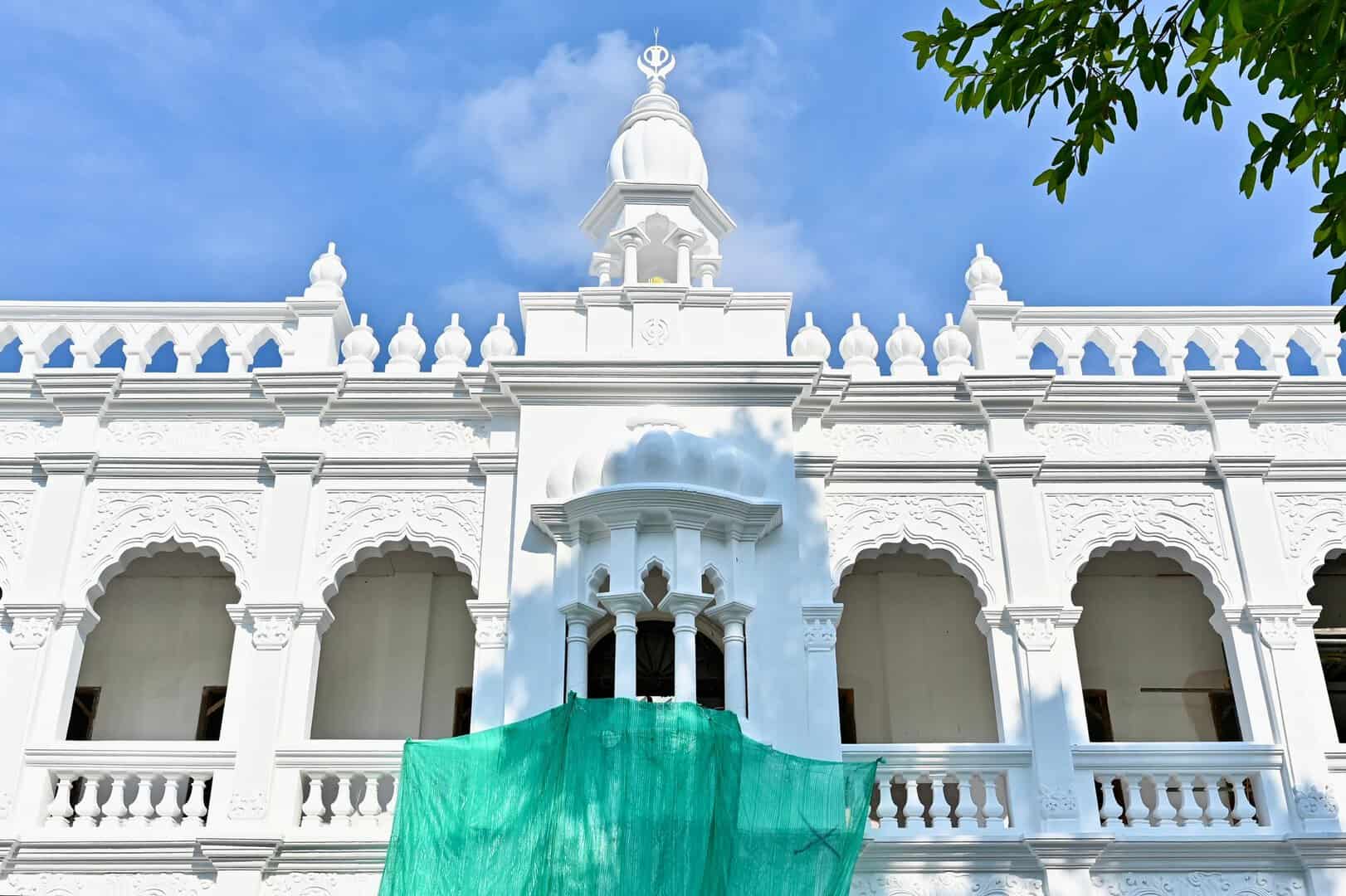

FROM the day it was established more than a century ago, at the Fort Cornwallis, and after it’s relocation to the present site at Jalan Gurdwara, the Wadda Gurdwara Sahib Penang has never ceased to serve the community.
According to temple chairman Santok Singh, the gurdwara, currently undergoing restoration, continues to stand as a vibrant symbol of cultural harmony, upholding its long-standing tradition of providing food and shelter to those in need.
In a recent exclusive interview with Buletin Mutiara, Santok said that the restoration of the Wadda Gurdwara Sahib Penang, one of the oldest Sikh temples in Southeast Asia, is nearing completion, with about 90% of the work done.
“Since the establishment at then site (Fort Cornwallis), it has continued to serve as an significant place of worship in Penang for the Sikhs, supporting religious services, community gatherings, and cultural activities up to today.
“The Gurdwara is not only significant to Sikhs; in its early days when the ships from Calcutta (now known as Kolkata) and Madras (now known as Chennai), it also served as a shelter for the wider Indian community and others, including Europeans and hippies, as its doors have always been open to all, providing food and a safe place, both then and now.
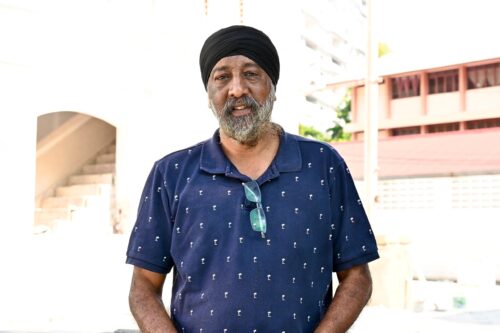
“Our principles are guided by what we call ‘seva’ (service), a core value of selfless giving and community care. In practice, this means we serve free food daily to whoever comes in, regardless of their background, faith, or circumstances,” Santok said.
Santok shared that the restoration of the 125-year-old gurdwara, a Category One heritage site, must be carried out with great care. For this reason, the work is being done to preserve and reflect its original design as closely as possible.
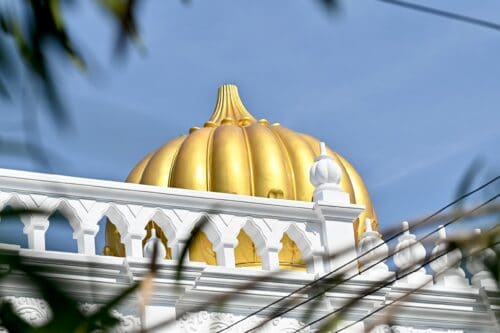
“This includes the installation of a huge dome that was brought in from Amritsar, India.
“In the early days, builders did not use cement. Instead, they relied on lime mortar for everything, including laying bricks. In contrast, modern construction uses cement, but for this restoration, they are returning to traditional methods.
“At some point, possibly around the 1970s, the original floral designs were replaced with colourful tiles to give the building a refreshed appearance.
“However, when the architect began the current restoration, it was decided that the structure should be returned to its original design,” he added.
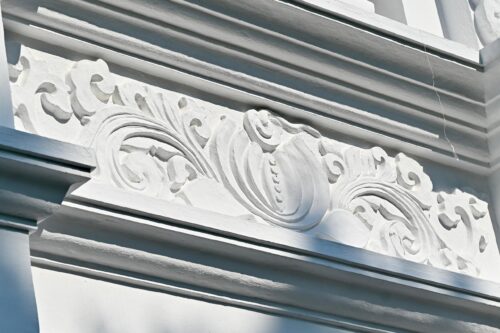
Speaking on the sculpture work of the building, Santok said a team of skilled artisans was brought in from Tamilnadu, India.
“This group consists of about seven craftsmen who comes from a place known for their long tradition of artisan work, located near to Rameswaram.
Pix of craftsmen at work :-
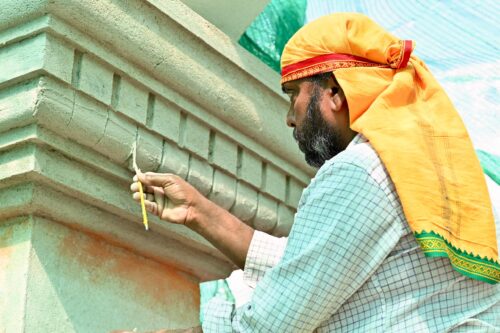
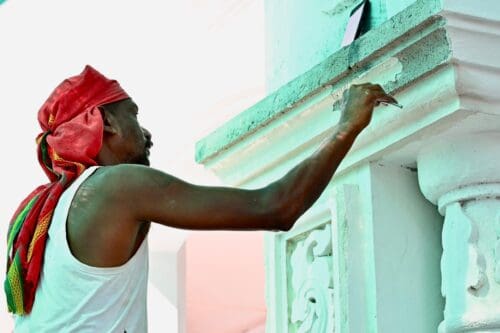
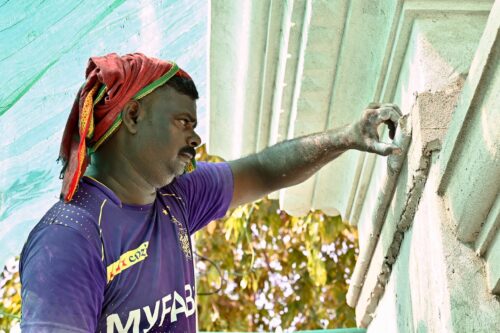
“In this community, craftsmanship is often passed down through generations, with many specialising in detailed sculpture work.
“These artisans have also worked on several Hindu temples in Penang such as the Jalan Baru Sri Muniswarar Temple and the Datok Keramat Kamatchi Amman Temple where their fine workmanship is evident. Their expertise made them the ideal choice for this project,” he said.
Story by Tanushalini Moroter
Pix by Siti Nur Atikah Rahmat