


FOR many school-leavers fresh out of Sijil Pelajaran Malaysia (SPM), the next step is one of the most defining decisions of their lives.
Choosing the right institution is not merely about continuing education, but it is about shaping a future.
The path they take can either open doors to meaningful careers or leave them struggling to find their footing in an increasingly competitive job market.
Recognising this, one institution is taking a bold and practical approach to ensure that young Malaysians are not just educated, but truly industry-ready.
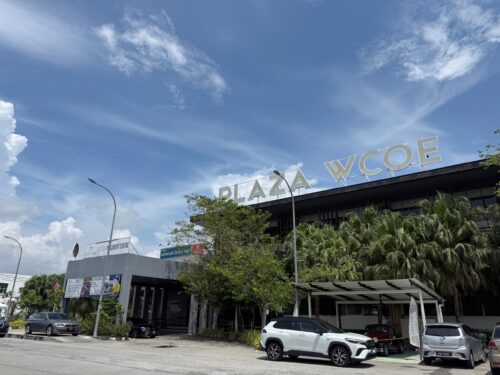
The Walta Centre of Excellence (WCOE), a technical and vocational training centre located in Batu Kawan Industrial Park (BKIP), is emerging as a game-changer in addressing the long-standing talent mismatch in Penang’s manufacturing sector.
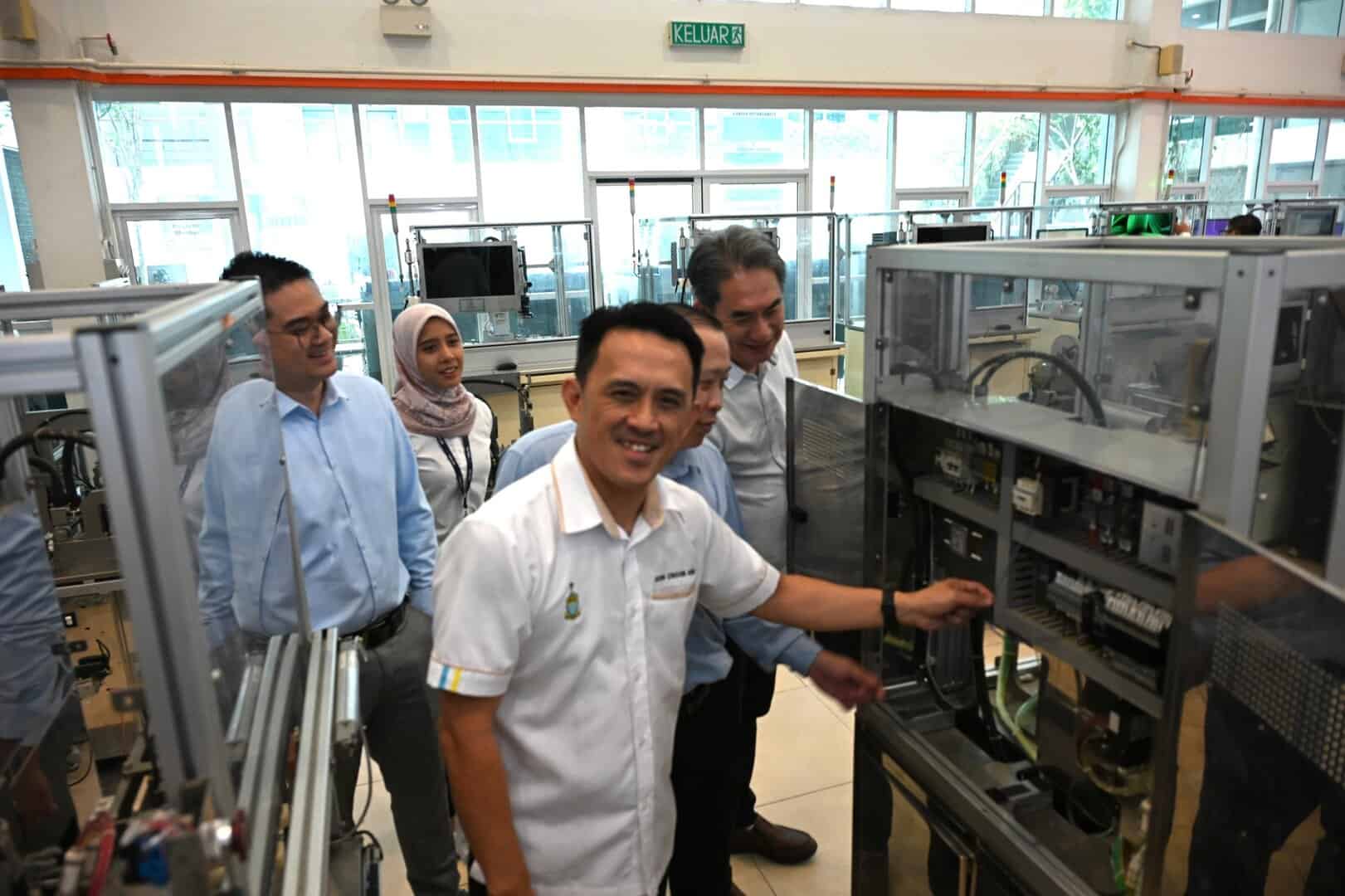
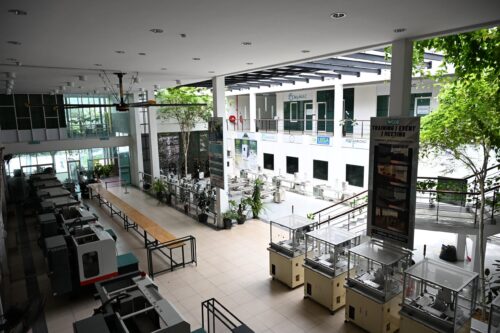
Unlike conventional institutions, WCOE operates as a ‘teaching factory’, a concept that integrates real industrial environments into the learning process.
Established by Walta Engineering Sdn Bhd, the centre was designed with a clear mission which is to produce skilled workers who can immediately contribute to the industry upon graduation.
Walta Engineering Sdn Bhd group managing director Goh Kheng Sneah explained that the idea behind WCOE is rooted in solving a critical issue faced by the state.
“The main reason WCOE is established is to solve the talent mismatch issue in Penang.
“I’m using a different approach by setting up WCOE to train talent.
“So meaning that the talent that we train here for six to eight months will be able to perform or work in factories in Penang.
“When investors come in, they need talent and we provide that talent.
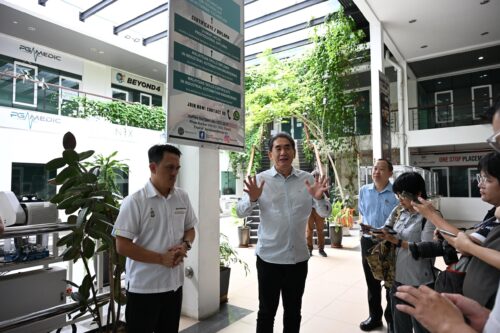
“With the support of the Penang Development Corporation (PDC), InvestPenang, Universiti Malaysia Perlis (UniMAP), and the Penang government, I dare to say that today we are one of the best training centres capable of solving this issue,” he told reporters during a media visit to WCOE’s headquarters in BKIP.
During the visit, members of the press were given a comprehensive tour of the facility, witnessing firsthand how the centre replicates actual manufacturing environments to prepare its students.
Also present were Penang Trade and National Unity Committee chairman Goh Choon Aik, who is also the Bukit Tambun assemblyman, WCOE chief executive officer Moey Lip Seng, manager Chin Ting Foong, assistant manager Farahaida Abdul Rahman, business development director Foong Sew Kang, business development manager Dmitri Lim, and senior business administrator Nurul Nadiah Zainol Abidin.
Chin further elaborated that WCOE was established not just to produce skilled graduates, but individuals who are creative, innovative, and equipped with a lifelong learning mindset.
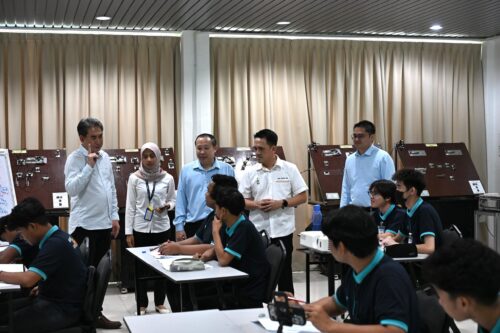
“At WCOE, we offer two main courses namely industrial automation and machining operations.
“Each programme spans 10 months. The machining operations course is conducted at our Prai branch, while industrial automation is based here at our BKIP headquarters.
“Our syllabus is structured with 70% practical training and 30% theoretical learning, fully aligned with the National Occupational Skills Standards.
“Our certified vocational training officers ensure that students gain real industry knowledge and hands-on experience,” he said.
Upon completing the programme and passing the required assessments, Chin said students will be awarded the Malaysian Skills Certificate (SKM) Level Two or Three, enabling them to begin their careers as certified manufacturing specialists.
“What sets WCOE apart is its strong emphasis on real-world training,” he said.
According to Chin, the centre utilises industry-grade equipment and machinery, many of which are designed and built in-house.
“Most of the equipment and machines here are the same as those used in the manufacturing industry.
“This allows students to undergo real hands-on training, making it easier for them to apply their skills once they enter the workforce,” he added.
In total, WCOE houses 25 types of machinery, with each machine capable of accommodating up to five students at a time.
Beyond training, WCOE offers something many institutions cannot, a guaranteed pathway to employment.
Chin revealed that potential employers within BKIP and Prai are identified even before students complete their training.
“Once they graduate, they can immediately start work with the companies.
“The starting salary for a certified manufacturing specialist ranges from RM1,900 to over RM3,500 per month, including allowances and overtime.
“They also have opportunities for salary increments and promotions based on their performance.
“Additionally, WCOE graduates are not limited to entering the workforce immediately.
“Through our official partnership with UniMAP, they have the option to further their studies at Diploma and Bachelor’s degree levels, allowing for continuous academic and career progression,” he said.
Chin emphasised that the demand for such skilled workers remains high, particularly as Penang continues to strengthen its position as a manufacturing hub.
“These talents are highly sought after and will help alleviate the severe shortage of technical workers in the industry,” he added.
Meanwhile, Farahaida highlighted that registration for WCOE is currently open, with intakes held twice a year.
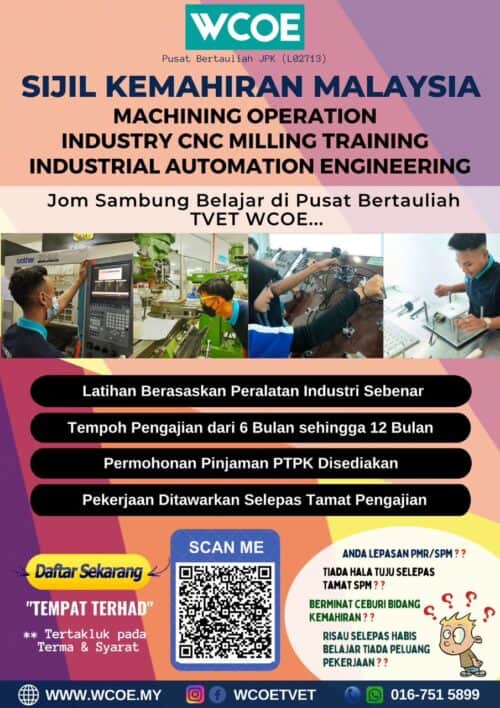
“Applicants must be Malaysian citizens, able to read, write and perform basic calculations, physically and mentally fit, and not colour blind.
“Each intake is limited to around 25 students, with classes conducted from Monday to Friday, 8am to 5pm,” she said.
Meanwhile, Goh said that since its establishment in 2020 and official launch by Chief Minister Chow Kon Yeow in 2022, WCOE has trained approximately eight batches of students, amounting to around 200 individuals.
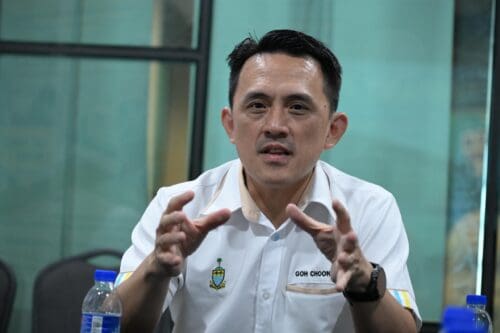
“Remarkably, all graduates have secured employment upon completion of their training.
“This success underscores WCOE’s unique position in the education landscape. Unlike universities, polytechnics, or private colleges, the centre focuses heavily on targeted, hands-on training tailored to industry needs,” he said.
Goh explained that for years, Penang has faced challenges in providing clear data on the availability of skilled workers and engineers to potential investors, particularly those involved in foreign direct investment (FDI).
“At the same time, local small and medium enterprises (SMEs) often struggle with talent retention, as workers they have trained are frequently recruited by multinational corporations (MNCs).
“This intense competition has further widened the talent gap, with many graduates from traditional institutions unable to meet the specific demands of modern manufacturing industries.
“WCOE addresses this issue head-on by offering structured, specialised training in automation, mechanical, electrical, and electronic fields.
“By the time students enter the workforce, they are already equipped with the necessary skills and thus, eliminating the need for additional training by employers,” said Goh.
Goh added that as Batu Kawan continues to grow into a high-technology industrial hub complete with schools, secondary institutions, and universities offering various disciplines, the need for a comprehensive talent ecosystem becomes increasingly evident.
“While there are ongoing discussions about establishing a research and development (R&D)-focused university in the area, there is also a pressing need for institutions like WCOE to produce highly skilled technicians capable of operating in areas such as automation, quality control (QC), and advanced manufacturing systems.
“In this evolving landscape, WCOE stands out as more than just a training centre. It represents a forward-thinking solution to one of the most pressing challenges in today’s workforce ensuring that education and industry move in tandem,” said Goh.
Story by Riadz Akmal
Pix by Darwina Mohd Daud