


PENANG wants to ensure that its young people are equipped with Science, Technology, Engineering and Mathematics (STEM) skills to take up future high-value jobs and build their careers in the state.
Chief Minister Chow Kon Yeow said the state government was investing in STEM education from an early age to develop a strong talent pipeline to support Penang’s growing high-tech industries.
“A question we shall answer today is where these young people will build their careers, and we want the answer to be here in Penang,” he said.
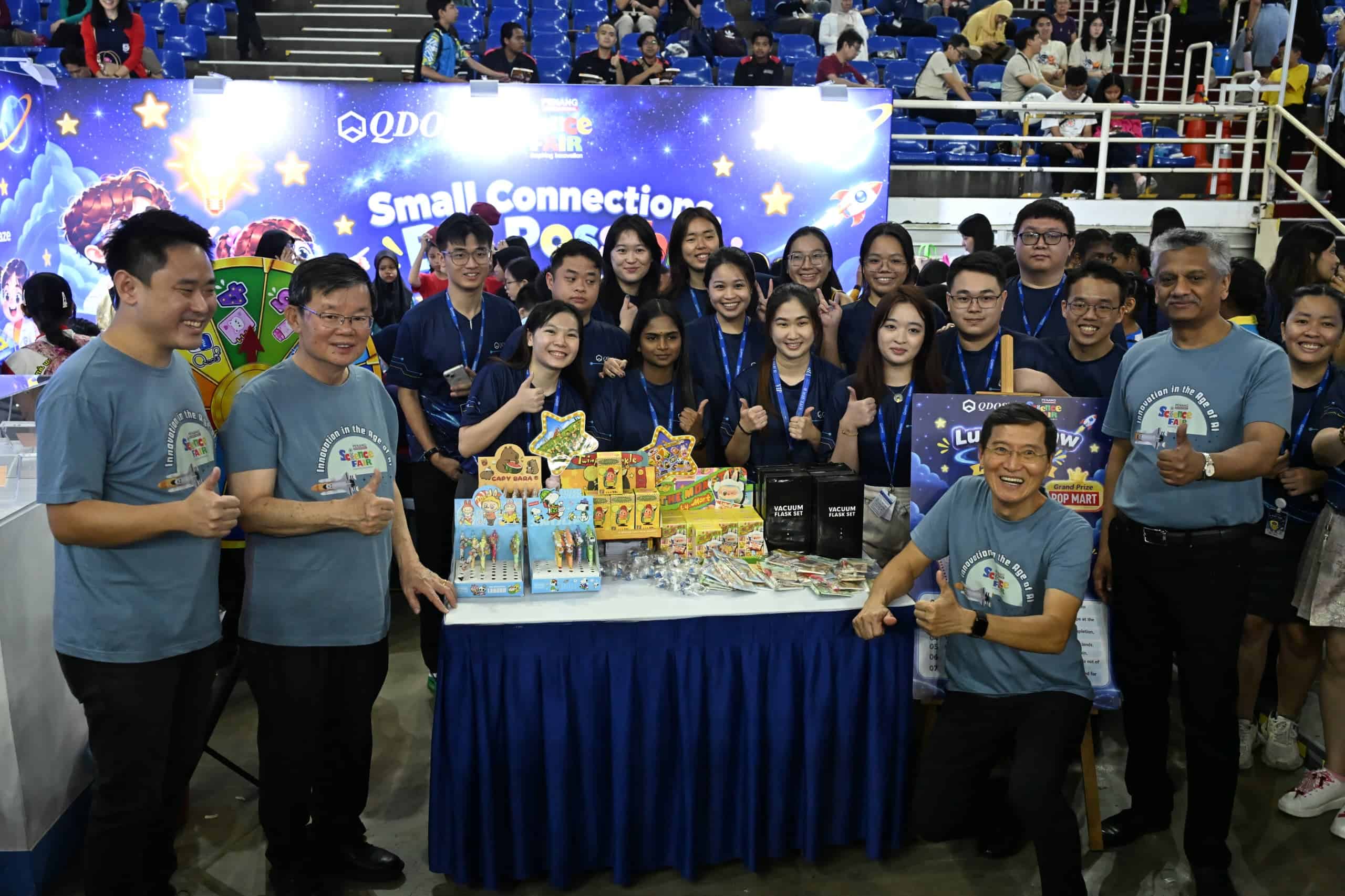
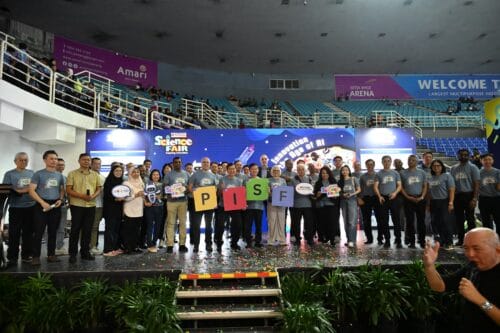
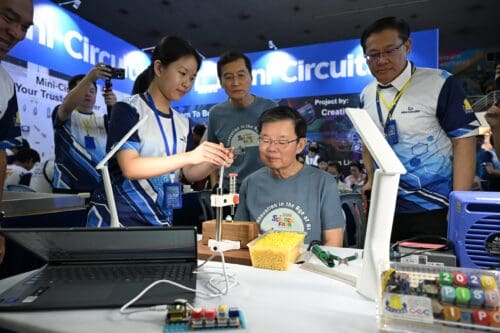
He said this during his speech at the opening of the 14th Penang International Science Fair at Setia SPICE Arena in Bayan Lepas today.
Chow said young people in Penang could either join established companies and progress from production roles into research and design, or venture into entrepreneurship by setting up their own technology start-ups.
He said 142 schools in Penang now have MakerLabs, established with support from the state government and industry, where students learn coding, 3D design and 3D printing.
Through the Coding-for-All programme, Penang Science Cluster (PSC) has also trained more than 3,000 teachers and reached over 200,000 students.
He said the state government and the Ministry of Economy launched the Penang STEM Talent Blueprint this year to reach students from primary to secondary schools, including those from rural areas and low-income families.
For 2027, the state has allocated RM850,000 to Tech Dome Penang and RM700,000 to Penang STEM to continue developing STEM talent.
On efforts to strengthen the semiconductor talent pipeline, Chow said the Penang Chip Design Academy had trained 675 participants by early September, with 85% of them already securing jobs in the electrical and electronics (E&E) sector.
He said aspiring entrepreneurs could also access shared laboratories and equipment at the Malaysia Automation, Test and Equipment (ATE) Campus in Batu Kawan before progressing to opportunities under Penang Silicon Design @5km+.
The state’s chip design community has doubled to more than 50 companies, he added.
Chow said Penang’s efforts to develop talent were crucial as the state continued to attract major investments.
“In the first half of this year, Penang attracted RM17.3bil in approved manufacturing investment. No other state attracted more, and these projects are expected to create 19,337 jobs,” he said.
He also highlighted the development of Silicon Island, where the first phase covers 1,270 acres, with 500 acres already reclaimed.
The island’s 700-acre Green Tech Park is planned to focus on high-tech industries, including semiconductors, automated test equipment, integrated circuit design and medical devices.
Chow said the proposed Penang Technology Financial Centre would bring capital closer to technology companies, supporting both major investments and early-stage start-ups.
On this year’s science fair themed “Innovation in the Age of AI”, he said artificial intelligence (AI) was changing the nature of work, making it increasingly important for young people to develop critical thinking, problem-solving and decision-making skills.
“Machines will take on more of the routine work. What remains will reward young people who can ask good questions, test their ideas, build with these new tools and, most importantly, make the right judgement,” he said.
This year’s fair has attracted 185 schools, with participants coming from all 13 states and three Federal Territories.
More than 30,000 seats are available across 56 types of hands-on workshops over the two-day event, covering areas such as robotics and AI.
Chow said students had also developed projects involving AI machine vision and solutions to address problems within their communities.
He added that the Advanced MakerLab programme had, for the first time, expanded beyond Penang, with six teams from SMK RPS Banun in Perak taking part.
Chow urged industry players to contribute their expertise by providing engineers as mentors and judges, opening their facilities to Form Four students and offering internships and graduate employment opportunities.
He also encouraged companies to adopt MakerLabs in schools that have yet to establish such facilities.
Meanwhile, Penang Science Cluster chief executive officer Datuk Ooi Peng Ee said the organisation has trained 17,000 teachers and reached 200,000 students nationwide through its STEM programmes.
“We also helped establish 87 new MakerLabs, bringing the total number nationwide to 232, including four sponsored by Micron,” he said.
Also present were Komtar assemblyman Teh Lai Heng, Penang Island City Council (MBPP) mayor Datuk A. Rajendran, PSC founding director Datuk Yoon Chon Leong, and Tech Dome Penang chief executive officer Khoo Boo Wooi.
Story by Edmund Lee
Pix by Siti Nuratikah Rahmat
Video by Muhammad Iqbal Hamdan