

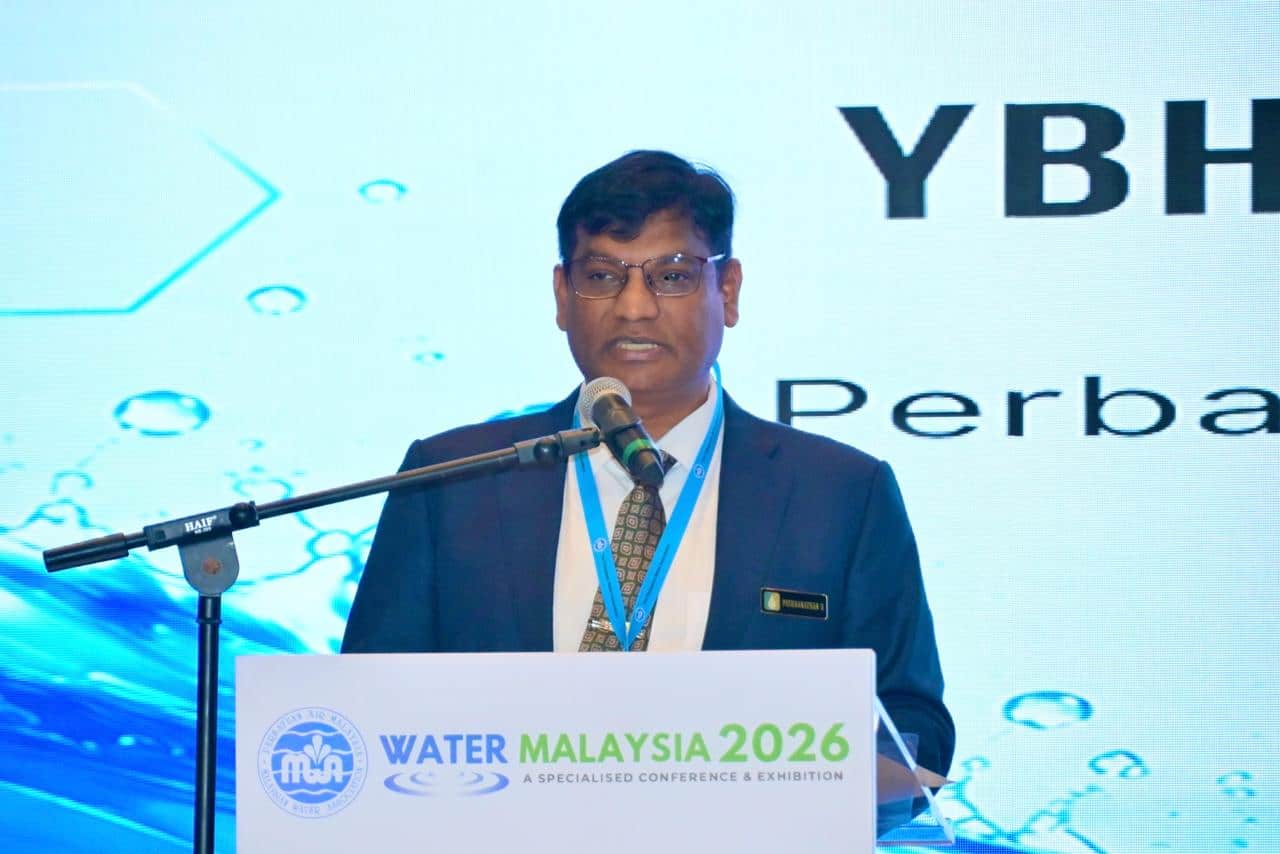

PENANG should introduce strategic desalination projects in the 2030s to reduce the risk of potential water shortages caused by low rainfall amid climate change, says PBA Holdings Bhd (PBAHB) and Penang Water Supply Corporation (PBAPP) chief executive officer Datuk K. Pathmanathan.
In a statement today, Pathmanathan said seawater desalination is a logical solution for an island state surrounded by the sea, adding that the introduction of strategic desalination projects will help make Penang’s water supply system more “weather-proof” in the 2030s.
“However, the costs of desalination are significantly higher than the costs of conventional treatment of freshwater from streams and rivers,” he said.
He said potential strategic desalination projects are among the three key water supply milestones under the Penang Water Supply Roadmap (PWSR).
The other two milestones are the ongoing six Water Contingency Plan 2030 (WCP 2030) projects to ensure sufficient water supply until 2030, and the purchase of 300 million litres per day (MLD) to 500 MLD of treated water from Perak under the inter-state Perak-Penang Water Project (P-PWP) from 2032.
In November 2025, PBAPP revived its pilot desalination project on Pulau Aman, which was designed to produce 240,000 litres of potable water daily using saltwater reverse osmosis (SWRO) technology.
The RM3.81 million project started in 2015 and was completed in 2019, but was subsequently put on hold after the initial plant failed to meet safety standards for boron and total dissolved solids.
The reactivated project shows that the state government does not want to rely on a single source of raw water, especially given Penang’s limited resources.
Since 2022, Penang’s population has increased by about 4 per cent, from 1.74 million people in 2022 to 1.81 million in 2025.
During the same period, Penang’s gross domestic product (GDP) contribution increased from RM112.1 billion in 2022 to RM130.3 billion in 2025, representing a 16.2 per cent increase over four years.
“Looking ahead, Penang’s water consumption is projected to increase from 865 million litres per day (MLD) in 2025 to 1,162 MLD or more in 2032.
“This projection is not guesswork. It is derived from data provided by multinational corporations, property developers and state government agencies who are undertaking various transformative projects in Penang,” Patmanathan said.
He added that when the projects are completed in 2032, they will help to propel Penang’s economy to a new and higher level for the benefit of the people.
Since 2023, PBAPP has completed two WCP 2030 projects at Bukit Panchor and Sungai Dua.
The remaining six WCP 2030 projects involve the development of four new water treatment plants (WTPs) in Seberang Perai to increase treated water production in Penang by 478 MLD; as well as the laying of two 1,800mm pipelines to pump more treated water from Seberang Perai to Penang Island.
On July 15, 2026, Penang signed a conditional Bulk Water Supply Agreement (BWSA) with Perak water concessionaire Prasarana Air dan Irigasi Perak Sdn Bhd (PAIP Perak) to secure treated water supply for the state over a 40-year period from 2032 to 2072.
Under the P-PWP, Perak has agreed to supply between 300 MLD and 500 MLD of treated water to Penang. The historic agreement allows Penang to tap a second major water resource for the future, ensuring water supply sufficiency and security in the 2030s and beyond.
“As Penang is a small state with limited raw water resources, it is a rational move to buy water from a “water-rich” state like Perak. The P-PWP will be instrumental in supporting rapid growth in Seberang Perai Selatan (SPS) and Seberang Perai Tengah (SPT),” he said.
He noted that since its corporatisation in 1999, PBAPP has been quietly but steadily supporting the socioeconomic growth of Penang on a 24/7/365 basis.
“We supply water continuously, in support the people’s lifestyles and livelihoods, as well as all business operations in this state.
“Today, Penang’s domestic water rate is the second lowest in Malaysia, at RM0.93 per cubic metre for the first 35 cubic metre per month. The national average is RM1.12.
“At the RM0.93 per cubic metre rate, about 82% of Penang households pay RM32.50 or less per month. That is significantly less than most electricity bills, monthly fuel costs and mobile device connectivity charges,” he said.
He added that while some people insist PBAPP should charge less than RM0.93 per cubic metre, the corporation’s 24-hour call centre, Facebook page and WhatsApp channels will be flooded with complaints whenever there are water supply interruptions.
Pathmanathan reiterated that the PWSR is a comprehensive and rational blueprint that will help Penang achieve a higher level of water security in the 2030s.
Pix by Law Suun Ting