

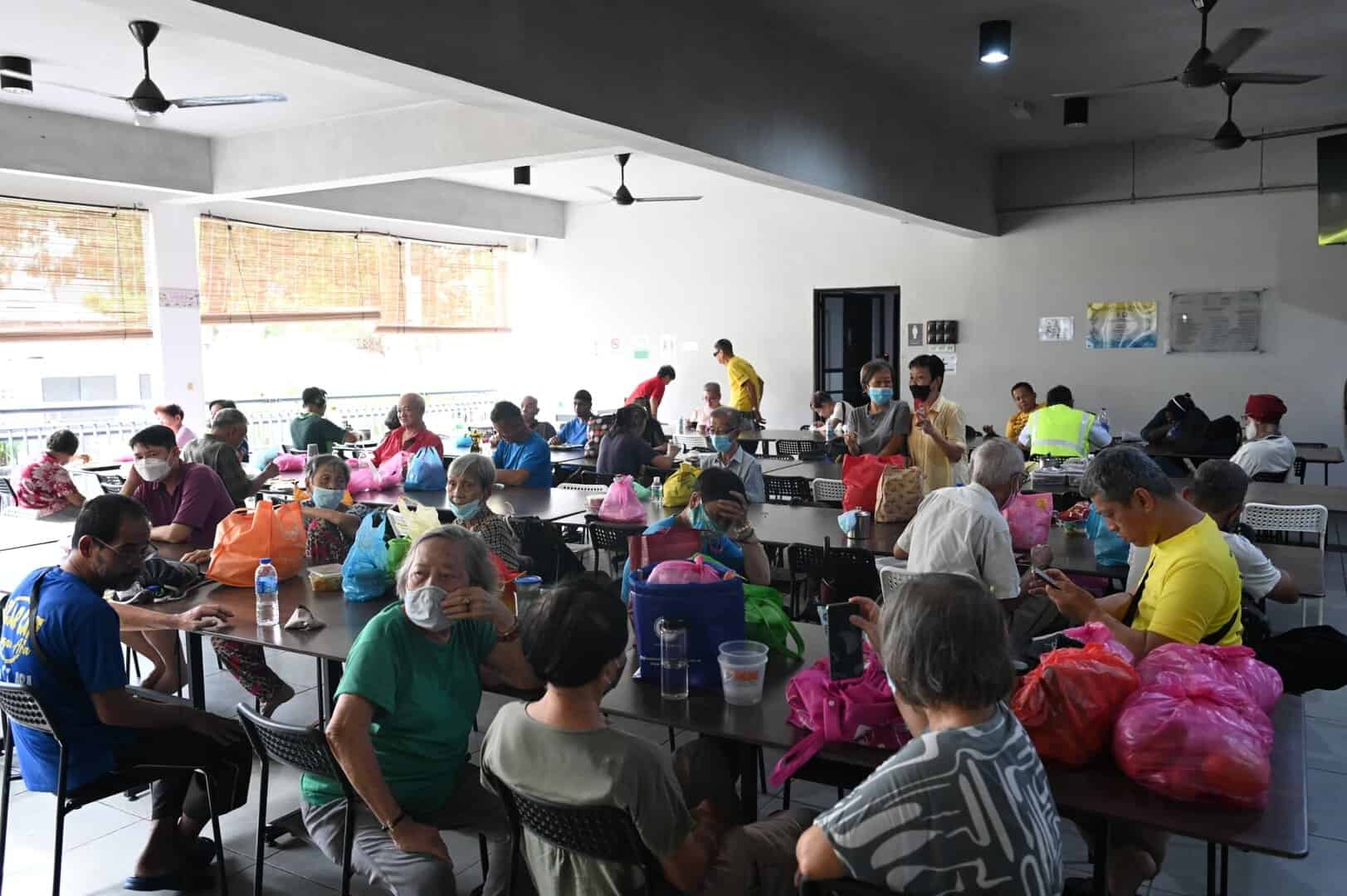

FOR MANY struggling with homelessness in the heart of Penang, the Pusat Transit Gelandangan (PTG)or Homeless Transit Centre in George Town, has become more than just a shelter as it is a turning point.
Buletin Mutiara visited the premise on June 19 to interview several residents that were currently employed and are on their own.
Nazri Ismail, 53, used to work in cargo before leaving his job to care for his cancer-stricken wife.
After her passing in 2020, he was evicted by his in-laws and left with nowhere to go
“I had no choice but to live on the streets of George Town,” he recalled.
His turning point came in September 2023 when he heard about the newly opened Transit Centre at Jalan C.Y. Choy.
“The centre gave me food, a safe place to sleep, and most importantly, a second chance,” said Nazri.
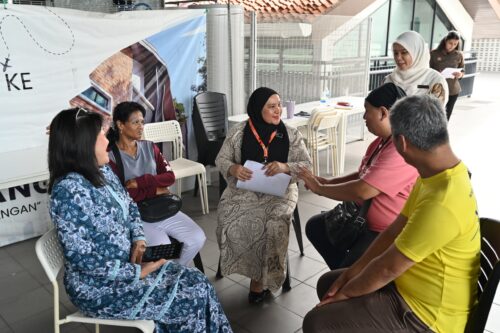
After six months there, he was offered a job as a security guard and later secured a cleaner position at the Kampung Kolam Public Toilet, under MBPP.
“Now, I rent a room in Lebuh Macallum. I am no longer homeless, but I will never forget what PTG did for me,” he added.
Ong Heng Lee, 45, was once an international tour guide based in Guangdong, China.
The Covid19 pandemic forced him to return to Malaysia in 2020.
“I couldn’t afford to stay in budget hotels, and that’s how I ended up homeless,” he said.
He credits PTG for changing his life.
“I stayed there and received food 12 times a day, and it was more than I could have imagined. I even got a motorcycle donation from a non-governmental organisation (NGO) and worked as a food delivery rider.
“Now, I an a parcel coordinator for Shopee in Taiping-Kemunting and have a room of my own,” he said.
Wong Kok Wei, 55, who now works as a security guard and lives in Batu Lanchang, believes in the power of self-motivation.
“Seventy percent of the effort must come from within; the rest is support systems like PTG,” he said.
Grateful for the opportunity, Wong now volunteers at the centre to help others like him. “Even though I’m no longer homeless, I want to give back.”
Khoo Kavetha, 45, from Melaka, lost her job and income, which led to months of homelessness.
“I had no income and no place to stay, so I came to PTG,” she shared.
Recently, she was hired as a security guard at Penang General Hospital.
“Now I can rent my own room again and rebuild my life,” said an emotional Khoo.
PTG manager Nazatulwanis Mohd Khorish, 34, explained the importance of such centres, especially in urban areas where affordable housing is limited.
“In villages, people without jobs can grow food. But in cities, if you cannot afford rent, you end up on the streets,” she said.
She revealed that since the centre opened, 565 individuals have registered.
“Out of that, 528 have exited the centre, many after securing jobs and housing, and here they are all treated with dignity.
“We call them clients, not homeless people,” she said.
The demographic data displayed in a television at the centre shows a balanced spread of 219 Malays, 168 Chinese, 169 Indians, and 9 from other backgrounds.
PTG accepts Malaysians aged 18 and above who are homeless, self-sufficient, and not suffering from infectious diseases or drug addiction.
Meanwhile, state Social Welfare Department director Rozita Ibrahim, praised PTG as a model of urban compassion.
“It is not just about temporary shelter. We provide proper meals, laundry facilities, and support systems to restore dignity,” she said.
Rozita also highlighted national-level efforts, including Anjung Singgah, another facility managed by the National Welfare Foundation.
“This aligns with the National Homeless Policy 2020, an integrated approach focused on empowerment, not just handouts,” she added.
State Social Development, Welfare and Non-Islamic Religious Affairs Committee chairman Lim Siew Khim, who oversees social development and welfare, said over 500 people had been helped through PTG, many of whom have transitioned into employment and housing.
“We have rescued hundreds through outreach operations. Over 200 have moved out after getting jobs and finding places to stay,” she said.
She emphasised the importance of cross-sector collaboration.
“None of this would be possible without support from government agencies, NGOs, and the private sector.
“Currently, 35 companies are partnering with us to provide job opportunities, and we welcome more to come forward.”
“Anyone can face hardship, such as losing a job, a home, and ending up on the street.
“But what matters is having a system that offers them a path back,” she concluded.
She Story by Kevin Vimal
Pix by Ahmad Adil Muhammad