

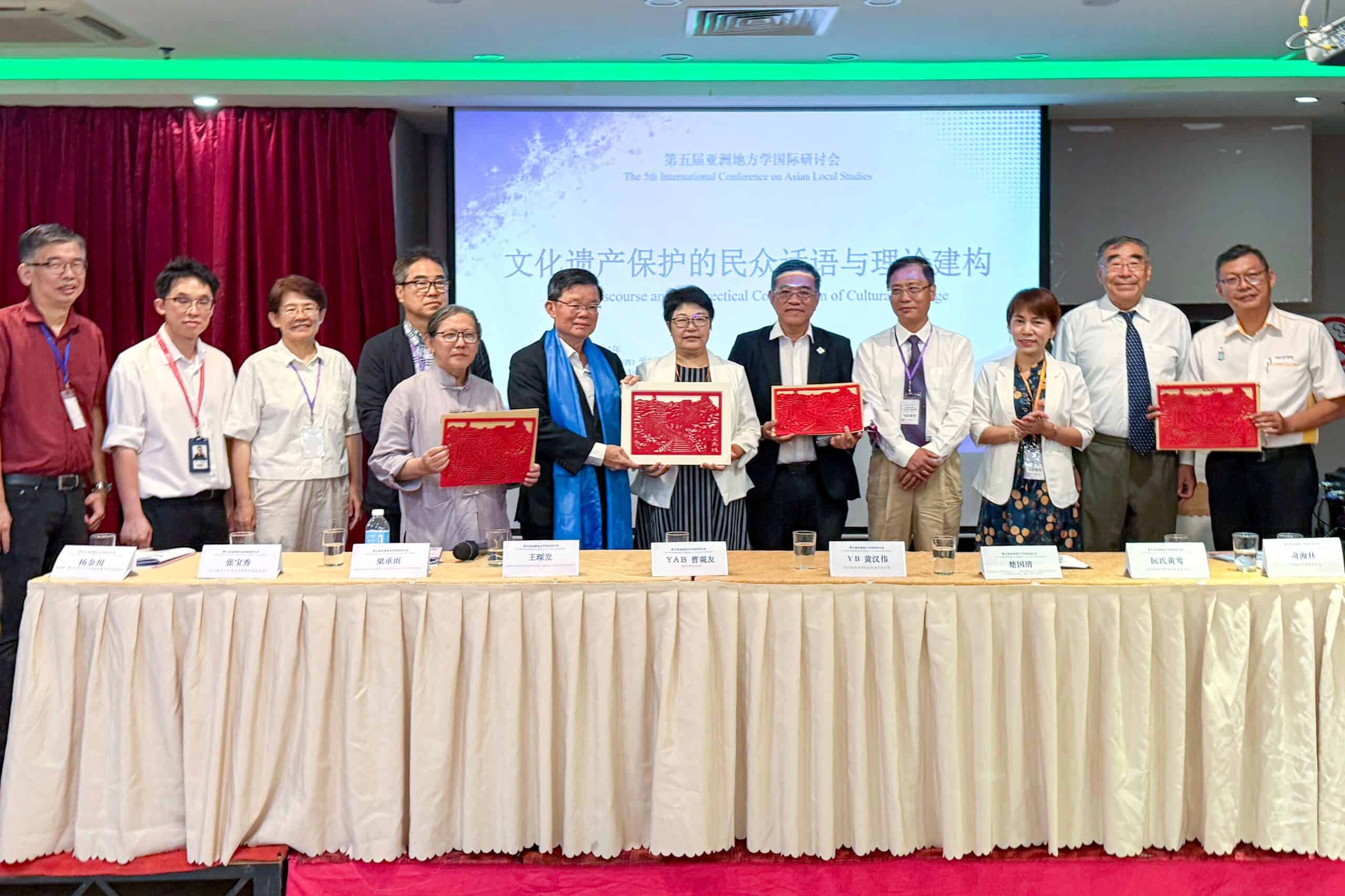

UNDERSTANDING local characteristics is crucial for elected representatives to formulate policies and development plans that meet community needs, says Chief Minister Chow Kon Yeow.
He said local studies should be regarded as essential knowledge for policymakers as it provides insights into a locality’s history, society, economy, culture and other unique features.
“While having a global perspective is important for elected representatives, local studies are also necessary. Only by understanding a place can we carry out proper planning and develop strategies based on the needs of the local community,” he said.
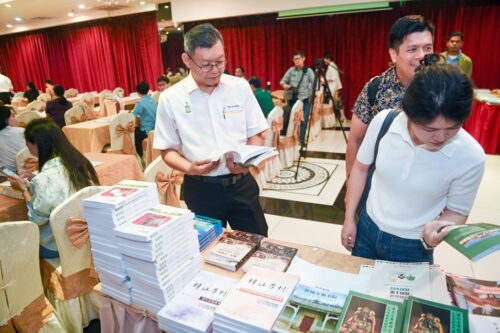
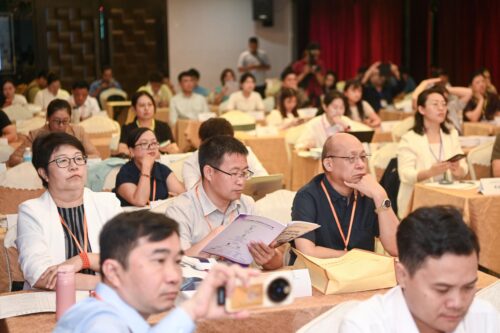
Chow was speaking at the opening ceremony of the 5th International Conference on Asian Local Studies held at Prangin Mall today.
The conference, themed “Public Discourse and the Theoretical Construction of Cultural Heritage”, brought together academics and researchers from Malaysia, China, South Korea, the United Kingdom, the United States, Thailand and Vietnam.
Chow said local studies covered various aspects, including local history, social development, economy, language, culture, traditional skills, religious beliefs, architectural characteristics and traditional industries.
“These local cultural elements form an important foundation for social and economic development,” he said.
Chow said cultural heritage remained an important resource for Penang’s future development, as culture could help drive tourism and the creative economy, while economic growth could provide greater support for heritage preservation and transmission.
“Penang has a rich history and diverse culture, from the George Town World Heritage Site to traditional neighbourhoods, architecture, food culture, folk beliefs and traditional industries.
“The lifestyles of different communities have shaped Penang’s unique cultural identity,” he said.
He added that the state government was actively promoting the transformation of the creative economy and tourism sector by integrating cultural heritage, artistic creation, traditional industries and cultural experiences to create new tourism products and economic opportunities.
Chow also welcomed participating scholars to explore George Town’s historic areas, cultural landmarks, and traditional communities to gain a deeper understanding of Penang’s multicultural heritage.
Meanwhile, state Tourism and Creative Economy Committee chairman Wong Hon Wai said Penang had been actively supporting Malaysia’s efforts in safeguarding intangible cultural heritage, including lion dance, 24 Festive Drums, and the giant flag drum performance.
He said Malaysia was currently working with China on a joint nomination for lion dance and with Singapore for the giant flag drum performance under the UNESCO intangible cultural heritage listing.
“At the same time, Malaysia is also pursuing a separate nomination for 24 Festive Drums through the National Heritage Department,” he said.
Wong said the symposium, which gathered scholars from various countries, promoted knowledge sharing and academic cooperation while strengthening cultural ties among different regions.
Symposium chairman Professor Wang Chen-fa said the event brought together scholars from China, South Korea, the United States, the United Kingdom, Malaysia, Vietnam, Thailand and other countries, to discuss the future development of local studies.
He said local studies represented knowledge generated from local communities and regions, allowing people to better understand themselves and others.
“Local studies can also serve as an important think tank for countries and regions by systematically organising local knowledge, uncovering its value and transforming it to support cultural tourism, business and other sectors,” he said.
Also present was Komtar assemblyman Teh Lai Heng.
Story by Edmund Lee
Pix by Siew Chia En
Video by Law Suun Ting