

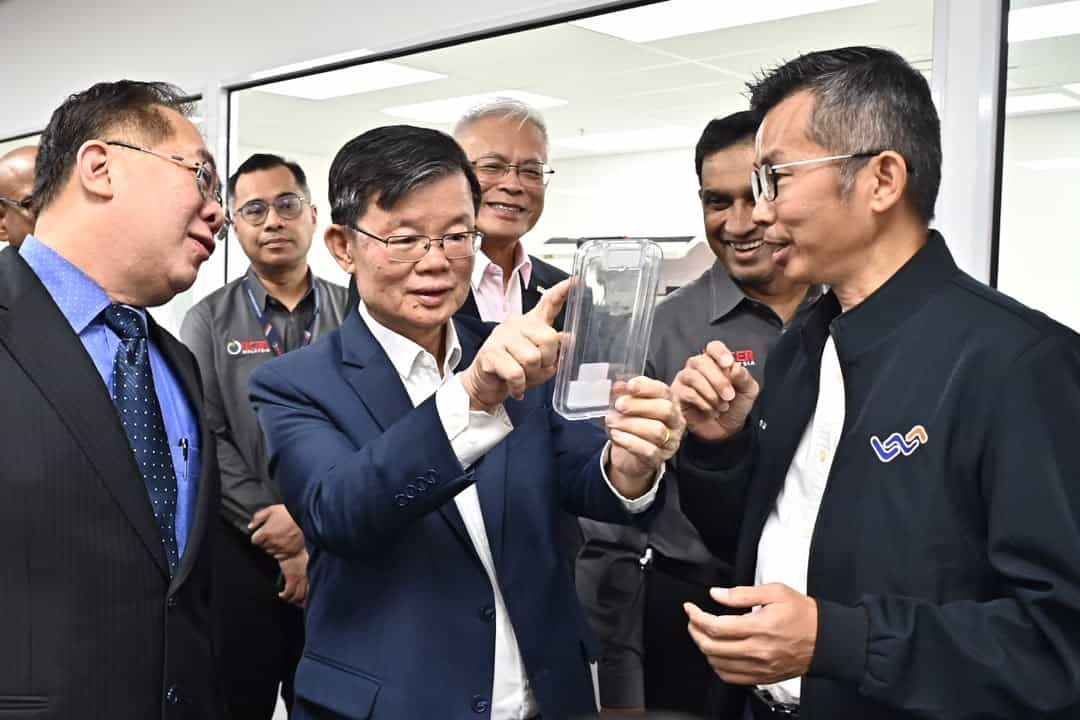

PENANG is taking a decisive step towards strengthening its homegrown semiconductor ecosystem, with a new focus on helping local small and medium enterprises (SMEs) move into higher-value segments, such as integrated circuit (IC) design and advanced semiconductor packaging.
This was among the key messages shared during Chief Minister Chow Kon Yeow’s visit to the Northern Corridor Economic Region Technology and Innovation Centre (NCER) (NTIC) in Bayan Lepas today, where industry players and officials outlined plans to nurture local talent, accelerate innovation and deepen domestic industry participation.
Northern Corridor Implementation Authority (NCIA) chief executive Datuk Mohamad Haris Kader Sultan said the centre was established not only to attract investments, but also to ensure local companies are able to participate meaningfully in the growth of the semiconductor industry.
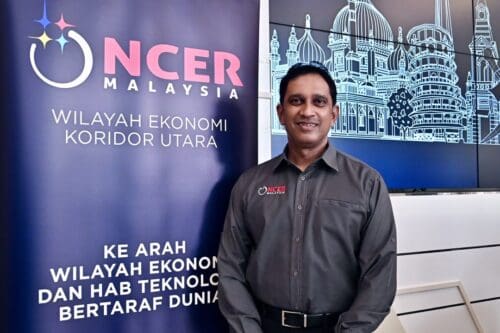
Responding to concerns that Penang’s industrial development has traditionally focused heavily on foreign direct investments (FDIs), Haris stressed that local enterprises remain a priority.
“That is where we come into the picture. We have to ensure that SMEs are given priority, especially DDIs (domestic direct investments), because, at the end of the day, if anything happens to the country, locals will be here to stimulate the economy.
“That is why we are looking and embarking on this,” he said.
The NTIC currently has about 60 per cent occupancy, with approximately 33,000 square feet of space available for leasing.
According to an NCIA representative, the facility is designed to support both talent development and ecosystem development programmes.

The talent development component encompasses industry-designed modules, elective university courses, short-term industry training programmes, and workforce upskilling initiatives.
“We cover all, from university students and unemployed fresh graduates to workers,” the representative said.
Beyond talent development, the centre will also host Centre of Excellence (COE) providers, companies capable of offering consultancy, research and development (R&D) services, productivity enhancement solutions, and technical expertise to help local SMEs improve competitiveness and move up the value chain.
The representative added that NTIC is also venturing into advanced packaging through dedicated programmes, supported by incentives and the Advanced Packaging Institute and Research Centre (APIRC).
In addition, technology and innovation initiatives focusing on R&D and product innovation will be rolled out to support industry transformation.
When asked about talent shortages in Penang’s fast-growing technology sector, Haris noted that the issue extends beyond the state.
“If you look at it, Penang is not the only one facing talent issues. The talent issue is a global issue, and all the programmes that she (NCIA staff) mentioned just now are to close the gap and to ensure that the talent issue is being rectified. That is what we are doing now,” he said.
Providing an industry perspective, Silicon Connect chief executive officer Dr Chin Yoong Tatt, who is also involved in APIRC, said collaboration between industry players, NCIA, and higher learning institutions is crucial to ensure graduates possess the relevant skills demanded by the sector.
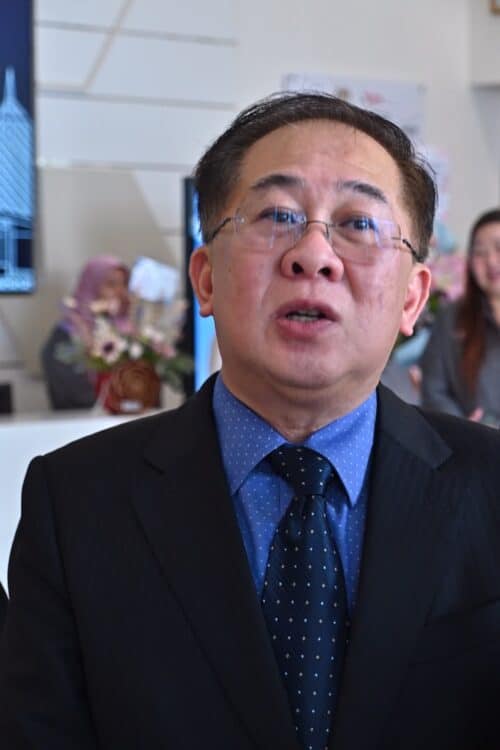
“We work closely with NCER and universities to create and look at where the gaps in the knowledge base are and then provide industry-based knowledge to the industry and to the graduates,” he said.
Haris added that industry requirements would be embedded directly into academic curricula to ensure graduates are workforce-ready.
Earlier, NCIA officials said talent development efforts are focused on strategic sectors, including electrical and electronics (E&E), mechanical and engineering (M&E), medical devices, aerospace, and automotive manufacturing, while also covering advanced services such as tourism, hospitality and modern industries.
Dr Chin said the broader goal is to elevate Malaysia’s position within the semiconductor value chain.
“The intent is to move up the value chain through design, fabrication knowledge and advanced packaging. Those will be the areas we move forward in, including the Fourth Industrial Revolution,” he said.
On advanced packaging, Dr Chin revealed that APIRC is collaborating with international partners, including the National Manufacturing Institute Scotland (NMIS), which operates a similar initiative known as the National Advanced Semiconductor Packaging and Integration Centre (NASPIC).
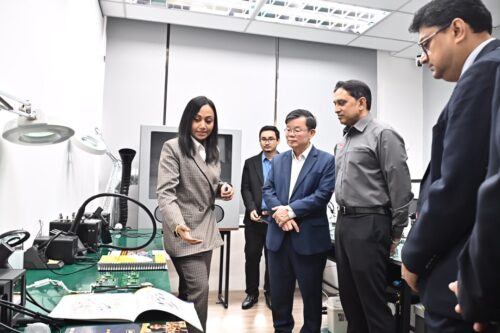
“We are going in a big way, especially on advanced packaging with NMIS. They have a similar sister programme called NASPIC.
“That is another programme that we are working closely on with the United Kingdom (UK), and we also have a partner from the United States, which we are bringing in, for example, DECA Technologies,” he said.
Haris, however, emphasised that the initiative remains firmly anchored in local participation.
The NTIC currently serves the northern region covering Perlis, Kedah, Penang and Perak.
Describing the centre as a pilot project, Haris said successful outcomes could pave the way for similar facilities elsewhere in the country.
“This is a pilot, but this is only for the northern region, from Perlis to Perak. After this, let’s see. If we are successful, it can be replicated in other states. That is the ultimate objective,” he said.
Meanwhile, Chow welcomed the centre’s full operationalisation, describing it as a significant milestone for the northern region’s innovation ecosystem.
“I am happy to see the Northern Corridor Technology Innovation Centre in full operation now.
“This collaboration among various stakeholders, ranging from industry, academia and government agencies, will further strengthen the northern region as an investment hub.
“Made by Malaysia, made by Penang” will soon be a reality in the high-technology fields,” he said.
Story by Kevin Vimal
Pix by Law Suun Ting
Video Alissala Thian