

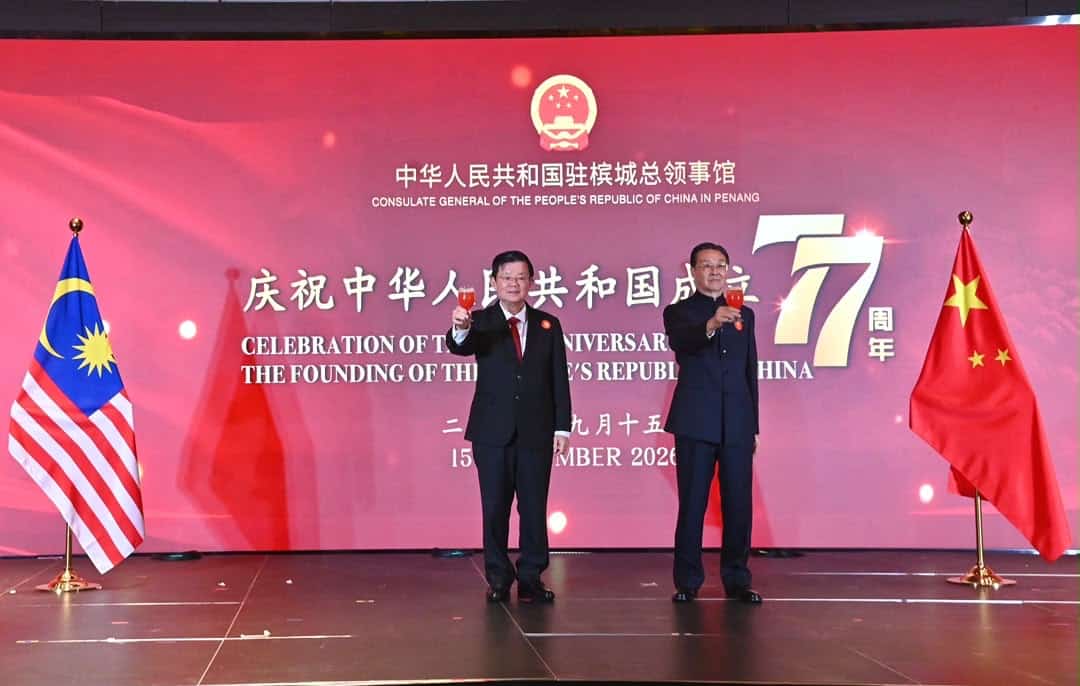

PENANG is looking to deepen its relationship with China by focusing on technology, talent development and industrial collaboration, particularly in artificial intelligence (AI), semiconductors and advanced manufacturing, Chief Minister Chow Kon Yeow said.
He said the next phase of Penang-China cooperation should go beyond trade and investment figures to create long-term value through stronger companies, new markets and greater opportunities for people on both sides.
“China brings its large-scale manufacturing, technology, industrial experience and access to global markets. Penang brings a mature semiconductor and manufacturing ecosystem, experienced talent and a strategic platform into Asean.

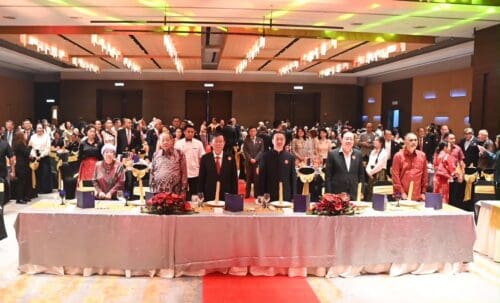
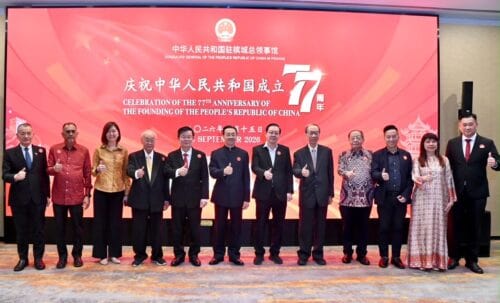
“Our opportunity is to combine these strengths so that both sides become more competitive together,” he said at the celebration of the 77th anniversary of the founding of the People’s Republic of China at G Hotel tonight.
Chow said Penang’s economic ties with China continued to strengthen, with the state exporting RM64 billion worth of goods to China from January to July this year, accounting for half of Malaysia’s total exports to the country.
He said 81 per cent of the exports comprised electrical and electronic (E&E) products and components.
On investments, Chow said Penang recorded RM2 billion in approved manufacturing investments from China in the first half of 2026.
“Approximately 90 Chinese companies are now operating in Penang, including Guangdong Fastrain Technology Malaysia and BYD Electronics,” he said.
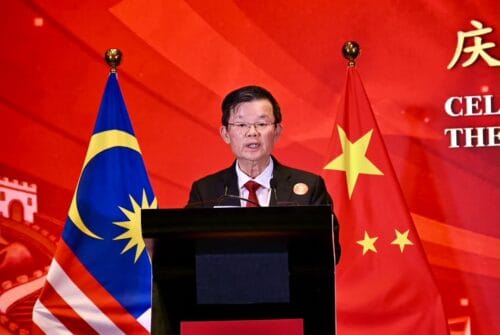
Chow said the rise of AI had made closer collaboration between Penang and China even more important, as the state seeks to leverage Malaysia’s growing momentum in the field while building on its industrial strengths.
“We should not aim merely to have more companies using AI. We should aim to have more companies creating products, intellectual property and businesses around AI,” he said.
To achieve this, Chow proposed three key areas of cooperation, namely strengthening linkages between Chinese companies and Malaysian small and medium enterprises (SMEs), enhancing collaboration between industry, universities and talent in AI, semiconductors and advanced manufacturing, and positioning Penang as a platform for Chinese and Malaysian companies to jointly develop and scale technologies for the wider Asean market.
He said people-to-people ties also remained an important pillar of the relationship, with students, universities, visitors and communities helping to build lasting friendships between Penang and China.
Meanwhile, Chinese Consul-General in Penang Zhou Youbin said China-Malaysia relations were currently at their strongest, underpinned by growing trade, tourism and people-to-people exchanges.
Speaking at the reception, Zhou said the two countries were working together to build a high-level strategic China-Malaysia community with a shared future.
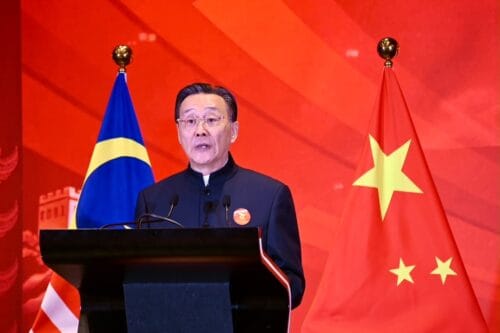
“China and Malaysia are friendly neighbours across the sea with a millennium-old friendship. Today, we are joining hands to build a high-level strategic China-Malaysia community with a shared future,” he said, adding that bilateral relations were now “at their best in history”.
Zhou said economic cooperation between the two countries continued to expand, with bilateral trade exceeding US$104 billion in the first half of the year, while visits by Chinese citizens to Malaysia surpassed 2.65 million.
He said cooperation in trade, investment and cultural exchanges continued to deliver positive results for both countries.
Highlighting developments in northern Malaysia, Zhou said Chinese-funded enterprises had invested in sectors such as electric vehicles, lithium batteries and medical devices, becoming important partners in local industrial transformation and upgrading.
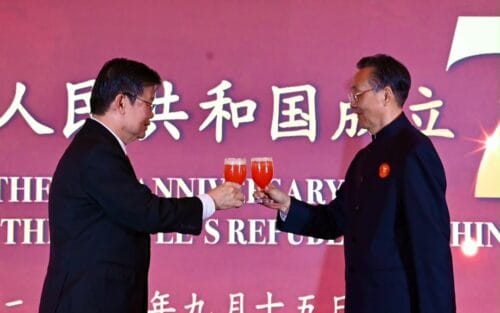
He also noted that the launch of direct flights from Qingdao and Chongqing to Penang had further strengthened connectivity and people-to-people exchanges between both sides.
Zhou also expressed confidence in the future of bilateral ties.
“We firmly believe that the prospects for China-Malaysia cooperation and development are brighter than ever,” he said, adding that the Chinese Consulate-General in Penang would continue working closely with stakeholders across northern Malaysia to deepen exchanges and enhance cooperation.
Among those who attended the grand reception were State Secretary Datuk Dr Jafri Abdul Jalil, vice Consul General of China in Penang Ding Qiao, former Chief Ministers Tan Sri Dr Koh Tsu Koon and Lim Guan Eng, Tanjong MP Lim Hui Ying, state Social Development, Welfare and Non-Islamic Religious Committee chairman Lim Siew Khim, Komtar assemblyman Teh Lai Heng, Sungai Puyu assemblyman Phee Syn Tze, Tan Sri Lim Kit Siang and his wife Neo Yok Tee, industry leaders, and other distinguished guests.
Story by Edmund Lee
Pix by Alissala Thian