

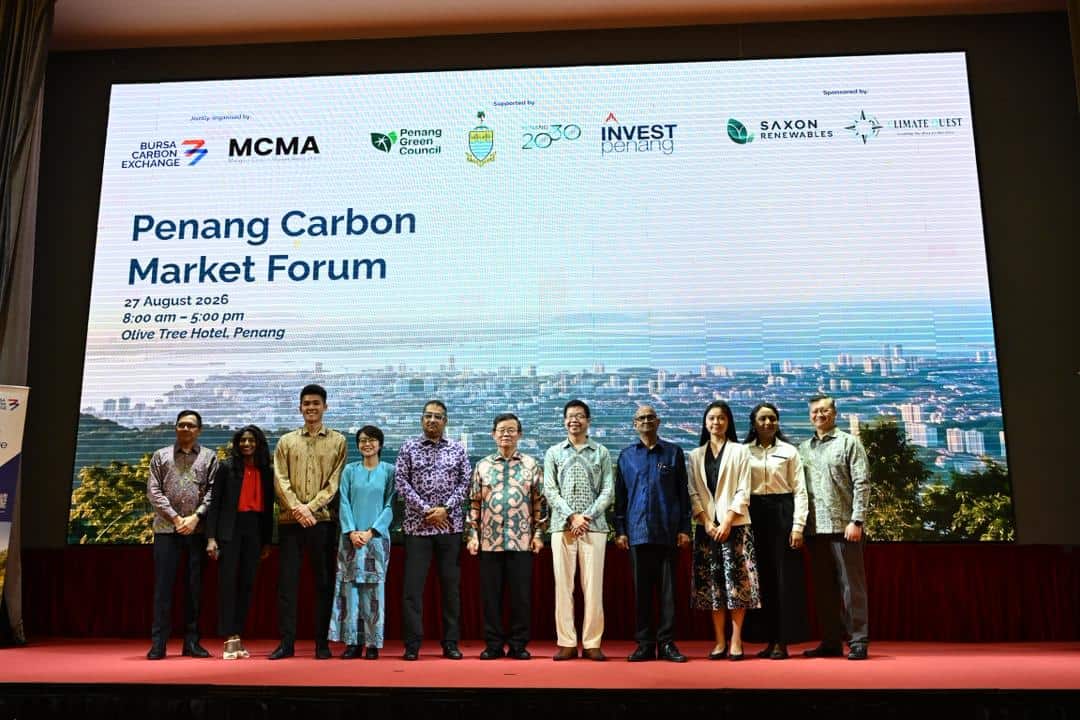

PENANG is positioning itself to tap the growing carbon market by developing a stronger pipeline of credible, measurable and bankable projects that can drive decarbonisation while creating new investment and business opportunities.
Chief Minister Chow Kon Yeow said the state’s industrial strength, technological capabilities, and sustainability ecosystem placed it in a strong position to develop projects in areas such as biomass and waste recovery, renewable energy, energy efficiency, industrial decarbonisation and the circular economy.
Speaking at the Penang Carbon Market Forum 2026 at the Olive Tree Hotel here today, Chow said Malaysia had moved beyond merely discussing the potential of carbon markets, with the National Carbon Market Policy (NCMP) now providing a more structured framework for developing a high-integrity market.
“The question is no longer simply whether carbon markets have a role to play. The question now is whether we can turn the framework into real projects, real investment and, most importantly, real emissions reductions,” he said.
Chow said the development was particularly relevant to Penang as one of Malaysia’s leading industrial and manufacturing hubs, with its electrical and electronics (E&E), semiconductor, medical device and advanced manufacturing sectors deeply integrated into global supply chains.
He said rising expectations surrounding emissions, energy efficiency and environmental performance meant sustainability was increasingly becoming a key factor in helping businesses remain competitive, attract investment and gain access to international markets.
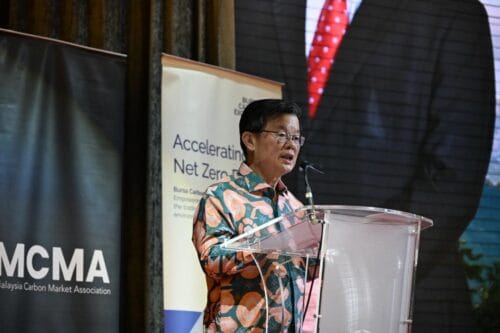
“This is closely aligned with our Penang2030 Vision of becoming ‘A Family-Focused Green and Smart State that Inspires the Nation’,” he said.
However, Chow stressed that carbon markets must complement rather than replace genuine decarbonisation efforts.
“Businesses must continue to reduce their own emissions through better efficiency, cleaner technologies and improved operations,” he said.
He added that credible projects capable of delivering additional, measurable and verifiable emissions reductions could benefit from carbon markets as an additional source of financing, helping make such projects economically viable.
Chow also stressed that market integrity must remain at the heart of the transition.
“The success of a carbon market should not be measured by how many credits are created, but by the quality of the projects and the emissions actually reduced,” he said, adding that strong measurement, reporting and verification, credible methodologies and transparency would be crucial to maintaining confidence in the market.
He welcomed Bursa Carbon Exchange’s (BCX) upcoming auction featuring carbon credits from Malaysia’s first technology-based biomass carbon project, developed by Climate Quest and located in Penang.
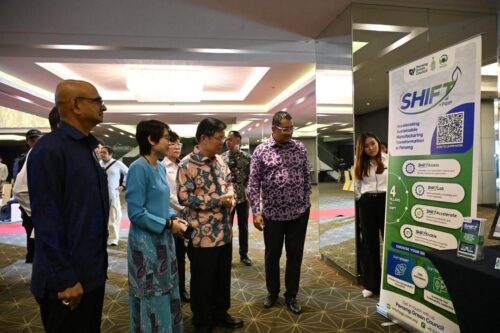
“We are proud that Penang is able to pioneer this type of technology-based carbon project for BCX’s upcoming auction. We wish this auction every success, and I hope this project will pave the way for other similar carbon projects to be developed and implemented in Penang,” he said.
Chow said the auction should be viewed as more than a single milestone, urging stakeholders to look at what could come next for Penang’s carbon market.
“Penang’s industrial base, technology capabilities and sustainability ecosystem create opportunities in biomass and waste recovery, renewable energy, energy efficiency, industrial decarbonisation and the circular economy.
“The opportunity is to turn some of Penang’s decarbonisation challenges into investable projects,” he said.
He said the state already had many of the ingredients needed to build a vibrant carbon-market ecosystem, including industry players, technology companies, project developers, universities, research institutions, local authorities and an active business community.
“What we need now is to connect these strengths and develop a stronger pipeline of projects that are credible, measurable and bankable,” he said.
Chow said the state government could provide the enabling environment, while industry players could bring technology and investment, financial institutions could mobilise capital, research institutions could contribute knowledge and innovation, and project developers could turn opportunities into viable projects.
“No single party can build this ecosystem alone,” he said.
Meanwhile, Bursa Malaysia director of Derivatives and Carbon Markets Mohd Saleem Kader Bakas said Penang’s position as a major industrial and technology hub made the state an important participant in Malaysia’s sustainability transition.
He said Penang remained Malaysia’s top exporting state in 2025, contributing approximately 38.1 per cent of the nation’s total exports, equivalent to around RM610 billion in export value.
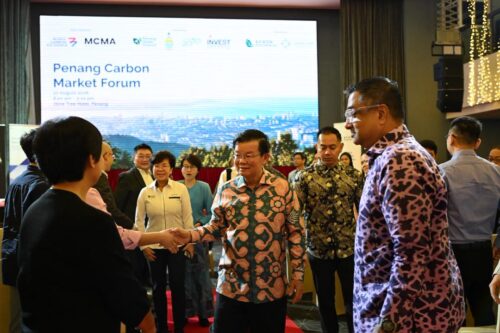
“Penang’s electrical and electronics sector continues to account for more than 60% of Malaysia’s total E&E exports, reinforcing its status as one of the country’s most important industrial and technology hubs,” he said.
Saleem said Penang’s ambition extended beyond economic growth, as the state sought to establish itself as a leading hub for sustainable technology and manufacturing.
“This transition requires more than policy ambition. It requires practical solutions that help businesses measure, manage, and reduce their climate impact while remaining competitive in increasingly sustainability-conscious global markets,” he said.
He highlighted the role played by the Penang Green Council in advancing sustainability awareness, capacity building and green initiatives across the state, adding that carbon markets and renewable energy could complement these efforts by providing additional pathways for organisations pursuing their decarbonisation and transition goals.
Saleem said the forum was therefore timely in bringing together industry leaders, practitioners and policymakers to explore how carbon markets could support Penang’s sustainability aspirations.
He noted that the event had attracted corporates, project developers, financial institutions, industry practitioners and eco-solution providers.
“Climate change and sustainability are no longer issues addressed only by sustainability departments. Today, they are boardroom priorities with direct implications for business strategy, operational resilience, market access, and long-term competitiveness,” he said.
Saleem said that while many organisations had already established sustainability aspirations and net-zero commitments, the challenge for businesses was translating those ambitions into practical and implementable action.
“That is precisely why forums such as these are important. They create opportunities for businesses to learn from one another, explore available solutions, and better understand the tools that can support their transition journeys,” he said.
He said BCX, launched in December 2022, was the world’s first Shariah-compliant carbon exchange and provided market infrastructure to support Malaysia’s climate ambitions while facilitating a credible, transparent and accessible carbon-market ecosystem.
According to Saleem, BCX had evolved beyond being merely a trading platform and was now supporting broader ecosystem development through market engagement, awareness initiatives and practical solutions for organisations pursuing sustainability objectives.
In line with Bursa Malaysia’s role as a multi-asset exchange, he said that BCX now facilitates transparent trading in both carbon credits and renewable energy certificates (RECs).
Saleem also highlighted the growth of the Malaysia Carbon Market Association (MCMA), of which BCX is a founding member.
He said MCMA had grown from nine founding members when it was launched on Aug 8, 2024, to nearly 40 members today, reflecting growing interest and momentum in Malaysia’s carbon-market sector.
“Today, BCX serves in an advisory capacity to MCMA and remains committed to supporting the Association’s efforts to develop a robust and vibrant carbon market ecosystem,” he said.
Saleem also expressed appreciation to Saxon Renewables and Climate Quest for sponsoring the forum and supporting its organisation.
The forum featured discussions on carbon markets, developments at BCX and MCMA, carbon-market infrastructure, carbon project opportunities relevant to Penang, the Penang Green Manufacturing and Energy Framework, as well as global developments in carbon standards and project certification.
A representative from Verra, one of the world’s leading independent carbon standards organisations and a major issuer of voluntary carbon credits, also participated in the programme.
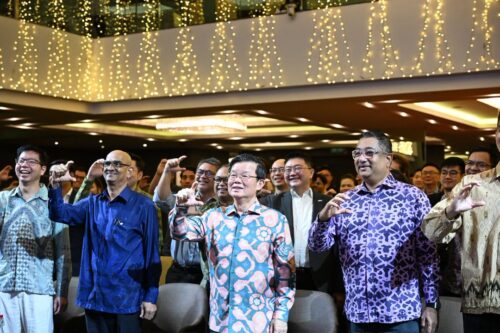
Saleem said the upcoming BCX auction of carbon credits from the technology-based biomass project in Penang represented an important milestone for the exchange, the State and Malaysia’s wider carbon-market ecosystem.
“What makes this project particularly special is that it is located right here in Penang.
“This represents an important milestone, not only for BCX, but also for Penang and Malaysia’s broader carbon market ecosystem. It demonstrates that high-quality domestic carbon projects are now beginning to enter the market and create new opportunities for climate action and investments,” he said.
Chow, meanwhile, called on participants of the forum to move beyond discussions and identify tangible opportunities that could be developed into viable projects.
“I hope the discussions will go beyond understanding the carbon market and instead identify actual opportunities, develop partnerships and answer a practical question: What project can we start developing now that will reduce emissions, attract investment and create value for Penang?
“Malaysia has begun putting the framework in place. Now comes the harder part – execution,” he said.
Chow also emphasised that Penang must be ready for the next phase by developing a stronger project pipeline, building local capabilities, improving access to financing and ensuring carbon-market opportunities supported genuine decarbonisation.
“If we get this right, the carbon market can become part of Penang’s emerging low-carbon economy, creating opportunities for investment, technology, innovation and new businesses while helping our existing industries remain competitive,” he said.
“That should be our ambition: a carbon market credible enough to earn trust, practical enough to generate projects, and effective enough to deliver real environmental and economic outcomes.”
Story by Kevin Vimal
Pix by Darwina Mohd Daud
Video by Alissala Thian