

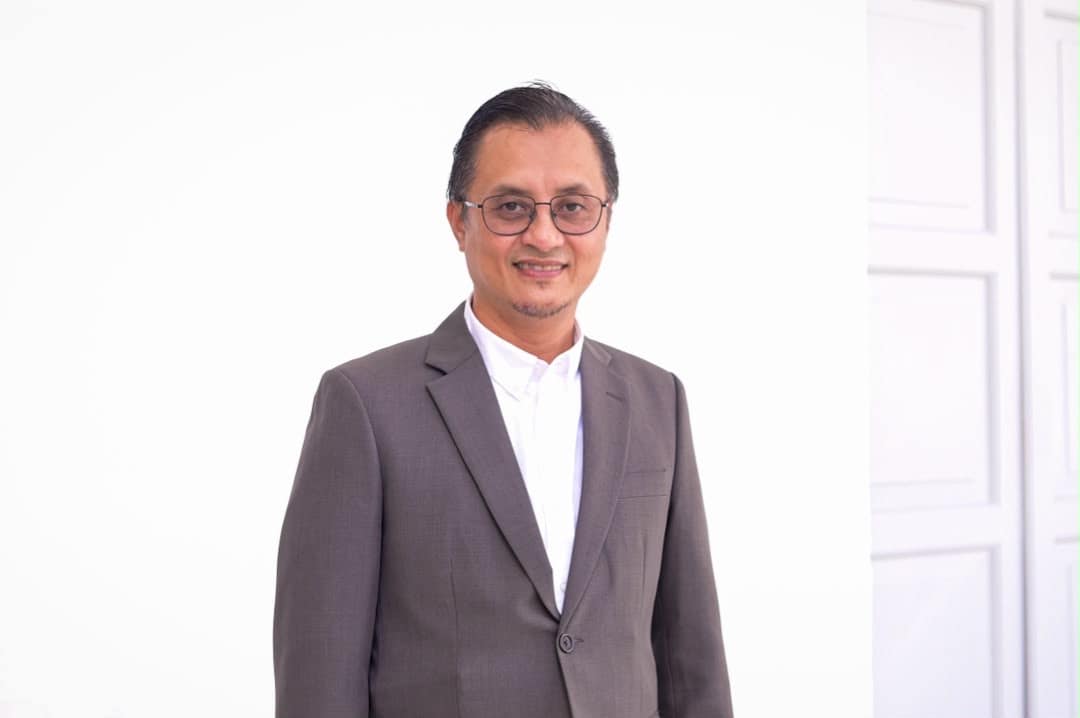

THE Penang government is moving ahead with plans to develop the Penang Halal Industrial Park (TPHPP) as part of its efforts to strengthen the state’s position in the halal industry and attract more high-value investments.
Deputy Chief Minister I Prof Datuk Dr Mohamad Abdul Hamid said the development initiative had received recognition at the National Halal Industry Development Council meeting on Sept 14 this year, chaired by Deputy Prime Minister Datuk Seri Dr Ahmad Zahid Hamidi.
“Penang Halal International (PHI) and the Penang Development Corporation (PDC) will continue to promote TPHPP to attract investments,” said Dr Mohamad (PH–Batu Maung) during his winding-up speech at the Penang State Legislative Assembly sitting at Light Street.
Dr Mohamad, who oversees the Islamic Religious Development, Education and Higher Education, as well as Cooperative Development portfolios, said the International Islamic College of Technology (Kitab) Penang and the Penang Regional Development Authority (Perda) had also signed a Memorandum of Understanding (MoU) on July 25 this year for the proposed 70-acre Kitab–Perda Halal Hub at Perda Halal Park in Kubang Menerong.
He said Kitab would serve as the strategic programme manager for halal-related training, while Perda would act as the landowner and infrastructure implementer.
“The Kitab–Perda collaboration focuses on human capital development and halal competencies, as well as entrepreneur incubation and academic-industry networking.
“Kitab, as a halal training provider under the supervision of the Department of Islamic Development Malaysia (Jakim), will spearhead training programmes, micro-credentials, professional certifications and entrepreneurial guidance,” he said.
Dr Mohamad added that the state government, through PHI, was also stepping up promotional and investment efforts in high-value-added sectors such as pharmaceuticals, cosmetics and medical devices.
He said the state government was also formulating the Penang Halal Industry Master Plan 2026–2030, themed ‘Halal Your Trust Assured’, to establish the state as a hub for halal investment, production, processing and exports.
“The master plan outlines five objectives covering the industrial ecosystem, digitalisation, the development of micro, small and medium enterprises (MSMEs), consumer affairs and human capital.
“It will be implemented through seven strategic thrusts, namely governance, promotion and investment, financing, competencies, digitalisation, consumer affairs and entrepreneur empowerment,” he said.
Dr Mohamad said human capital development would also be further strengthened through the proposed establishment of the Penang Halal Training Centre, subject to the relevant studies and approvals.
He said existing professional training programmes were conducted by halal training providers recognised by Jakim’s Halal Professional Board, including Kitab, Universiti Sains Malaysia (USM) and Politeknik Seberang Perai.
“Kitab offers the Halal Executive Professional Certificate course in collaboration with PHI,” he said.
He added that Kitab had organised six series of halal executive training programmes between 2025 and 2026, with three sessions held each year and each programme lasting 72 hours.
“These programmes have trained 92 certified halal executives,” said Dr Mohamad.
Story by Riadz Akmal