

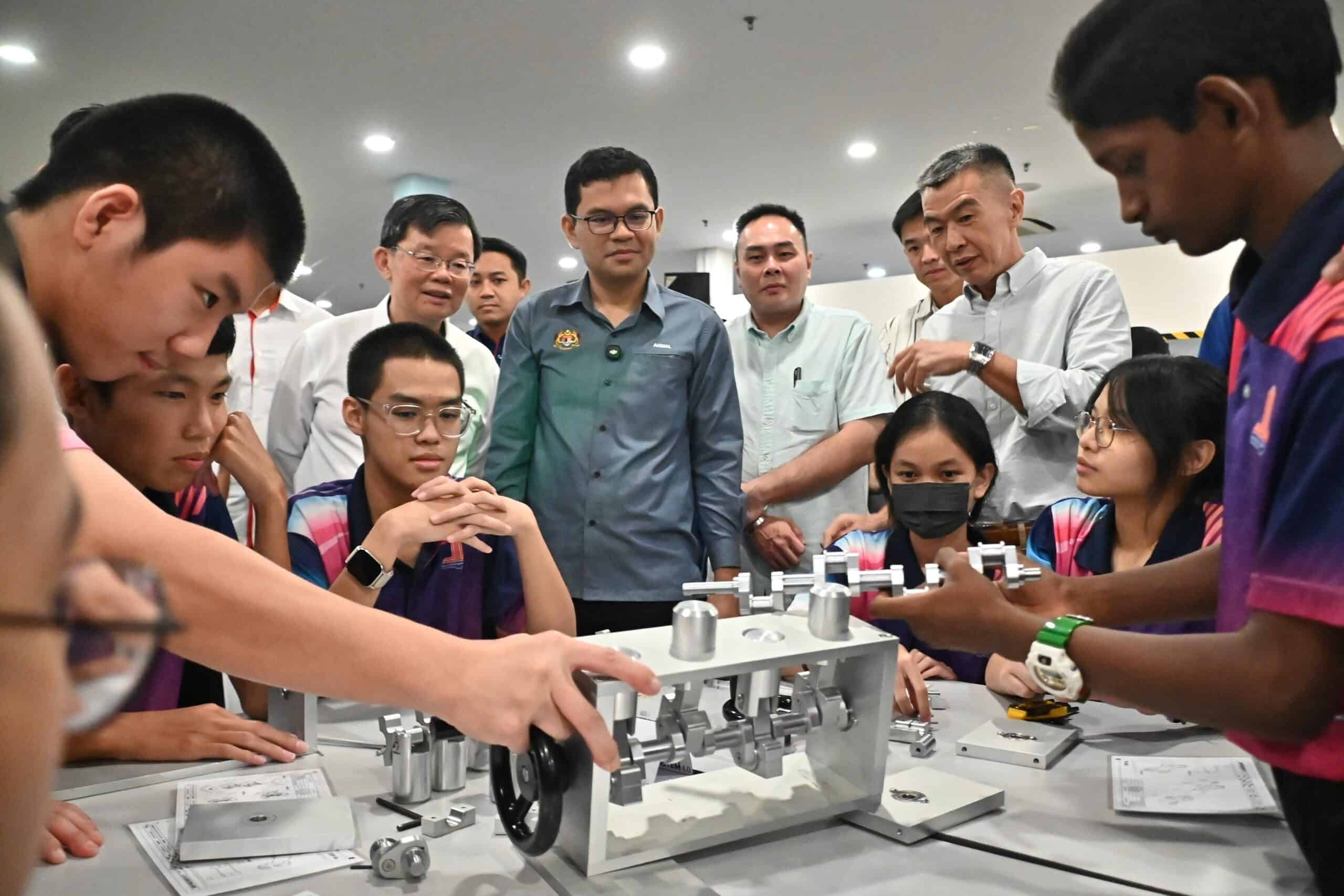

PENANG’s STEM (science, technology, engineering and mathematics) education blueprint has received a major boost with the Federal Government allocating RM12.3 million over the next four years to strengthen the state’s talent pipeline and prepare students for high-value careers in emerging industries.
Chief Minister Chow Kon Yeow said the allocation would support the implementation of the Penang STEM Talent Blueprint through four key streams covering STEM education, mathematics, artificial intelligence (AI) and technical skills.
He said the initiative would build on Penang’s existing efforts to nurture future talent while strengthening collaboration between the state government, schools, STEM organisations and industry.
“We thank the Ministry of Economy for welcoming the Penang STEM Blueprint and for providing the allocation of RM12.3 million until 2030 to support the four streams,” Chow said during a press conference after the launch of the STEM Talent Pilot Project at Tech Dome Penang, Komtar, today.
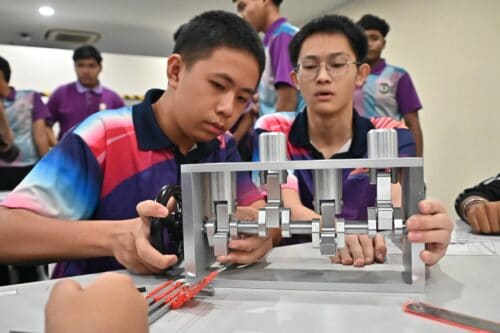
The four programmes are Ignite: STEM Education, Ignite: MathQuest, Embed: AI on Wheels and Embed: Technical Skill Learning, targeting students across different stages of schooling.
Chow said Penang had already implemented numerous STEM initiatives, driven by the need to ensure the state’s economic development was supported by a strong and future-ready talent pool.
He added that the programme could provide students with an early pathway into industry, particularly those who choose to enter the workforce after completing their Sijil Pelajaran Malaysia (SPM).
“Some students who finish SPM could already start working because this programme prepares them from Form Four onwards. If they choose to continue to a higher level, they can continue along their education pathway,” he said.
The Chief Minister said such an approach would help prepare both Penang and Malaysia for future economic challenges, particularly as the state continues to strengthen its position in the electrical and electronics (E&E) and semiconductor sectors.
Meanwhile, Economy Minister Akmal Nasrullah Mohd Nasir said the Federal Government had recognised the strength of Penang’s existing STEM ecosystem and its potential to serve as a model for other states.
He said the pilot project aims to reach more than 100,000 students between 2026 and 2030, with particular emphasis on students from rural areas and lower-income communities.
“The target is to train more than 100,000 students by 2030 in our efforts to generate greater interest in STEM,” he said.
Akmal said the initiative would adopt a whole-of-ecosystem approach involving not only government agencies, but also industry players already established in Penang.
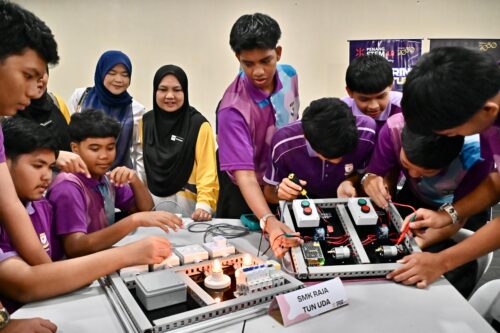
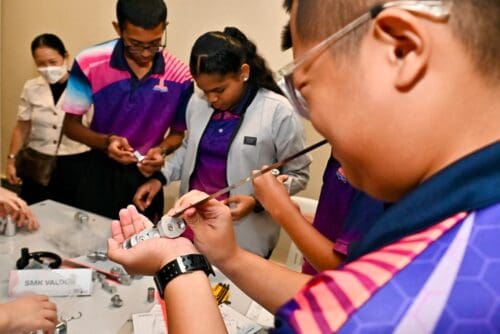
He said students would be exposed to practical, hands-on skills in areas such as AI, data science, robotics and digital technology, helping create pathways towards high-paying careers.
The pilot project is based on the Penang STEM Talent Blueprint: A Roadmap for Workforce Development, first introduced by Chow in 2024.
Akmal said the blueprint had attracted positive response from industry and STEM stakeholders, prompting the Ministry of Economy to collaborate with the state government to expand its implementation.
“Penang has an advantage in terms of its ecosystem, particularly in semiconductors as well as electrical and electronics. Therefore, promoting interest in STEM requires a comprehensive approach involving the whole ecosystem, not just the Government or agencies, but also industry players,” he said.
The pilot project is also aligned with the objectives of the 13th Malaysia Plan (RMK13), New Industrial Master Plan 2030 (NIMP 2030) and National Semiconductor Strategy (NSS), including efforts to develop 60,000 Malaysian engineers to strengthen capabilities in chip design, advanced packaging, research and development and other high-value activities.
Akmal said the success of the Penang pilot would be evaluated before the model is considered for expansion to other states and economic sectors nationwide.
He said the initiative also complemented the Federal Government’s broader effort to accelerate the country’s transition towards high-growth and high-value industries.
For Penang, Chow said the collaboration would further strengthen existing industry partnerships, including programmes that provide students with exposure and placement opportunities in companies.
“This is among our plans to prepare the country to meet future challenges,” he said.
Also present earlier was state Trade and National Unity Committee chairman Goh Choon Aik.
Story by Kevin Vimal
Pix by Suun Ting
Video by Siew Chia En