


THE medical technology (MedTech) industry is no longer a niche sector in Penang but has emerged as an increasingly important pillar of the state’s high-value manufacturing ecosystem, said Chief Minister Chow Kon Yeow.
He said Penang’s growing strength in MedTech is underpinned by a unique synergy between the state’s longstanding electrical and electronics (E&E) industry and its rapidly expanding medical technology sector.
“What makes Penang a MedTech powerhouse? The answer lies in our unique synergy between E&E and MedTech.
“Leveraging over 50 years of industry excellence in the E&E and semiconductor sector, where precision and automation are essential, these competencies translate directly into the production of surgical instruments, implants and high-accuracy medical devices,” he said.
Chow said Penang’s established local supplier ecosystem and highly skilled workforce, particularly in precision engineering and advanced manufacturing, further strengthened the state’s MedTech capabilities.
“In other words, Penang did not build its MedTech ecosystem from scratch. It built on the industrial capabilities it had already developed and continued moving them into higher-value applications,” he said.
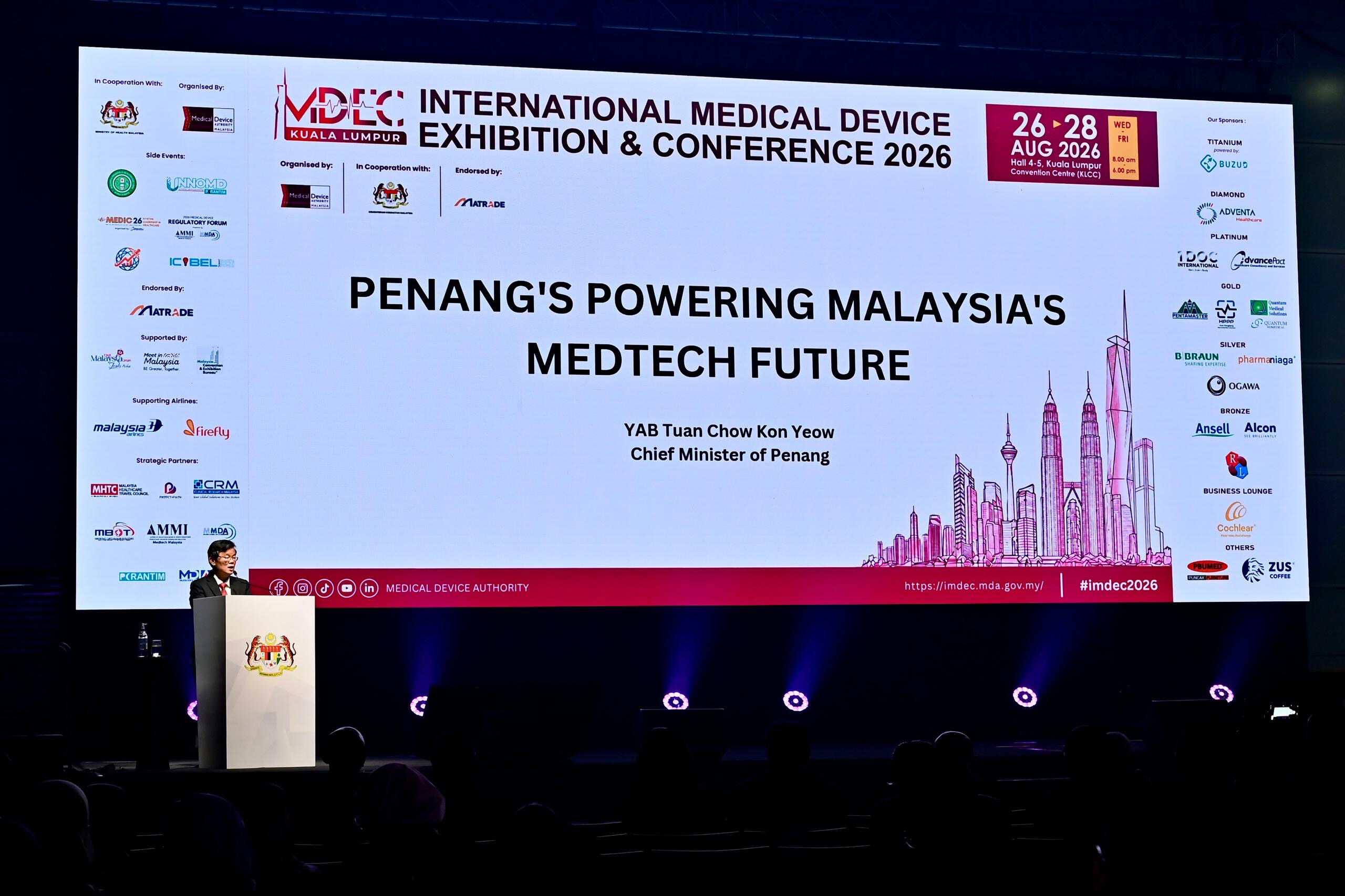
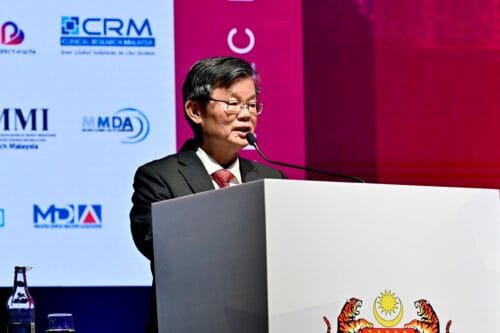
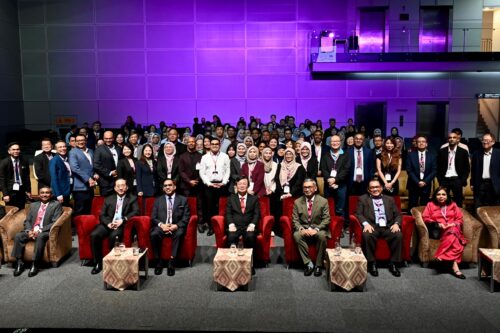
Chow was delivering his keynote address, titled ‘Penang’s Powering Malaysia MedTech Future’, at the International Medical Device Exhibition and Conference (IMDEC) 2026 at the Kuala Lumpur Convention Centre (KLCC) today.
He said cross-industry collaboration will be crucial in taking Penang’s MedTech ecosystem to the next level.
“The recently launched Penang Automation, Test and Equipment (ATE) Campus, spearheaded by InvestPenang, aims to create an integrated ATE ecosystem to accelerate the co-development, qualification and scaling of local ATE solutions, ultimately enabling the first-customer deployment of Malaysian ATE solutions through structured co-development.
“This initiative is well-suited to MedTech companies operating in Penang, offering them opportunities to collaborate with local companies in technology development, supplier localisation and supply chain strengthening.
“Such partnerships will not only enhance operational resilience but also create greater value for both Penang and global and local MedTech players over the long term,” he said.
Chow also highlighted the proven capabilities of Penang’s ATE companies in developing MedTech equipment for multinational corporations (MNCs), with solutions produced in the state already being adopted globally.
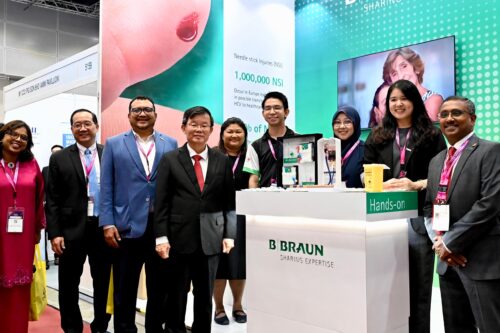
He said Penang’s MedTech journey could be traced back to 1972, when B. Braun established its manufacturing facility in the state.
“This was B. Braun’s first manufacturing site in the Asia-Pacific region and has since grown into one of the Group’s largest manufacturing sites outside Europe.
“Since then, Penang’s MedTech ecosystem has continued to grow, attracting some of the world’s leading medical technology companies,” he said.
According to the Worldwide Medical Devices Market Factbook 2025, Malaysia has one of the largest MedTech markets in ASEAN, valued at approximately US$2.5 billion.
Chow said Malaysia was also home to 12 of the world’s top 30 medical technology companies, seven of which operate major facilities in Penang.
They are Abbott, Boston Scientific, B. Braun, Smith+Nephew, STERIS, Dexcom and, most recently, Intuitive, whose investment in Penang was announced just two weeks ago.
“This gives Penang the strongest concentration of leading MedTech companies in Malaysia and also Southeast Asia,” he said.
More importantly, Chow said, the presence of these global industry leaders reflects the confidence they have placed in Penang’s industrial ecosystem, engineering talent, supply chain capabilities and proven track record in high-precision manufacturing.
He added that one of the key aspirations of Penang’s investment strategy is to ensure the presence of global companies also creates opportunities for homegrown businesses to grow, develop new capabilities and move further up the value chain.
“Today, Penang is home to more than 20 local MedTech companies producing MDA-registered medical devices across a broad range of applications.
“These include orthopaedic implants such as screws and plates; single-use and disposable products for urology; endoscope-related products; wound and infection control solutions; dental products; patient isolation transporters; inhaler-related products; pharmaceutical products; as well as surgical blades and instruments,” he said.
Chow said the growing base of local companies is an important component of Penang’s MedTech success story.
“This demonstrates that the ecosystem is not simply about bringing multinational corporations into Penang.
“It is about building local capabilities alongside global capabilities, creating opportunities for Malaysian companies to participate in the value chain, and ultimately developing more homegrown champions that can stand out on the global stage,” he said.
Chow added that the growth of Penang’s MedTech industry is also reflected in the state’s investment performance.
“From 2021 to the first quarter of 2026, Penang secured RM2.3 billion in approved manufacturing investments in the scientific and measuring equipment sector, including MedTech, representing nearly 20% of the nation’s total investments in this sector.
“These investments involved 40 projects and generated nearly 4,500 employment opportunities,” he said.
On trade, Chow said Penang continued to lead Malaysia’s export performance in the first half of 2026, recording RM429 billion in exports, equivalent to 44% of the country’s total exports.
He said that from 2021 to the first half of 2026, Penang recorded RM238 billion in exports of optical, photographic, cinematographic, measuring, checking, precision, medical or surgical instruments and apparatus, accounting for an average of 64% of Malaysia’s total exports in this category.
Chow said Penang is proud to be home to a growing MedTech cluster that combines the strength of global industry leaders with an increasingly capable base of homegrown companies.
“This combination gives Penang the foundation to further establish itself as a leading offshore manufacturing hub for medical devices, alongside established hubs such as Puerto Rico, Ireland and Costa Rica,” he said.
Addressing global investors, industry leaders and innovators at IMDEC 2026, Chow said Penang is ready to support the next phase of MedTech growth.
“My message to global investors, industry leaders and innovators gathered here today is simple: Penang is ready for your next phase of growth.
“To our existing investors, thank you for your continued confidence and trust.
“The Penang government, through InvestPenang and the Penang Development Corporation (PDC), supported by the Malaysian Investment Development Authority (MIDA), remains fully committed to providing seamless support for your operations.
“To prospective investors, our doors are wide open. Come and be part of this transformative journey. Let us design and manufacture the future of global healthcare right here in Penang,” he concluded.
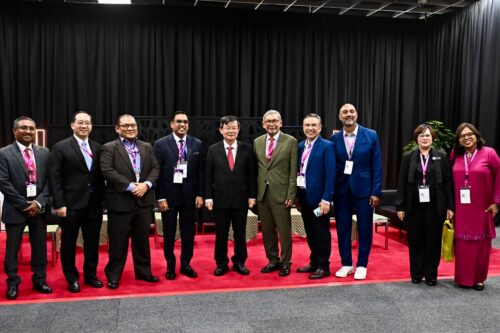
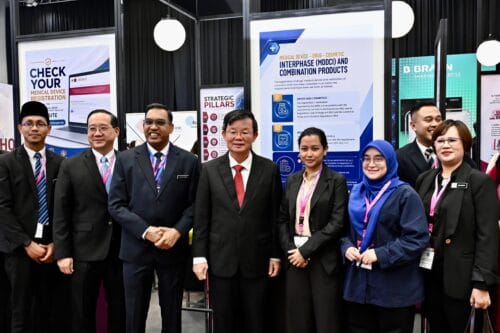
Also present were Medical Device Authority (MDA) chief executive Datuk Dr Muralitharan Paramasua, MDA board of directors Datuk Mohamad Fazin Mahmud, Andy Lee Kuan Min and Prof Dr Evelyn Shyamala Paul Devadason.
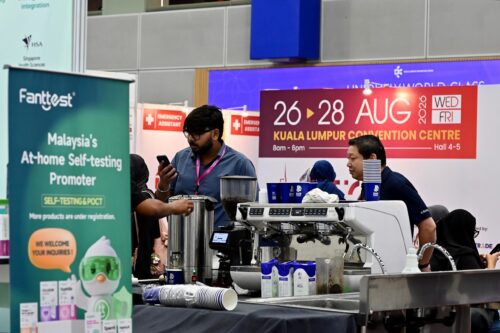
IMDEC 2026, held from Aug 26 to 28, carries the theme ‘Revolutionising Medical Technology: Powering Tomorrow’s Era of Healthcare’ and serves as a global platform for knowledge exchange, innovation and collaboration.
The event is organised in partnership with Universiti Malaya, Clinical Research Malaysia and the Malaysia Healthcare Travel Council, among others.
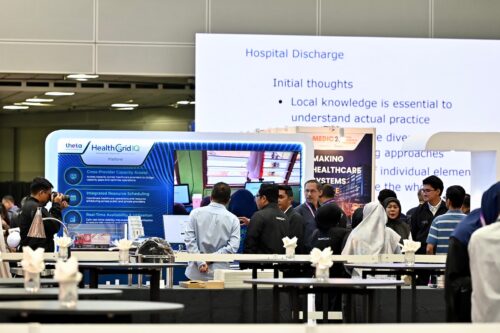
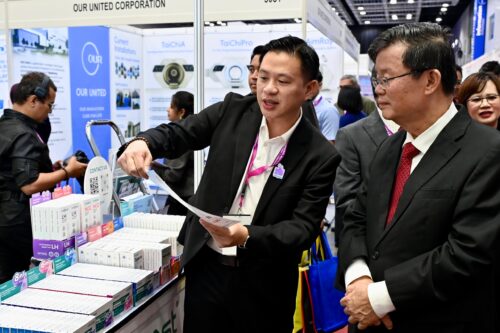
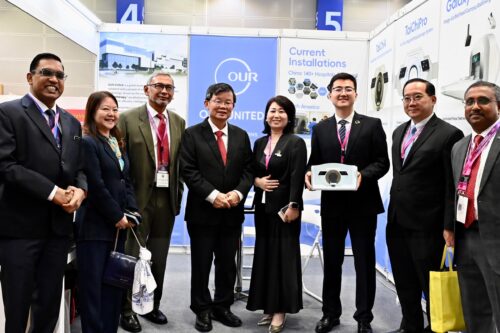
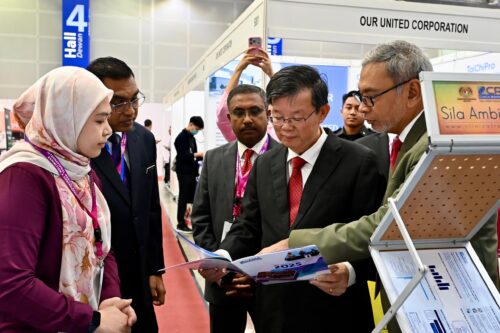
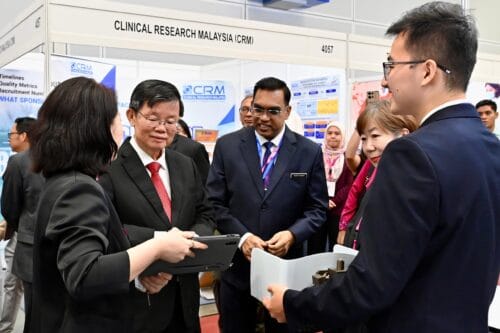
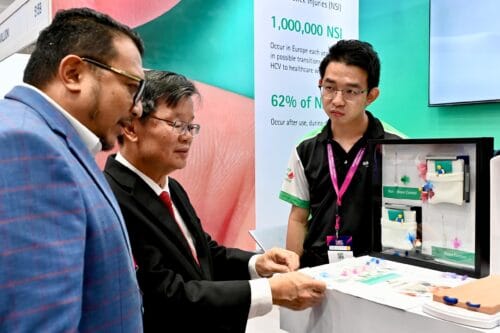
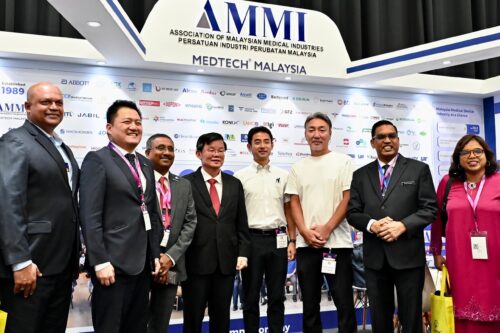
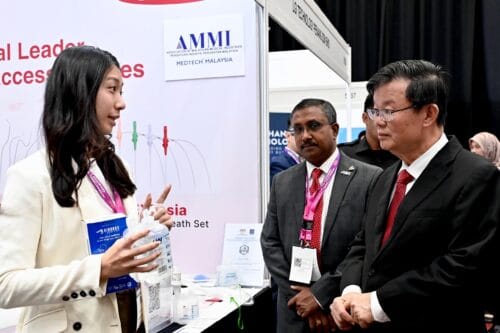
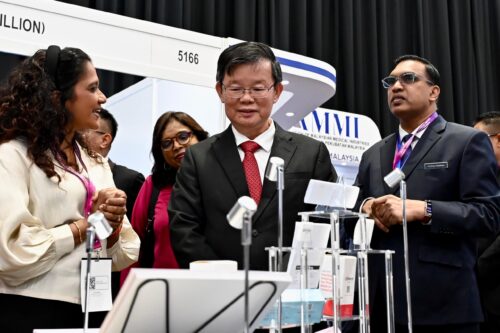
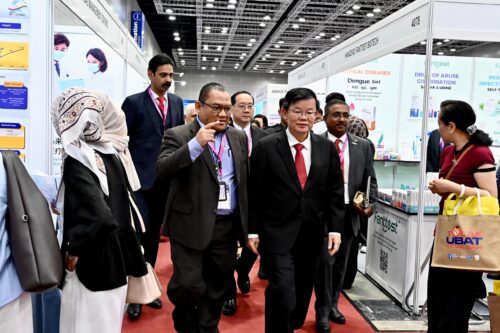
Chow also took time to visit exhibition booths featuring various companies, including several Penang-based MedTech players, during the conference.
Story by Riadz Akmal
Pix by Siti Nuratikah Rahmat