


THE Penang government will move forward with the development of the Penang Silicon Design @5km+ (PSD@5KM+) Campus II, following the strong response to its inaugural campus.
Chief Minister Chow Kon Yeow said the PSD@5KM+ initiative had delivered significant results since Campus I was launched barely two years ago, with the facility now fully occupied.
“Since launching PSD@5KM+ Campus I barely two years ago, I think we have seen significant results.
“And we have already run out of space. So, the next step is, of course, to expand.
“With the commitment of more funding, I am therefore very pleased to announce that we will move ahead with PSD@5KM+ Campus II,” he said.
Campus I is an existing incubation space that was established under Batch 1 and 2 at GBS TechSpace, which is now occupied by seven incubatees in full operation.
Chow said the state was now exploring additional locations and buildings for the second campus, with one of the potential locations identified as GBS@Mayang in Bayan Baru.
“The place already houses several integrated circuit (IC) design companies in Penang and provides a natural environment to further strengthen this cluster.
“I think we will give more details soon, but the significant announcement today is that we are going for Campus II,” he said.
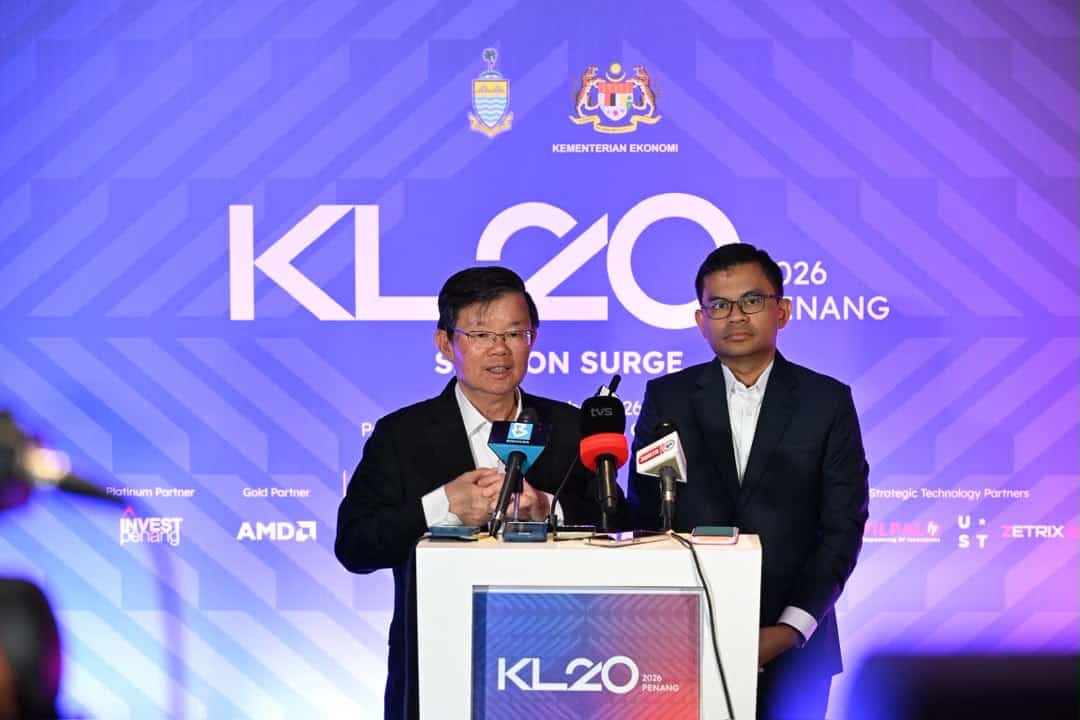
Chow was speaking during the special forum titled ‘Shaping Malaysia’s Next Semiconductor Chapter’, held in conjunction with KL20@Penang 2026 at the Penang Waterfront Convention Centre (PWCC) here today.
He was one of the panellists at the forum, alongside Economy Minister Akmal Nasrullah Mohd Nasir, while InvestPenang chief executive officer Datuk Seri Loo Lee Lian moderated the session.
Also present were state Trade and National Unity Committee chairman Goh Choon Aik, state Tourism and Creative Economy Committee chairman Wong Hon Wai and Pulau Tikus assemblyman Joshua Woo Sze Zeng.
Chow said the state government’s next priority was to build on the foundation established under PSD@5KM+ by helping local technology companies advance their capabilities and move closer towards commercialisation.
“Therefore, the state government will provide additional core funding for this initiative, drawn from existing funds already provided by the state government together with the Ministry of Economy.
“The funding will help our companies gain better access to advanced semiconductor tools, infrastructure and technical capabilities, while also supporting strategic partnerships, specialised engineering and technology collaboration.
“Ultimately, we want to build a clear pathway from capability to commercialisation, and then to scale,” he said.
Chow noted that Penang was already home to promising technology companies with strong capabilities, but many still required additional support to make the transition from technology development to commercialisation and subsequent expansion.
To address this, he said the state executive council had deliberated on the matter and agreed to establish a Strategic Technology Fund, with a state government commitment of up to RM50 million.
“This fund can be used to support our local companies.
“And importantly, this is to show that the state is committed to serving as an anchor to encourage greater participation from venture capitalists, institutional investors, strategic investors and the private sector,” he said.
While acknowledging that RM50 million was relatively modest compared with the scale of the semiconductor industry, Chow said the fund was intended to demonstrate the state’s commitment to helping local companies gain greater access to capital.
“Indeed, we hope that this initiative will also encourage the Federal Government and other investors to join us in this effort, so that this technology fund can grow and scale, and our local companies will benefit.
“With greater accessibility to capital, I think some of our companies will have their concerns addressed. They can then focus on what they do best, while investors can invest in their capabilities to commercialise and scale later on,” he said.
Looking ahead, Chow said sustained focus over the next five years could help position Penang and Malaysia not only as a destination where semiconductors are manufactured, but also as a hub where Malaysian companies design chips, own intellectual property (IP), develop technologies and take their products to the global market.
“In five years, I think we can make a difference. Probably this is the last opportunity for Malaysia to achieve this.
“I hope that we can drive this agenda together,” he concluded.
Meanwhile, Akmal announced during the programme that the Malaysia Advanced Testing Equipment (ATE) Campus would be established in Penang, with RM25 million in approved funding from the Federal Government.
Story by Riadz Akmal
Pix by Darwina Mohd Daud
Video by Law Suun Ting