

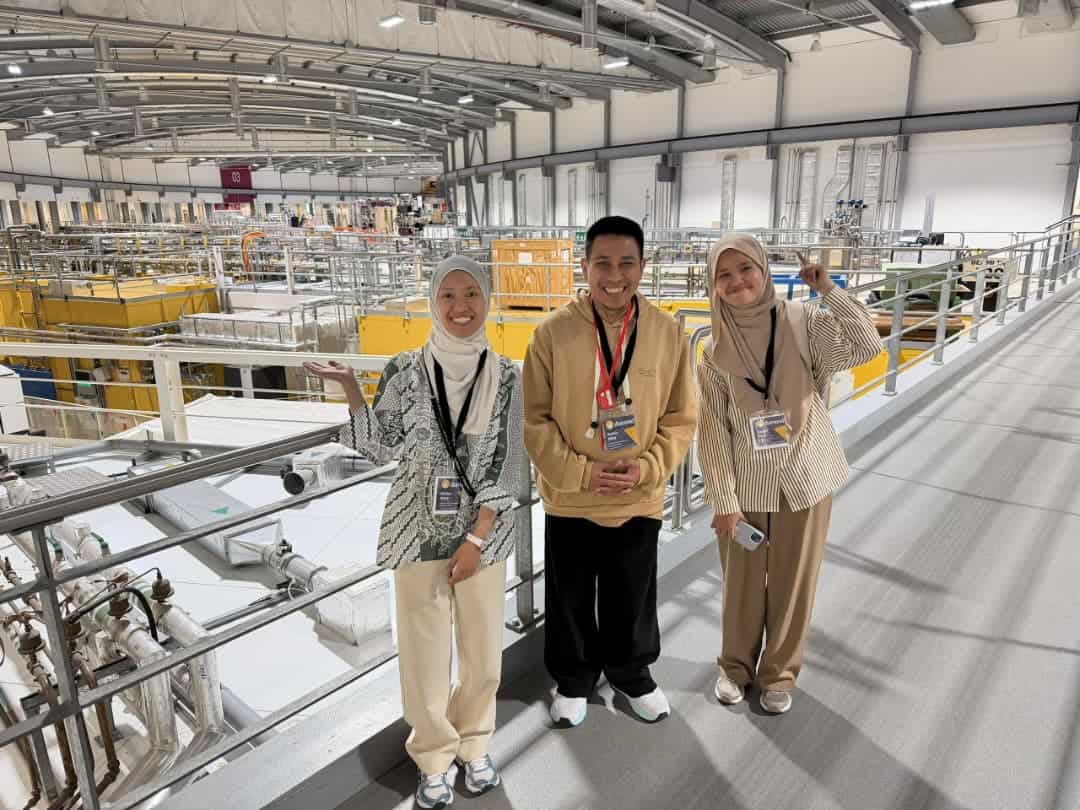

THREE researchers from Universiti Teknologi MARA (UiTM) Penang Branch, Permatang Pauh Campus, have brought honour to the nation after being selected to conduct experiments at the ISIS Neutron and Muon Source in the United Kingdom, one of the world’s most prestigious neutron research facilities.
The three-year research project aims to develop new technologies to address the threat of microplastics and enhance the value of plastic waste through advanced materials research. Initial work began in Malaysia and is now continuing with experimental work in the United Kingdom.
The team is led by Ir Ts Mohamed Syazwan Osman, senior lecturer at the Faculty of Chemical Engineering, UiTM Penang Branch, together with two Doctor of Philosophy (PhD) students, Nur Lina Syahirah Mustapa and Anis Syuhada Saufi.
What makes the achievement more significant is that the two young researchers are not merely involved in an academic visit but directly participated in conducting experiments using the LARMOR Small-Angle Neutron Scattering (SANS) instrument, a world-class facility used by scientists from various countries to study materials at the nanometre scale.
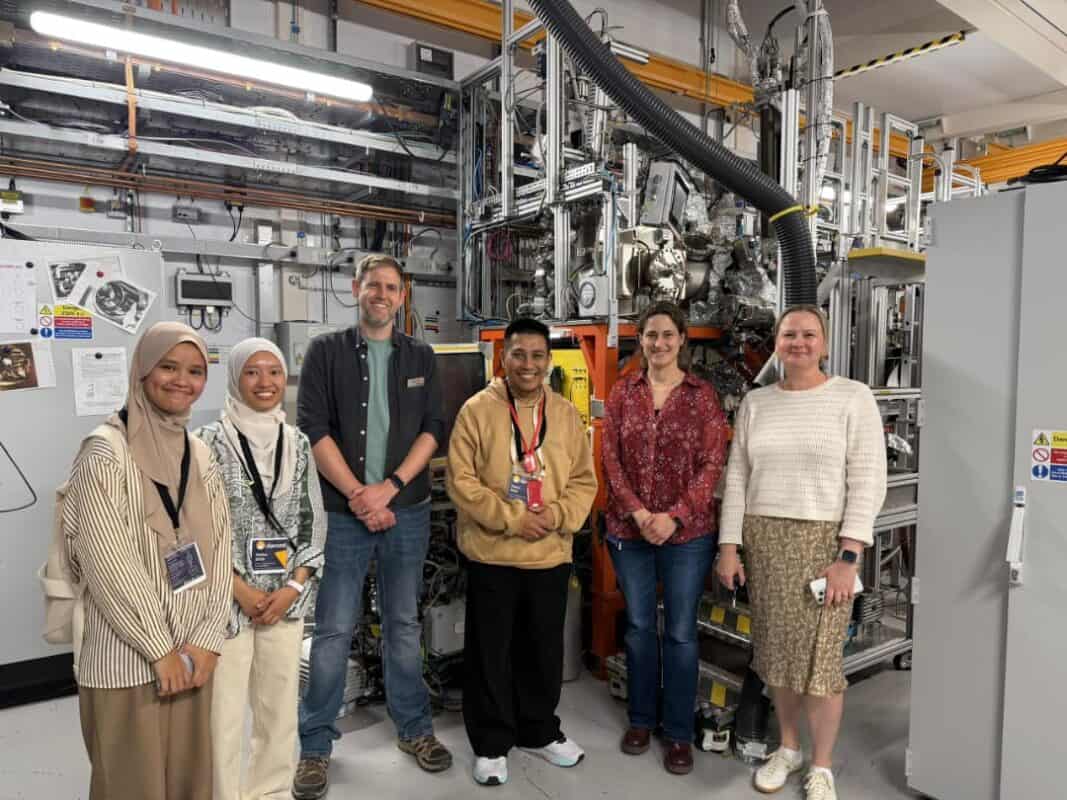
Mohamed Syazwan said access to the facility was secured after going through a competitive international scientific review process, proving the ability of local researchers to compete and contribute within the global research ecosystem.
He said many people are unaware that Malaysian researchers are capable of working in the same laboratories as scientists from developed countries. More importantly, two local PhD students were directly involved in the high-technology experiment.
“Such experience not only builds their confidence and expertise as future scientists, but also proves that young Malaysians have great potential when given the right opportunities and exposure,” he said.
The study focuses on the development of catalyst materials that can help break down microplastics more effectively, while also exploring upcycling approaches to convert plastic waste into materials or products with added value.
Microplastics have become a global concern due to their presence in rivers, oceans and marine life, with several studies also reporting their presence in the human food chain. This situation calls for the development of more sustainable and effective technologies to reduce their impact on the environment and public health.
According to Mohamed Syazwan, Malaysia is not exempt from the challenges of plastic pollution. Therefore, the country must develop its own expertise and technologies instead of relying solely on solutions developed elsewhere.
“The use of neutron techniques enables researchers to understand the internal structure of materials down to the nanometre level. This knowledge is essential in designing more efficient catalyst materials with potential applications in future microplastic treatment technologies,” he said.
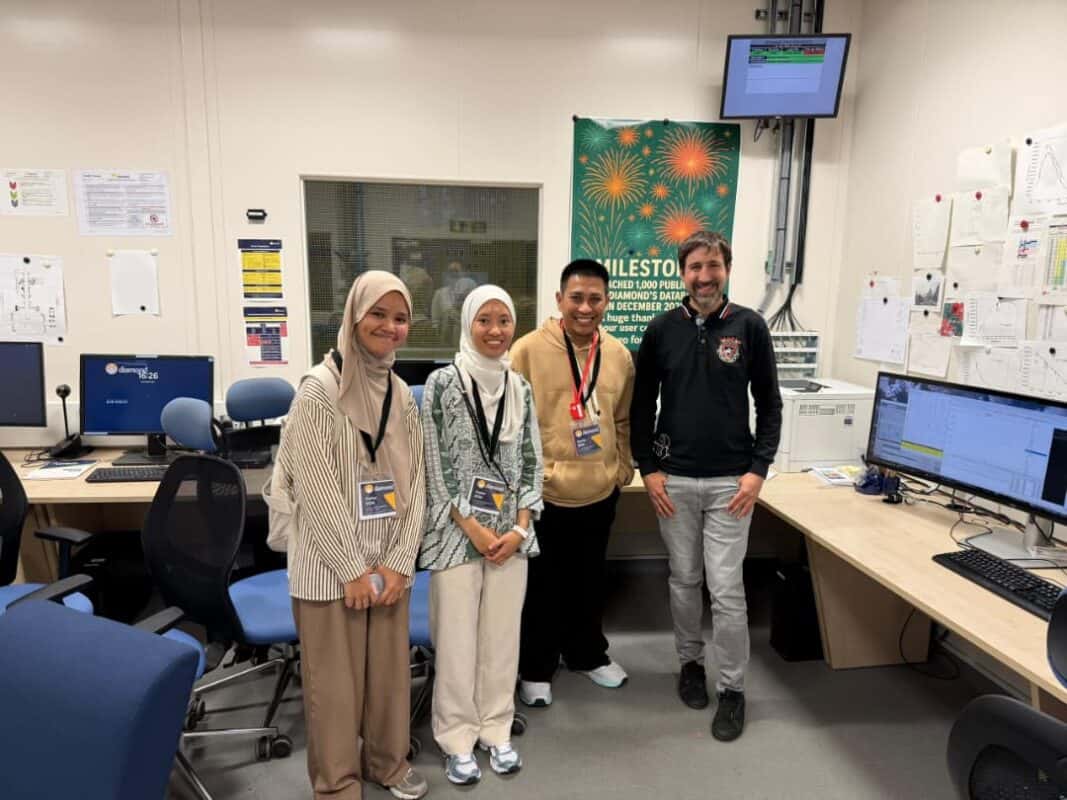
The experiment was carried out using the Small-Angle Neutron Scattering (SANS) technique on the LARMOR instrument, in collaboration with ISIS Neutron and Muon Source scientists Dr Steven Parnell and Dr Dirk Honecker, who have expertise in neutron scattering and materials science.
Mohamed Syazwan said the collaboration between Malaysian and United Kingdom researchers goes beyond generating research data, as it also opens opportunities for knowledge transfer, talent development and international scientific networking that could bring long-term benefits to the country.
He said the future development of the nation would not depend solely on physical infrastructure, but also on the ability to produce highly skilled human capital capable of creating solutions to global challenges.
“If the country wants to see more Malaysian scientists standing on the international stage, the research culture must continue to be strengthened, and the younger generation must be given opportunities to explore advanced fields of science,” he said.
Located at the Rutherford Appleton Laboratory in Oxfordshire, the ISIS Neutron and Muon Source is one of the world’s leading neutron research centres. It is used by scientists from various countries to study the structure of materials at atomic and nanometre scales across fields such as energy, environment, engineering and life sciences.
The achievement of the UiTM team demonstrates that Malaysian talent is not only capable of competing internationally, but also able to contribute to efforts in finding solutions to global challenges such as microplastic pollution, for the well-being of society and environmental sustainability for future generations.
Pix courtesy of Mohamed Syazwan Osman