

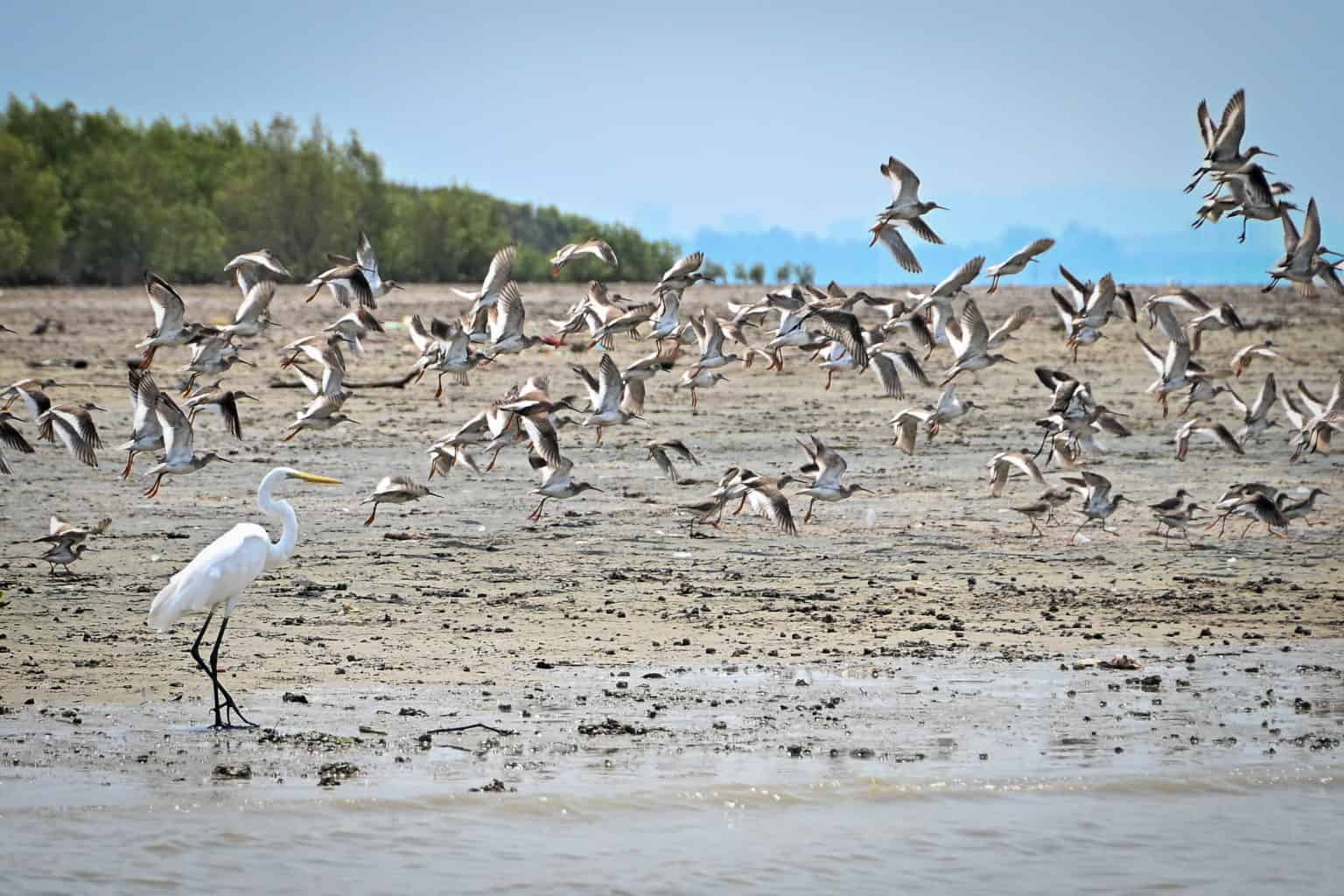

AS climate change continues to reshape ecosystems worldwide, Penang is witnessing noticeable changes in the behaviour of migratory birds that have long been part of the state’s rich natural heritage.
According to Malaysian Nature Society (Penang branch) adviser and honorary member Kanda Kumar, migratory birds are now arriving earlier and departing later than they traditionally did, a phenomenon closely linked to global warming.

Speaking during an interview with Buletin Mutiara at the Penang Hill office recently, Kanda said the changing climate has disrupted migration cycles that birds have followed for generations.
“Previously, most migratory birds would leave by March when spring and summer begin in their breeding grounds. However, things have changed significantly. Now, some birds remain here until July before returning,” he said.
Kanda explained that Balik Pulau was once a major nesting destination for several migratory bird species. However, extensive habitat loss over the years has reduced the availability of suitable nesting grounds.
“Many of the places where they used to nest have already been destroyed. As a result, fewer birds are coming, and those that do are forced to seek alternative nesting sites.
“Some species have shifted to parts of Seberang Perai, where suitable habitats still exist. Certain birds nest directly on the ground, creating shallow holes for their eggs, making them especially vulnerable to habitat disturbance,” he said.
He added that the delayed migration schedule poses another challenge.
“Shorebirds, which depend on flat and wet coastal habitats for feeding and nesting, are unable to breed in Malaysia due to the lack of suitable wetlands.
“They need mudflats and wet ground to survive. If they return too late to their breeding grounds, they may find that the best nesting sites have already been occupied by birds that arrived earlier,” Kanda explained.
He added that changes in migration timing can also lead to food shortages as larger numbers of birds compete for limited resources.
“Global warming is very destructive not only for humans, but also for birds and many other species. It affects food availability, breeding success and overall survival.
“The impact is already visible in the Teluk Air Tawar–Kuala Muda (TAT-KM) coastal area, one of Penang’s most important habitats for migratory shorebirds.
“Previously, by March, most of the shorebirds would have left. Today, even until July, there can still be a few thousand birds remaining in the TAT-KM area,” he said.
Beyond the mainland coast, Penang Hill and its surrounding biosphere reserve continue to serve as important sanctuaries for avian biodiversity.
Kanda revealed that approximately 250 bird species have been recorded within the Penang Hill Biosphere Reserve, while Penang as a whole is home to about 500 species.
“When I compiled the checklist, there were around 500 species recorded in Penang. Malaysia has about 800 bird species altogether, so Penang supports a very significant proportion of the country’s bird diversity,” he said.
As part of efforts to raise public awareness about Penang’s unique wildlife, Kanda will be one of the featured speakers at the upcoming talk session titled ‘Lives Above the Ground: The Flying Fauna’ during the Penang Hill Festival (PHF).
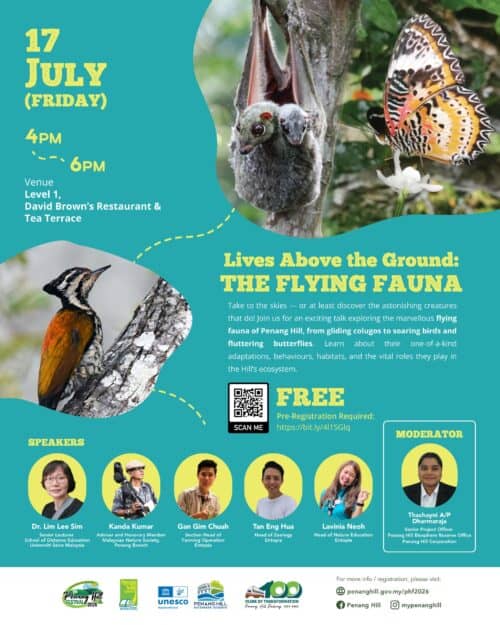
The festival returns for its seventh edition from July 17 to July 19.
During the talk, Kanda will focus on Penang’s birdlife, while other speakers will cover colugos and butterflies.
“I will be sharing information on the different bird species found here, their habits and behaviours, as well as the importance of both forest birds and shorebirds within the biosphere ecosystem,” he said.
A key highlight of his presentation will be the growing importance of Penang’s coastal habitats, including the mainland coastline, Penang National Park and Pantai Mas, as critical stopover sites for migratory shorebirds.
“Previous studies did not place much emphasis on migratory shorebirds along our shores. Now, we are seeing how important these coastal areas have become for birds travelling across the East Asian-Australasian Flyway.
“We want people to understand that Penang’s coast is not only important for biodiversity but also plays a crucial role in supporting migratory bird populations,” he added.
Kanda also plans to introduce audiences to fascinating bird behaviours that are often overlooked, including brood parasitism, where certain bird species lay their eggs in the nests of other birds and leave the host species to raise their young.
“These are things many people may not know. There are many interesting aspects of bird behaviour that can be learned through this talk,” he said.
Apart from the talk session, Kanda will also lead a birdwatching programme on Penang Hill on July 18.
“The activity is open to participants of all ages and is free of charge.
“Those with their own binoculars are encouraged to bring them, although binoculars will also be provided and shared among participants.
“There is no age restriction. It is entirely up to parents to decide if their children would like to join. The aim is simply to encourage more people to appreciate and learn about the birds around us,” Kanda said.
Story by Riadz Akmal
Pix by Law Suun Ting