

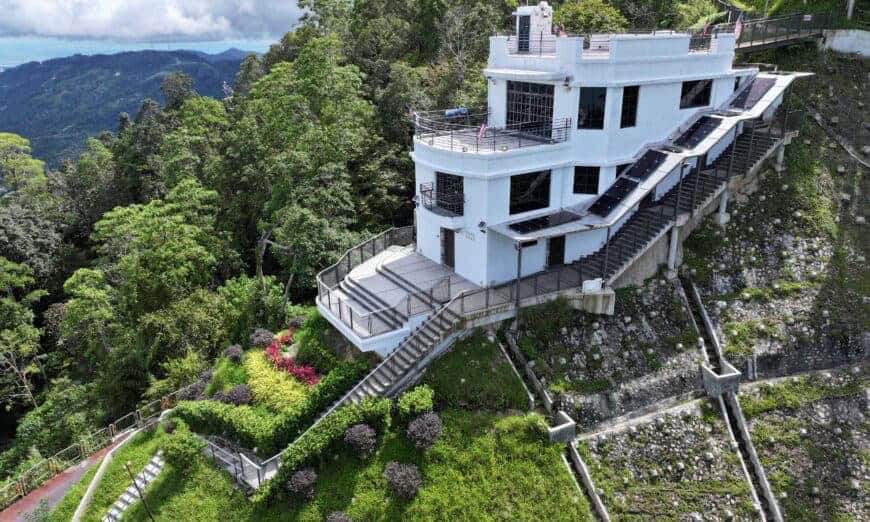

PERCHED on the edge of Penang Hill with sweeping panoramic views, the historic Edgecliff Villa has undergone a remarkable transformation, evolving from a quiet colonial-era bungalow into one of the hill’s most popular attractions, the Edgecliff Gallery@Penang Hill.
The visionary behind this architectural reinvention is BETA Architects founder Tan Bee Eu, who played a key role in transforming the heritage structure into a renowned gallery and educational centre dedicated to showcasing the rich history, biodiversity and cultural significance of Penang Hill.

Today, the three-storey gallery not only serves as a gateway to understanding Penang Hill’s past and present but also acts as a bridge between Penang’s colonial heritage and its internationally recognised natural environment.
Visitors can enjoy a stunning 270-degree view from its scenic terrace while exploring interactive exhibits housed within the restored building.
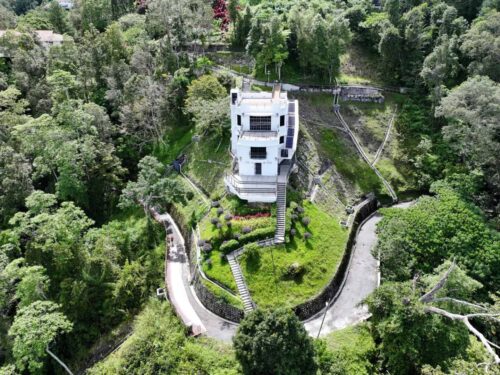
Located within the UNESCO-recognised Penang Hill Biosphere Reserve, Edgecliff Villa is a heritage building gazetted as a Category II monument by the Penang government.
Speaking during an interview with Buletin Mutiara recently, Tan expressed satisfaction that the gallery has successfully fulfilled the original vision of the Penang Hill Corporation (PHC).
“Basically, we are happy to see that Edgecliff has become a destination, a must-stop destination, because that is what PHC envisioned from the beginning,” Tan said.
She explained that the concept behind the gallery was inspired by the idea of a ‘pit stop’.
“When you drive from Penang to Kuala Lumpur, you usually stop at a rest area along the way. Before Edgecliff Gallery@Penang Hill was created, visitors going up the hill did not really have a go-to place.
“There was no landmark building and no proper pit stop where people could stop, learn and appreciate what Penang Hill has to offer.
“Today, the gallery is achieving that vision. It has become a must-visit stop where visitors can discover the history of Penang Hill, learn about the funicular railway and gain a deeper understanding of its unique biodiversity,” she explained.
Tan will be among the featured speakers at the upcoming talk session titled “Penang Hill in Focus: Conservation Challenges and Achievements” during the seventh edition of the Penang Hill Festival (PHF), which will take place from July 17 to July 19.
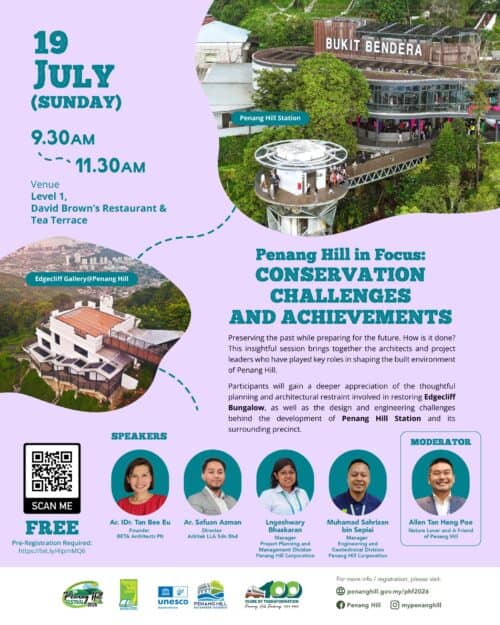
During the session, she will share insights into the heritage preservation and architectural innovation behind the Edgecliff Gallery@Penang Hill project, offering audiences a rare glimpse into the journey that transformed the once-vacant bungalow into a thriving educational destination.
“I feel it is important to share the story behind the transformation because most people only see the finished product.
“It is like watching a blockbuster movie without knowing how it was made. The talk will reveal the ‘making of’ Edgecliff Gallery@Penang Hill, the challenges we faced, the obstacles we overcame and the achievements we accomplished along the way,” she said.
According to Tan, one of the most overlooked aspects of the project is its origin story, which began with the foresight of PHC general manager Datuk Cheok Lay Leng.
“We have to give credit to Datuk Cheok because without his vision, this project would never have materialised.
“You need someone who truly believes that an old building can be given a new purpose. At that time, Edgecliff was vacant and its potential had not been realised. Because it sits on a difficult site at the edge of the hill, many people could not imagine what could be done with it.
“Datuk Cheok saw the possibilities. That was when we were brought in to help realise the vision and transform the old Edgecliff Bungalow into something meaningful and relevant for the public,” Tan said.
Tan added the challenge, however, was far from straightforward.
“Originally designed as a bungalow capable of accommodating around 10 people, the building had to be adapted to safely welcome up to 100 visitors at a time.
“Imagine converting a residence for 10 people into a public space for 100. From the very beginning, we had to assess the building’s structural integrity, safety requirements and load-bearing capacity. These are the fundamentals of conserving and revitalising a heritage building.
“We looked at how to strengthen the structure, increase its capacity and transform the former bedrooms into gallery spaces while preserving the character of the original building,” Tan explained.
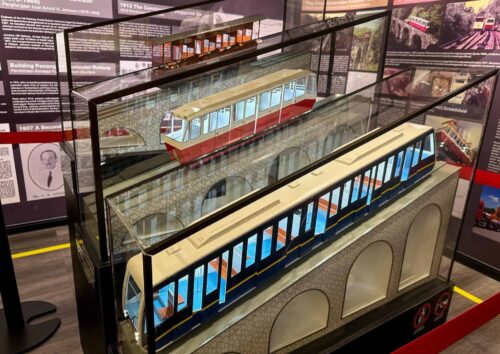
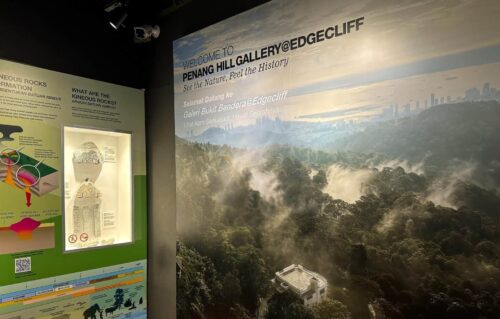
Through meticulous restoration and adaptive reuse, the Edgecliff Gallery@Penang Hill now features five thematic exhibition halls namely Time Tunnel, Biodiversity, Heritage, Funicular and Cultural.
Each offering visitors an immersive multimedia experience that traces Penang Hill’s evolution from a colonial retreat to an ecological sanctuary.
For Tan, the gallery’s success lies in its ability to educate and inspire.
“It is a must-visit location for both tourists and locals because it offers a comprehensive understanding of Penang Hill’s history, significance and future,” she said.
Meanwhile, another highlight of this year’s Penang Hill Festival is the talk session titled “Penang Hill Biosphere Reserve – What Does It Take to Protect Our Coast and Sea?”
The session will feature Dr Chee Su Yin, a senior lecturer from the School of Biological Sciences at Universiti Sains Malaysia (USM).
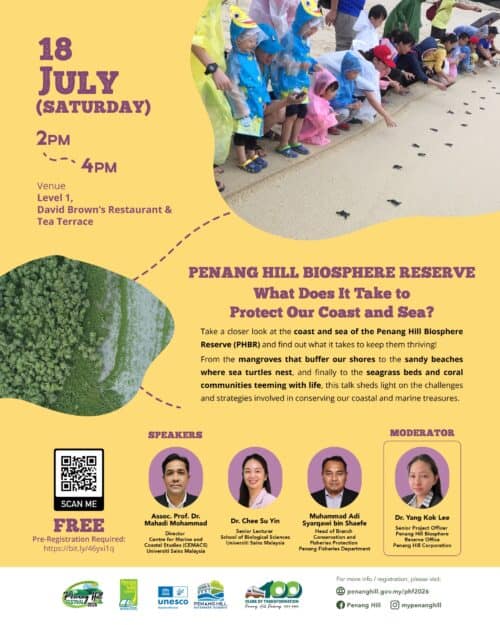
Dr Chee will discuss the conservation and protection efforts within the Penang Hill Biosphere Reserve, focusing on the interconnected ecosystems that support the region’s rich biodiversity.
“From the mangroves that protect our coastlines to the sandy beaches where sea turtles nest, and from seagrass meadows to vibrant coral communities teeming with life, these ecosystems are invaluable natural assets,” she said.
Her talk will explore the challenges and strategies involved in safeguarding these coastal and marine environments while highlighting the crucial role the public can play in conservation efforts.
Participants will gain a deeper appreciation of Penang’s coastal and marine biodiversity and learn how collective action can help preserve these natural treasures for future generations.
Story by Riadz Akmal
Pix by Law Suun Ting