


THE Penang government is studying the provision of covered walkways around Transit-Oriented Development (TOD) areas to strengthen first- and last-mile connectivity and encourage more people to use public transport once the Penang Light Rail Transit (LRT) Mutiara Line becomes operational.
State Local Government, Town and Country Planning Committee chairman Jason H’ng Mooi Lye said the Penang Island City Council (MBPP) was already studying ways to improve pedestrian connectivity, including requiring certain developments near TOD stations to provide covered walkways.
He said the initiative aimed to ensure residents could conveniently walk between their homes, workplaces, and nearby public transport facilities without being hindered by Malaysia’s hot weather or rain.
“We need to start from now. If the LRT comes without proper covered walkways, it will become a problem. We want to encourage people to walk more, and covered walkways can provide that connectivity,” he said.
H’ng said the requirement would not necessarily apply uniformly to every development, as planning and engineering teams would assess each location based on its surroundings and connectivity needs.
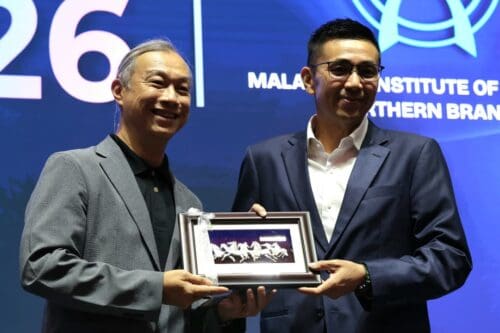
“Whether it is compulsory depends on the area. Through the planning and engineering departments, we will identify locations where this can be implemented and impose the appropriate requirements,” he said after officiating the Malaysian Institute of Planners Northern Branch (MIPNB) 2026 TOD seminar at Iconic Marjorie Hotel here today.
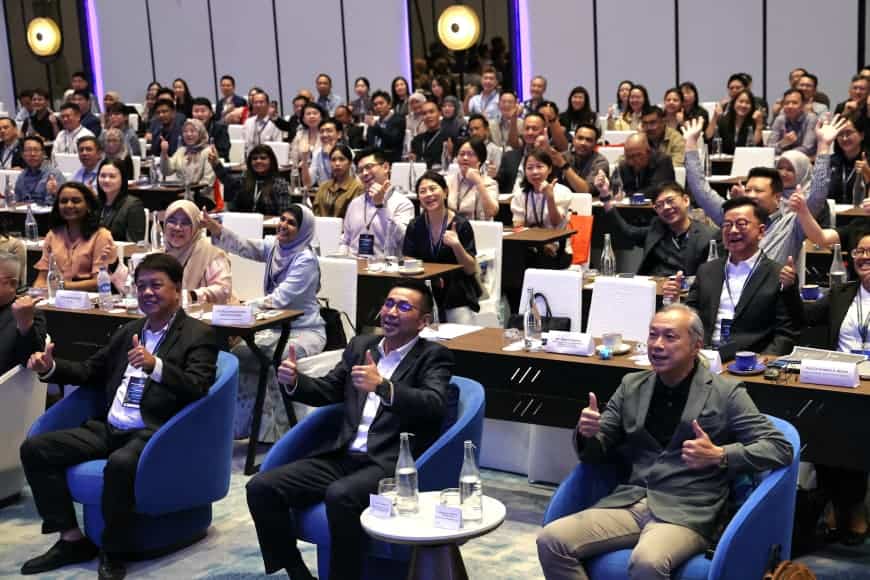
The seminar, themed “Transit-Oriented Development in Penang: Promise, Potential and Perils”, brought together 311 participants from the planning, architecture, engineering, surveying, development, construction, government, academic and civil society sectors.
H’ng said TOD should not be mistaken for simply allowing higher-density or high-plot-ratio developments around railway stations.
“Developers should not think that TOD means they can have higher density or higher plot ratios. TOD is about connectivity and providing basic facilities for the public living around the area, so that when there is an LRT, bus station or other public transport facilities, they can access them easily,” he said.
He added that the concept extended beyond individual developments and stations, encompassing the wider connectivity and quality of life of communities surrounding public transport networks.
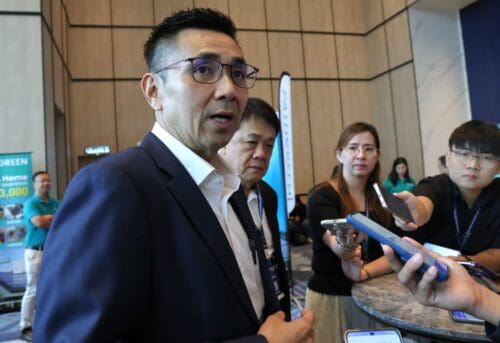
“TOD is a broad concept. It is not just about development, but also connectivity and the livelihood of the public in the surrounding areas,” he said.
H’ng said the state government, through PLANMalaysia@Pulau Pinang and the two local councils, was taking proactive measures to establish suitable planning requirements for developments that could strengthen TOD implementation in Penang.
TOD components have also been incorporated into the Draft Penang Structure Plan 2040 (Review), including the concept of first- and last-mile connectivity.
He stressed that a successful public transport system depended not only on the efficiency of the trains themselves, but also on the experience commuters faced before reaching and after leaving a station.
This included feeder buses, covered walkways, pedestrian crossings, pick-up and drop-off areas, as well as traffic and parking management.
Meanwhile, MIPNB chairman Datuk Michael Ong Chin Keong said TOD should ultimately be about building communities around people, rather than merely building developments around stations.
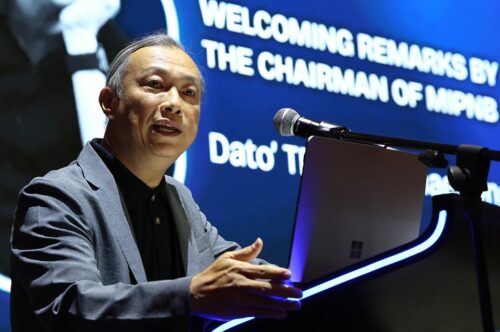
He said Penang was now at a defining point in its development journey, with the LRT Mutiara Line presenting a “once-in-a-generation opportunity” to reshape how communities would grow around public transport.
“If we pursue TOD solely as a real estate opportunity, without giving equal attention to affordability, public spaces, connectivity, heritage and community well-being, we risk creating developments that are transit-oriented, but not people-oriented,” he said.
Ong said the success of TOD should not be measured solely by the number of buildings constructed or the investment generated, but by whether people enjoyed shorter, safer and more convenient journeys.
He said it should also enable senior citizens to move independently, allow children to walk safely to school and, ultimately, make public transport the preferred choice for daily travel.
“Ultimately, Transit-Oriented Development is not about trains. It is not about stations. It is not even about buildings. It is about improving people’s everyday lives,” he said.
Ong also called for stronger collaboration among planners, architects, engineers, transport specialists, developers, local authorities, policymakers and communities to ensure Penang’s TOD ambitions translated into liveable, inclusive and sustainable neighbourhoods.
He said the presence of 311 participants at the seminar demonstrated the growing recognition that TOD was a shared responsibility across the built-environment sector.
“Successful Transit-Oriented Development demands genuine collaboration. It requires all these stakeholders, and most importantly, the communities we serve, to work together towards a shared vision for Penang,” he said.
Story by Kevin Vimal
Pix courtesy of The Star